Band Saw Machine
— —
Navigation
recommend

Send Us A Message
Band Saw Machine
1.1 Core Definition and Usage: Sawing machines fall under the field of mechanical engineering and are mainly used for cutting bars, tubes, and other profiles. They achieve the cutting process through the continuous or reciprocating movement of the saw blade or sawing disc, combined with the feed movement. They are important cutting equipment in mechanical processing.
1.2 Main Classification: According to the tools and structure, band saw machines can be classified into three main categories.
1.2.1 Circular Saw Machine: It uses a rotating circular saw blade as the tool. Depending on the feed direction, it can be divided into horizontal (horizontal feed), vertical (vertical feed), and oscillating (oscillating feed around a pivot point).
Product Parameters
1.Introduction for Band Saw Machine:
1.1 Core Definition and Usage: Sawing machines fall under the field of mechanical engineering and are mainly used for cutting bars, tubes, and other profiles. They achieve the cutting process through the continuous or reciprocating movement of the saw blade or sawing disc, combined with the feed movement. They are important cutting equipment in mechanical processing.
1.2 Main Classification: According to the tools and structure, band saw machines can be classified into three main categories.
1.2.1 Circular Saw Machine: It uses a rotating circular saw blade as the tool. Depending on the feed direction, it can be divided into horizontal (horizontal feed), vertical (vertical feed), and oscillating (oscillating feed around a pivot point).
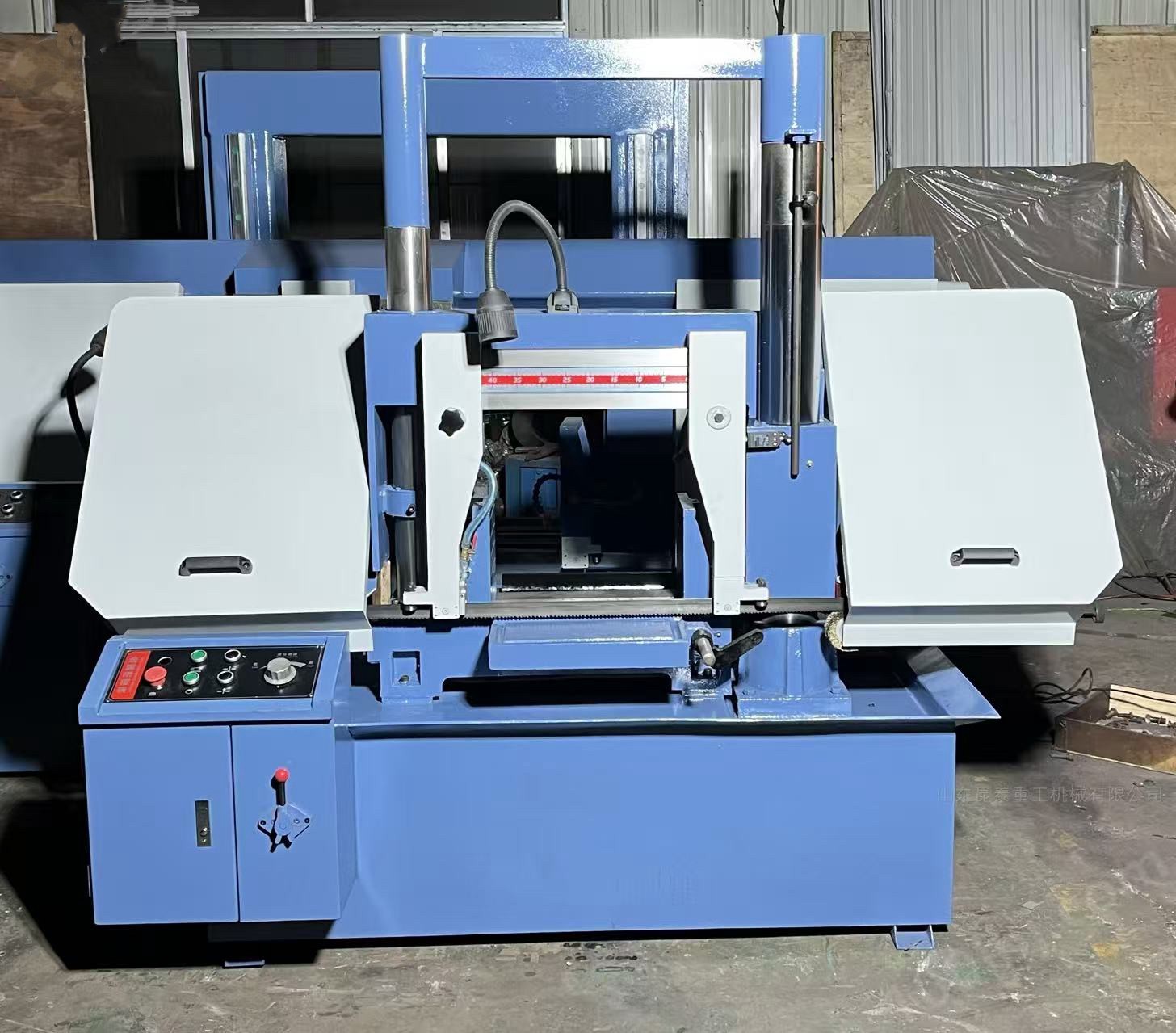
1.2.2 Band Saw Machine: It uses a ring-shaped saw belt that is tensioned between two saw wheels and driven by the wheels for cutting. It is mainly divided into vertical and horizontal types. Among the horizontal type, it can be further classified into scissors type, double-column type, and single-column type. According to the degree of automation, it can be classified as manual, automatic, and fully automatic (numerical control) types.
Bow Saw Machine: The saw bow with saw blades moves back and forth to achieve cutting. The movement trajectory of the saw blade has two types: straight line and arc. The new bow saw machines mostly adopt the more efficient arc movement mode.
1.3 Evolution of Automation: CNC sawing machines are sawing machines equipped with computer numerical control systems. They can automatically control parameters such as motion trajectories and feed speeds according to preset programs, achieving higher precision and automated production.
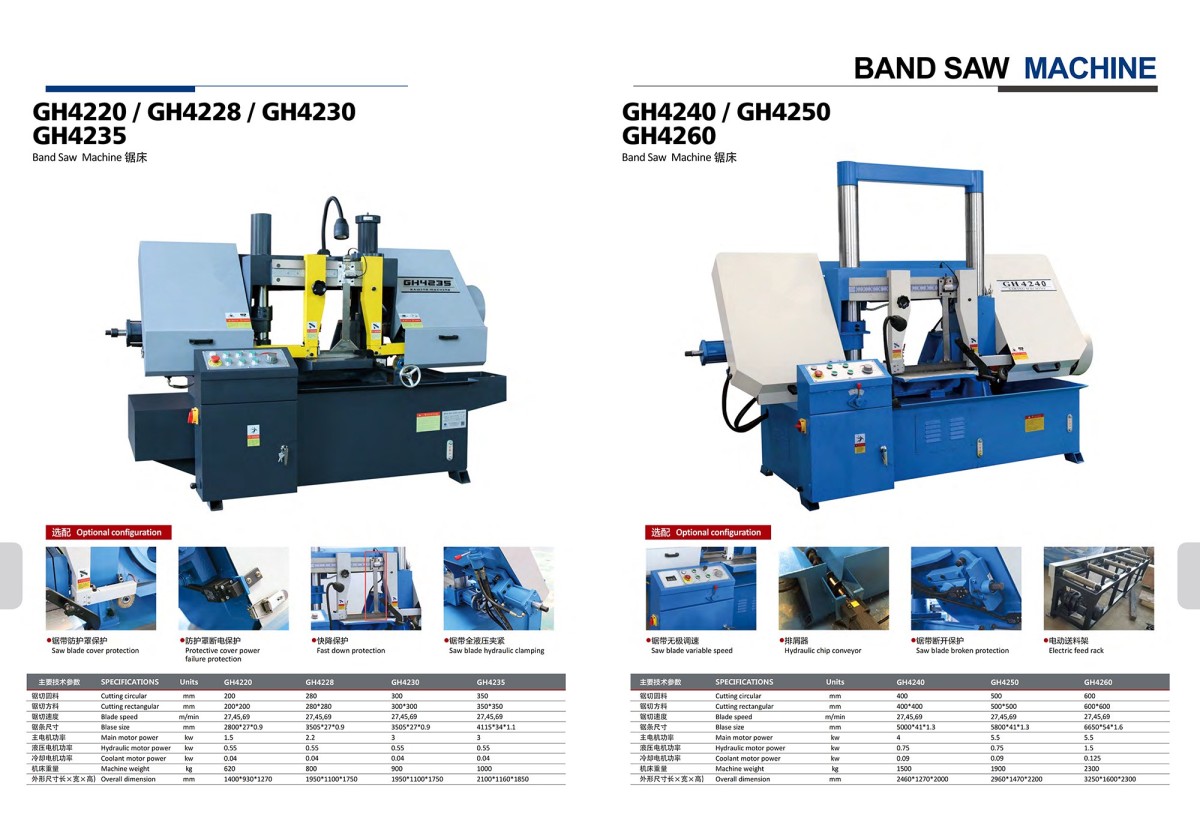
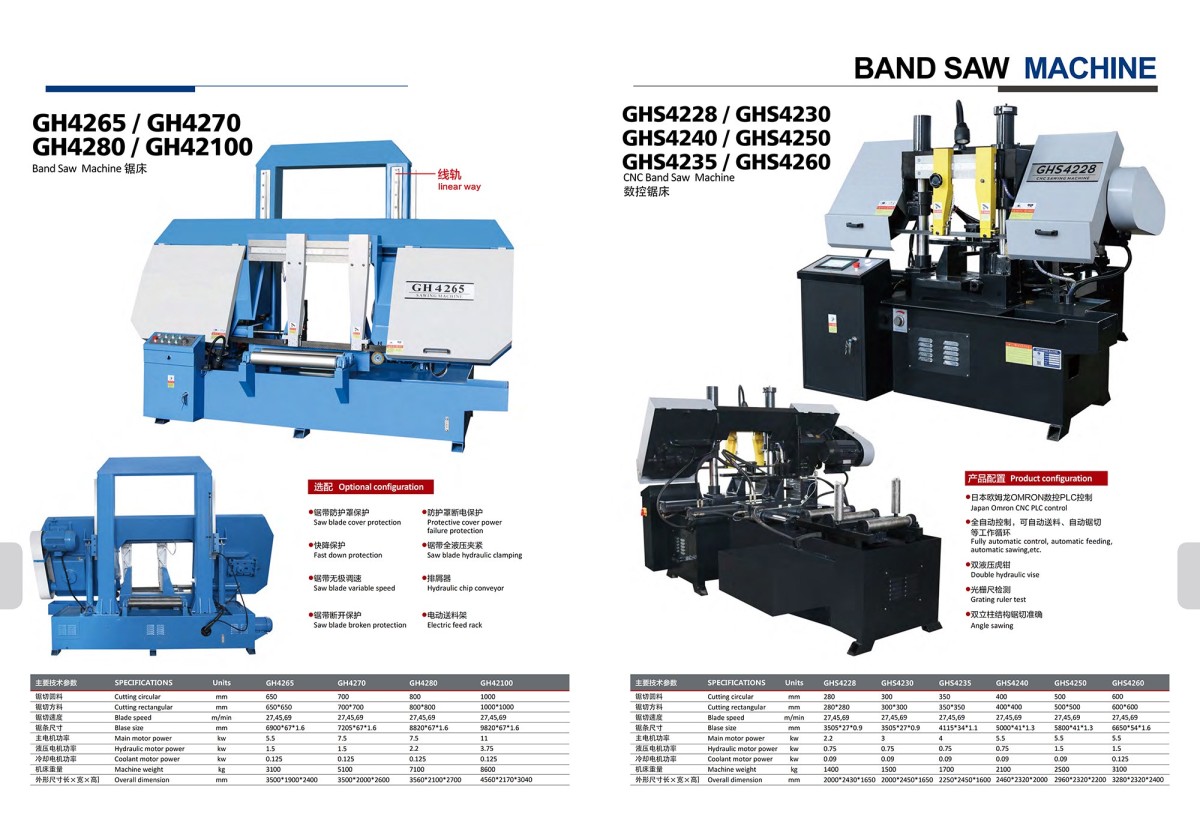
2.Technical parameter for Band Saw Machine
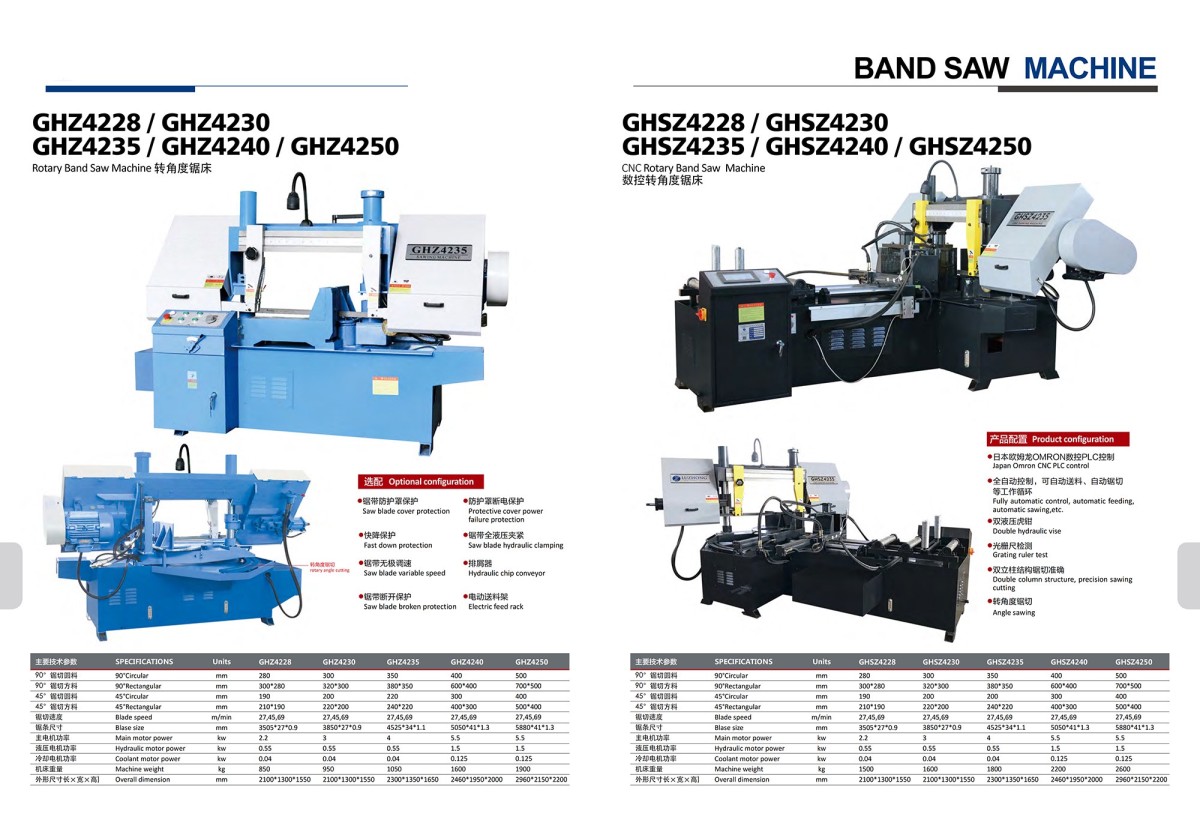
3.Characters for Band Saw Machine:
3.1 Working Principle: The working principles of different types of sawing machines vary.
3.1.1 Band Sawing Machine: The machine drives the ring-shaped saw blade to rotate continuously through the driving wheel and the driven wheel, and the rotational motion is combined with the feed motion of the machine to complete the sawing.
3.1.2 Circular Sawing Machine: The circular saw blade performs a cutting motion while also moving forward with the sawing tool box.
3.1.3 Bow Sawing Machine: The saw bow drives the saw blade to move back and forth for cutting.
3.2 Core Mechanical Structure: A typical sawing machine (such as a horizontal band saw machine) mainly consists of the following components.
3.2.1 Base and Bed Frame: The base is usually a box-shaped structure made of steel plates welded together, and the bed is a cast iron component used to fix and support other components.
3.2.2 Saw Frame and Transmission Mechanism: The saw frame is an arched box with strong rigidity, and saw wheels, tensioning mechanisms, etc. are installed inside or on the sides. The transmission system is usually driven by a motor and is driven by mechanisms such as belts and worm gears to move the saw wheels or saw blades.
3.2.3 Guidance and Clamping Devices: The guidance device ensures that the saw blade is perpendicular to the worktable, reducing vibration; the clamping mechanism (usually a hydraulic vise) is used to fix the workpiece.
3.2.4 Hydraulic and Electrical Systems: The hydraulic system realizes the lifting of the saw frame, the clamping of the workpiece, and the stepless speed adjustment; the electrical control system coordinates all actions to work in a programmed cycle.
Related products
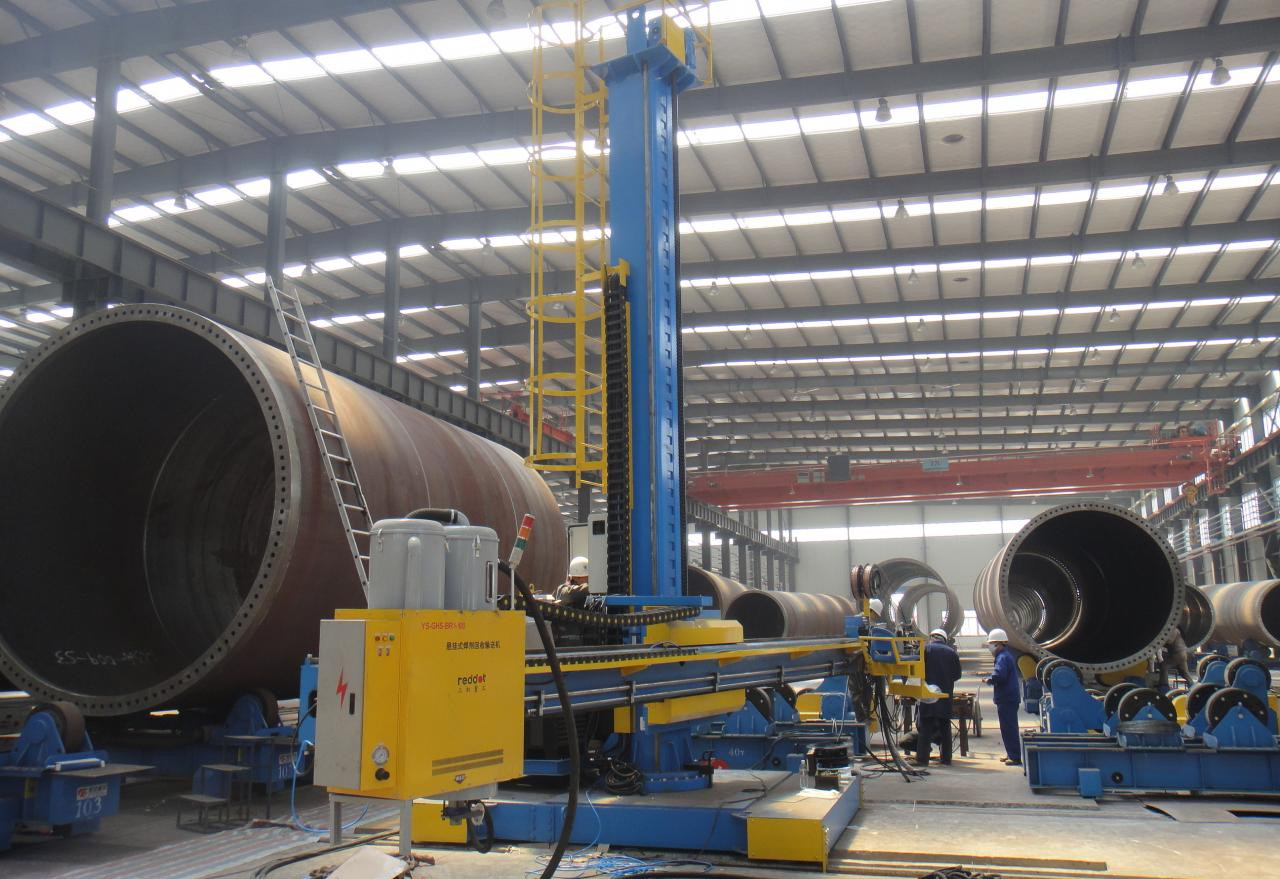
 Welding manipulator1.1. Welding manipulator With 1000-7000mm effective lifting stroke and retracting stroke.
1.2. Welding column boom machine Boom end capacity up to 300kg. With 100x100mm cross slides.
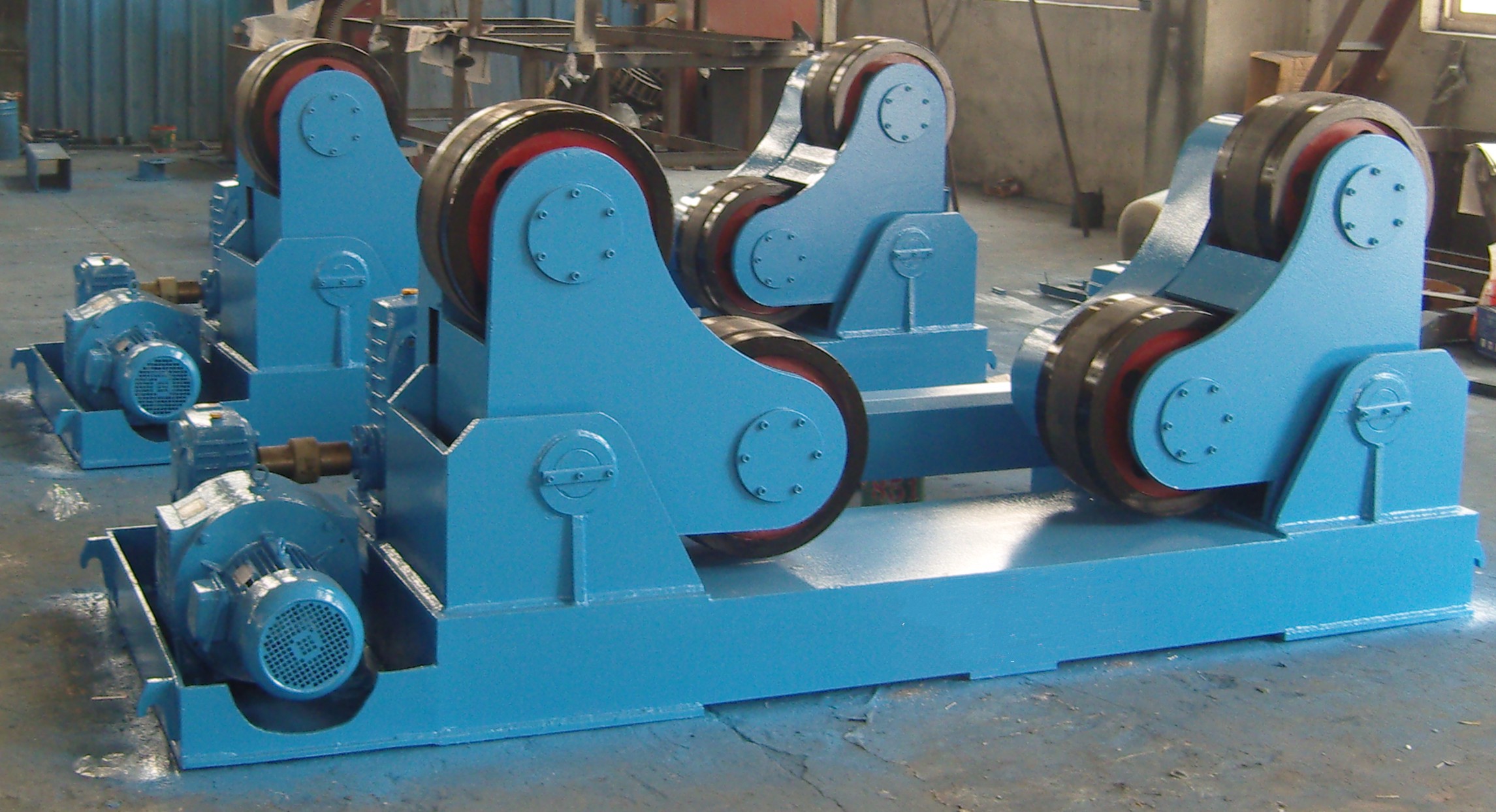
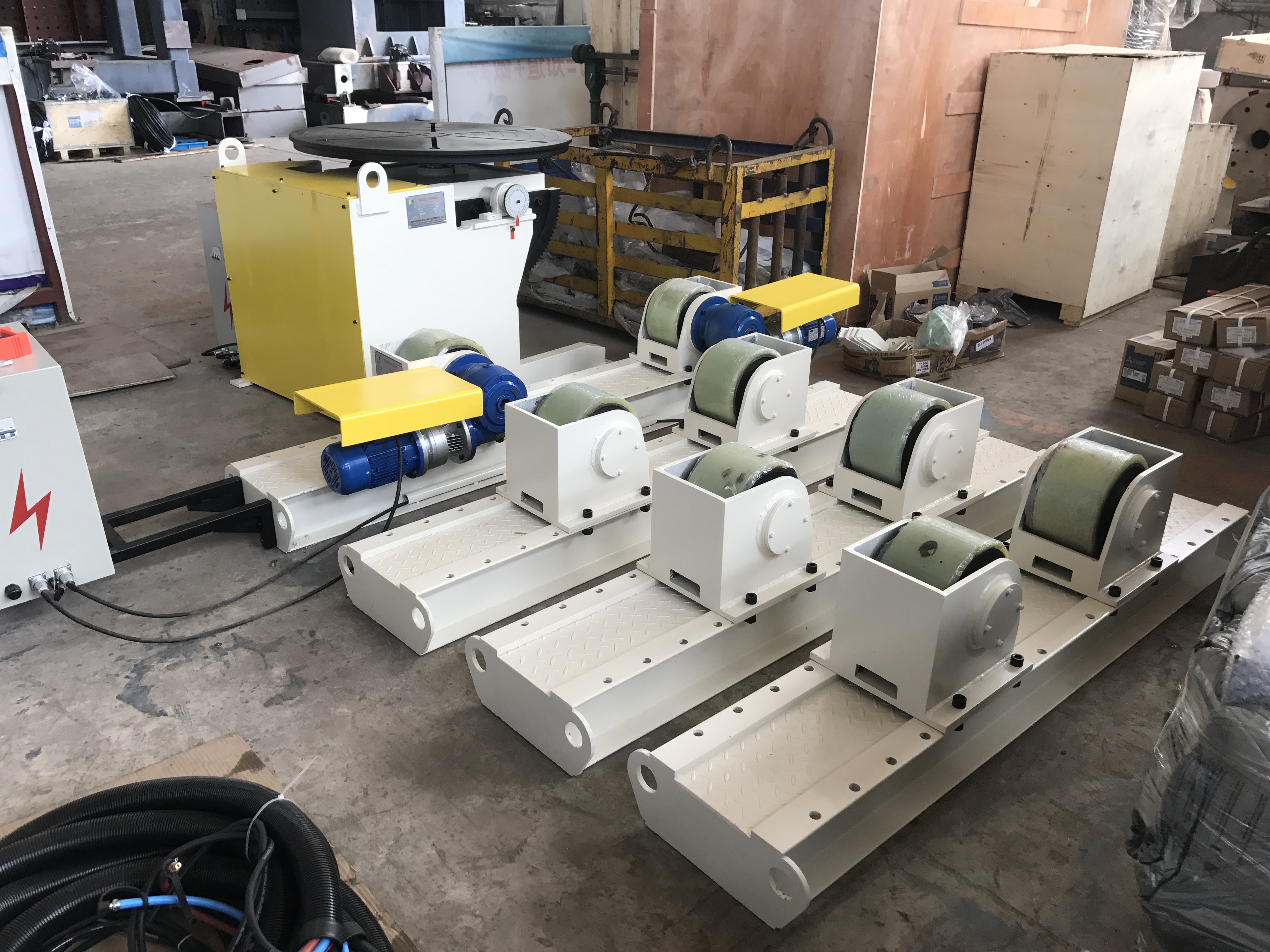
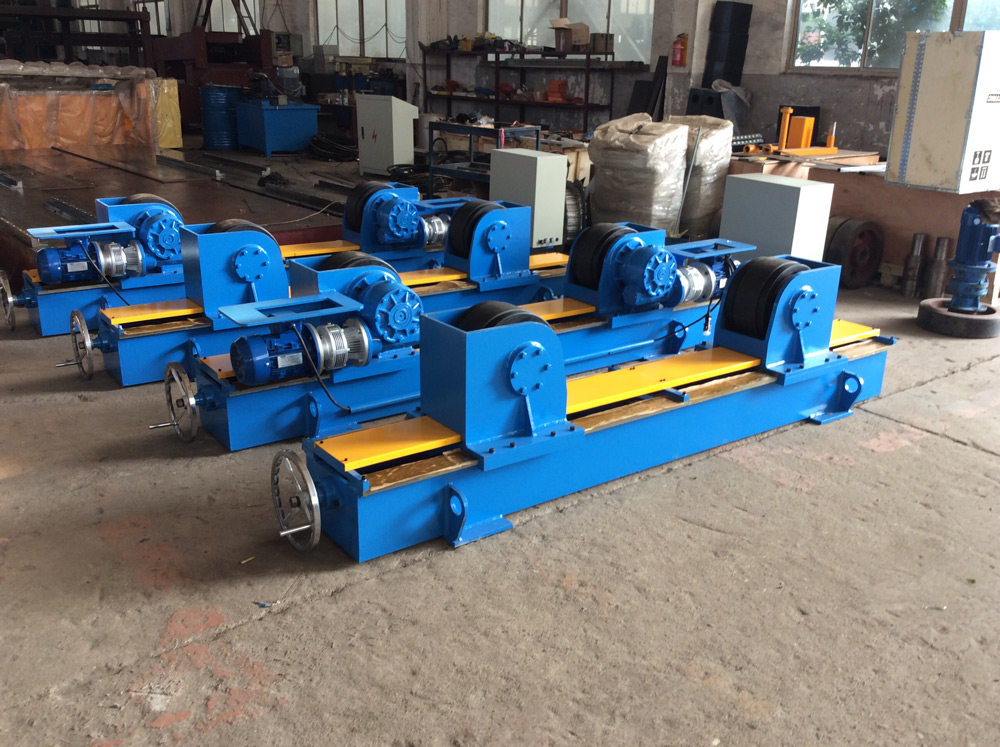
1.3. Pipe welding manipulator Automatic welding for tank/pipe/vessel straight seam and circle seam. Self aligning welding rotatorWelding rotator is consist of rotator with motor ,rotator without motor and control system.Welding rotator is mainly used for making cylinder work piece rotating.Automatic welding rotator Then its better for welding of work piece.Welding turning roll also used for big diameter pipe butt welding and pressure vessel.Welding rotator improves the productivity and quality of welding,also Pipe welding rotator reduce labor of worker.Pipe rotator has become necessary equipment in welding cylinder work piece
 Bolt adjusting welding rotatorWelding rotator is consist of rotator with motor ,rotator without motor and control system.Welding rotator is mainly used for making cylinder work piece rotating.Automatic welding rotator Then its better for welding of work piece.Welding turning roll also used for big diameter pipe butt welding and pressure vessel.Welding rotator improves the productivity and quality of welding,also Pipe welding rotator reduce labor of worker.Pipe rotator has become necessary equipment in welding cylinder work piece
 Lead screw welding rotatorWelding rotator is consist of rotator with motor ,rotator without motor and control system.Welding rotator is mainly used for making cylinder work piece rotating.Automatic welding rotator Then its better for welding of work piece.Welding turning roll also used for big diameter pipe butt welding and pressure vessel.Welding rotator improves the productivity and quality of welding,also Pipe welding rotator reduce labor of worker.Pipe rotator has become necessary equipment in welding cylinder work piece
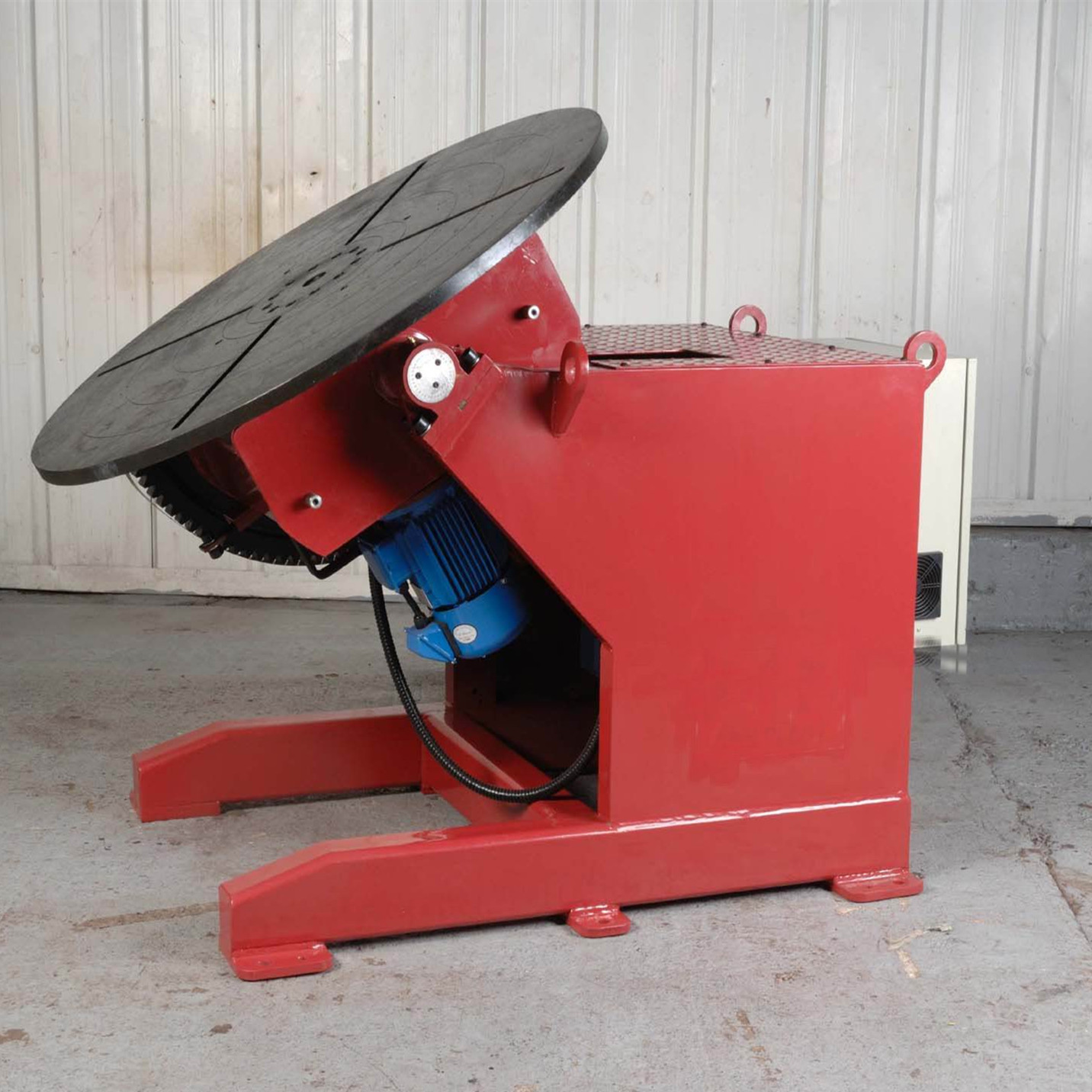
 Welding positioner1.1.Welding rotary table Capacity from100kg,300kg,600kg,1000kg,2000kg,3000kg,5000kg,8000kg,10000kg,20000kg are all available.
1.2.Welding Positioner can tilting from 0 to 90° ~120°, rotating 360° by VFD control.
1.3.Automatic welding positioner Voltage standard is 380V , 50HZ , 3PH. Other voltage can be customized Space frame welding machineBody of space frame welding machine is assembled by steel metal,structure parts are anneal processed,quite stable and durable;Automatic space frame truss welding machine realizes welding gun swing welding,welding gun is adjusted by manual;Main and vice withstanding device is by hydraulic,Space frame welding machine will loose after welding finishes,lifting of work piece adopts lead screw by manual.Automatic space frame welding machine Length of body is 7.2 meters,and width is 900mm,max welding gap could be 3-5cm,length of work piece should be under 5.5 meters,and diameter of work piece is 42mm-180mm
 12 meter Pipe inside and outside seam welding machine12 meter pipe welding machine is customized according to client’s request,long beam is clamped on the frame,inside seam welding is welded through moving of welding rotator on the trolley.12 meter pipe longitudinal seam welding machine Moving of trolley is controlled by VFD,stable and reliable,and speed is adjustable,12 meter pipe inside longitudinal seam welding machine meet with different welding technology.Since diameter of pipe is small,worker can not get inside for checking and adjusting,12 meter pipe outside longitudinal seam welding machinewe adopted advanced monitoring system to check welding quality and condition.Worker can check and operate all conditions from Computer screen,and work with motorized accurate adjusting,12 meter pipe welding machine finishes automatic inside longitudinal seam welding for small diameter pipe.It improve the working efficiency and welding quality.Its suitable for manufacturing small diameter pipe in batch
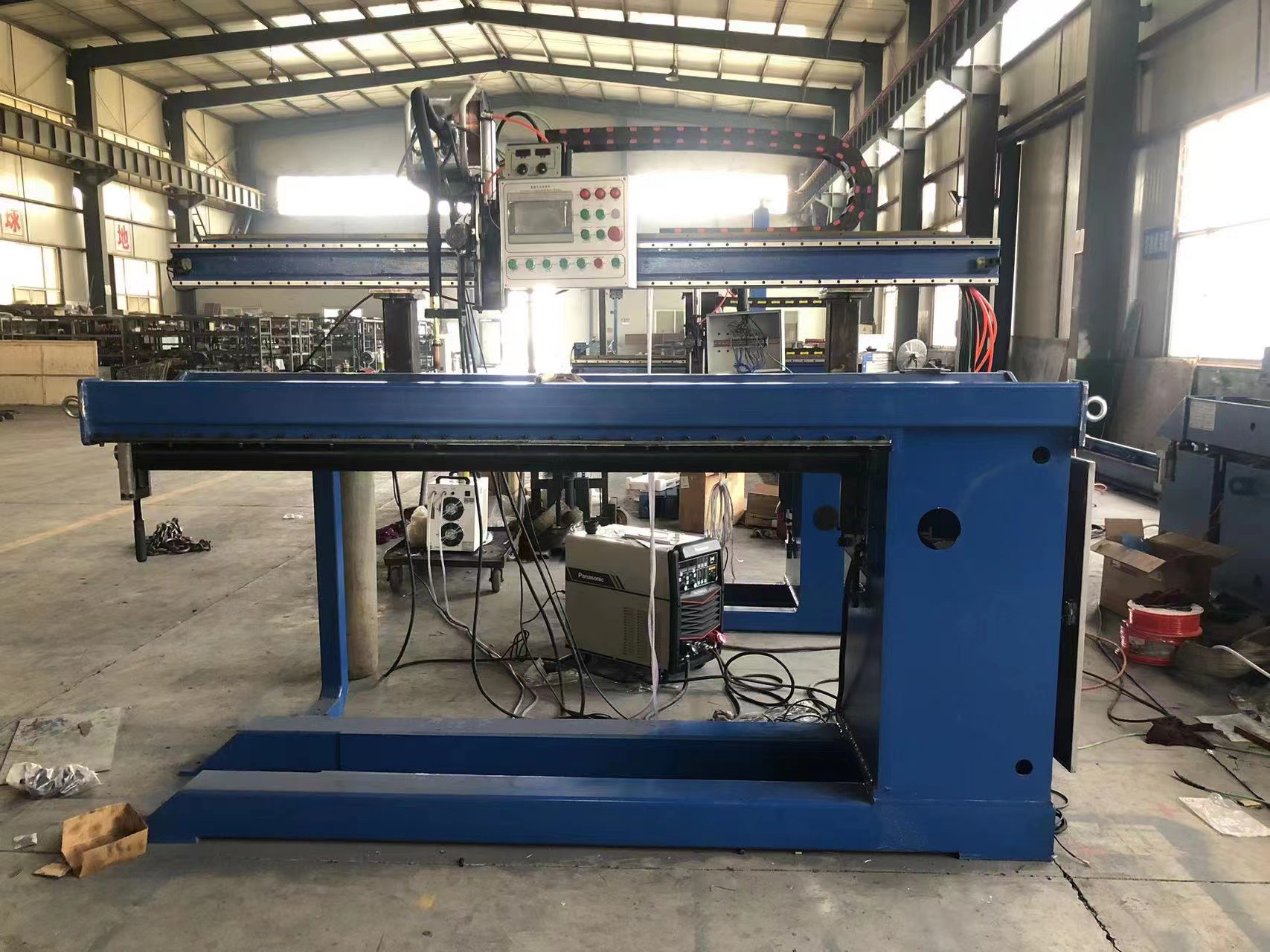
 Longitudinal seam welding machine1.1 Key-type pneumatic pressing device is applied to calmp the work piece. This device provides force evenly to work piece and prevents
deformation.
1.2 It is widely applied in high quality welding and low-deformation straight seam. Use in such fi eld: petrochemical industry, solar water
heater manufactor, pipeline and automobile industry.
1.3 Controlled by PLC, driven by DC motor, and stepless speed regulation, with control system to realize automatic welding,and equipped
with straight oscillator for optional choice. H beam assembly machine1.Introduction for H beam assembly machine:
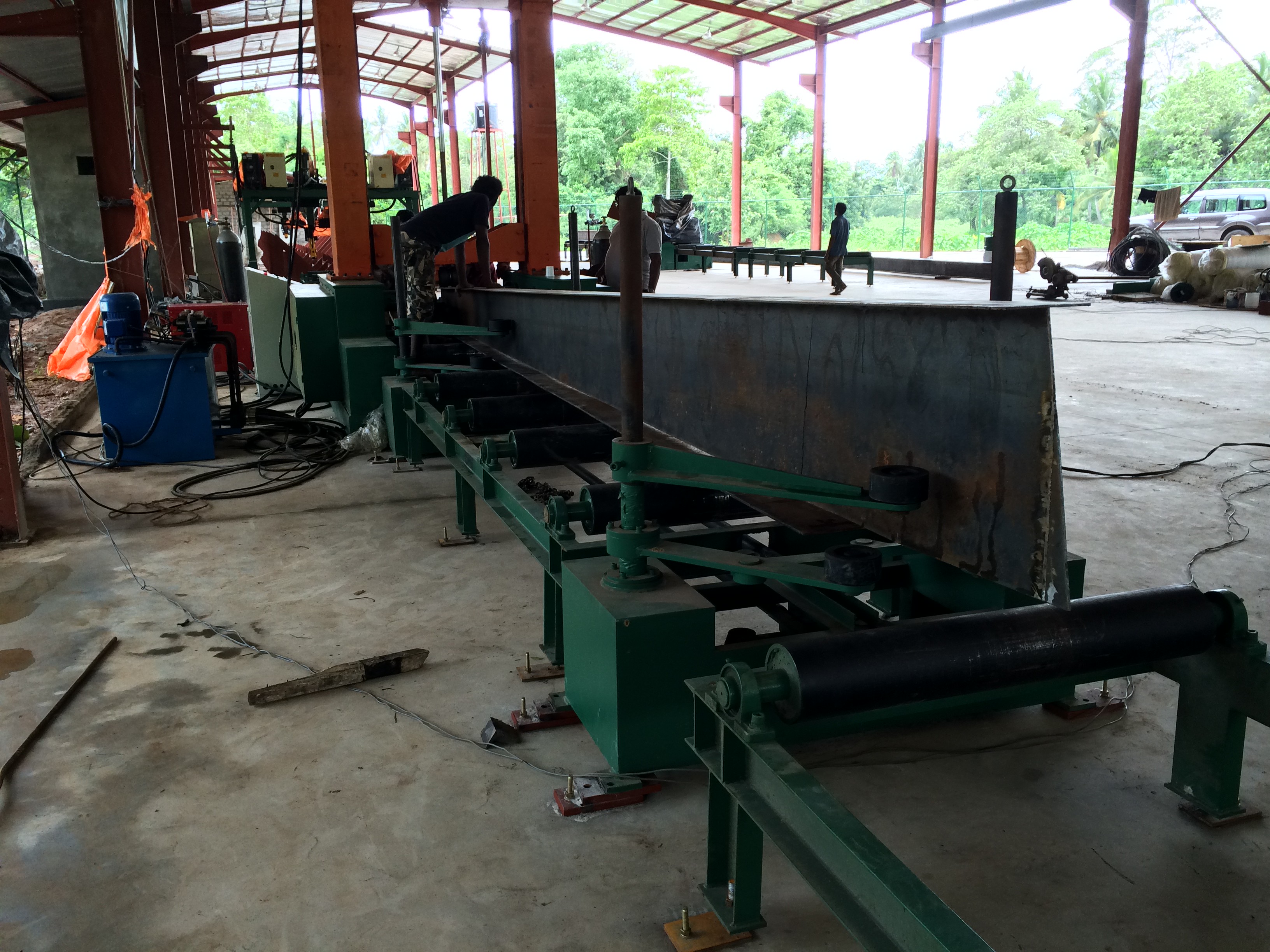
1.1.The automatic centering of flange and web adopts hydraulic motor and gear, with high centering precision and good reactivity. All of the operation are centralized on the electric control button panel, with easy and convenient operation and precise positioning.H beam assembly machine
1.2.The main transmission part adopts cycloid pinwheel and Taiwan TAIAN brand inverter, the assembly speed can be adjusted between 0.5—6 M/min.H beam making machine Standard gantry h beam welding machine1.Introduction for H beam welding machine:
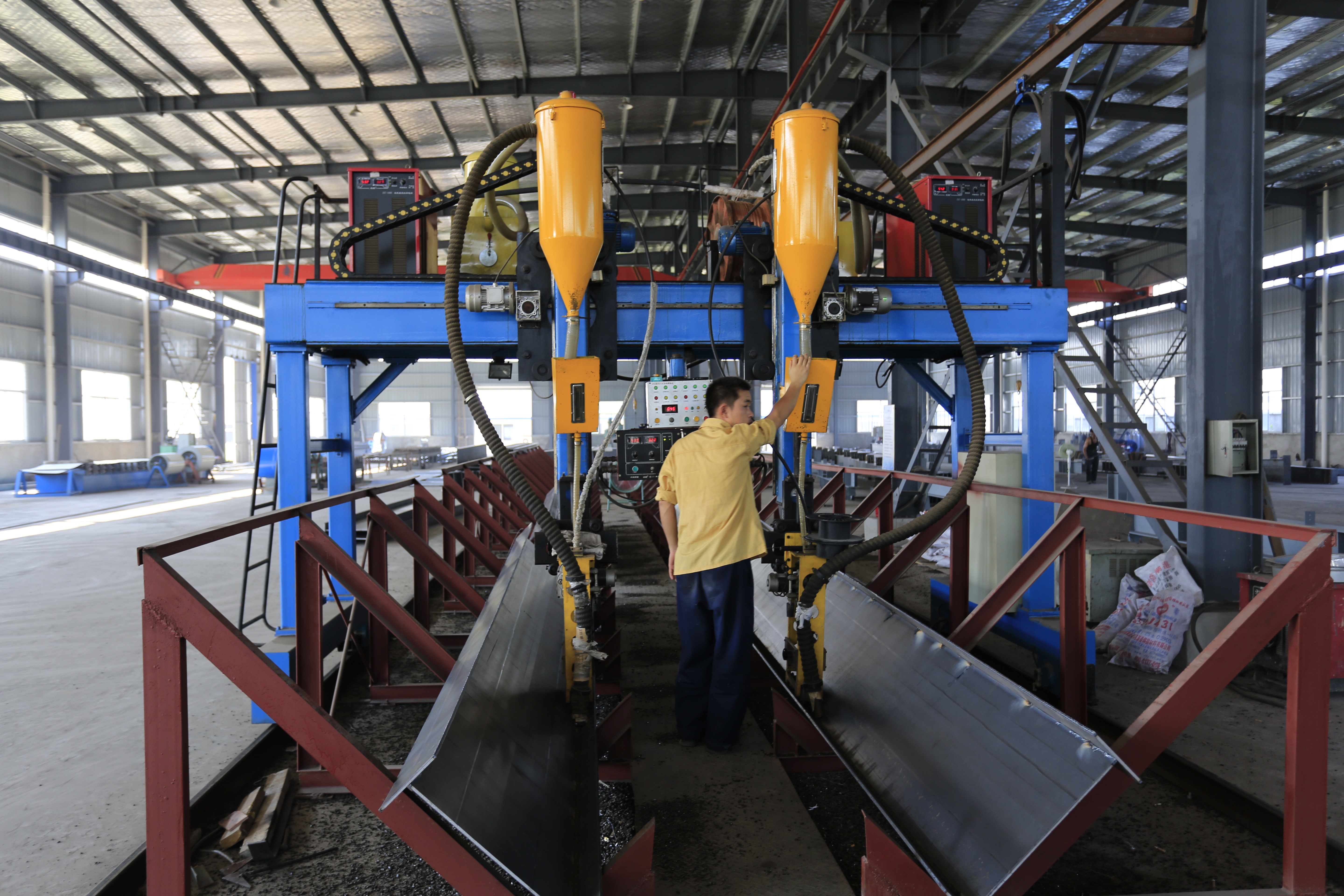
1.1.The H beam gantry gate welding machine has two structures: Gantry gate move type & double cantilever move type.H beam welding machine
1.2. Gantry gate or cantilever drive method: AC motor and R series worm reducer.Automatic H beam welding machine
1.3. Welding speed: 0.15~1.5m/min.H beam saw welding machine T type gantry h beam welding machine1.Introduction for H beam welding machine:
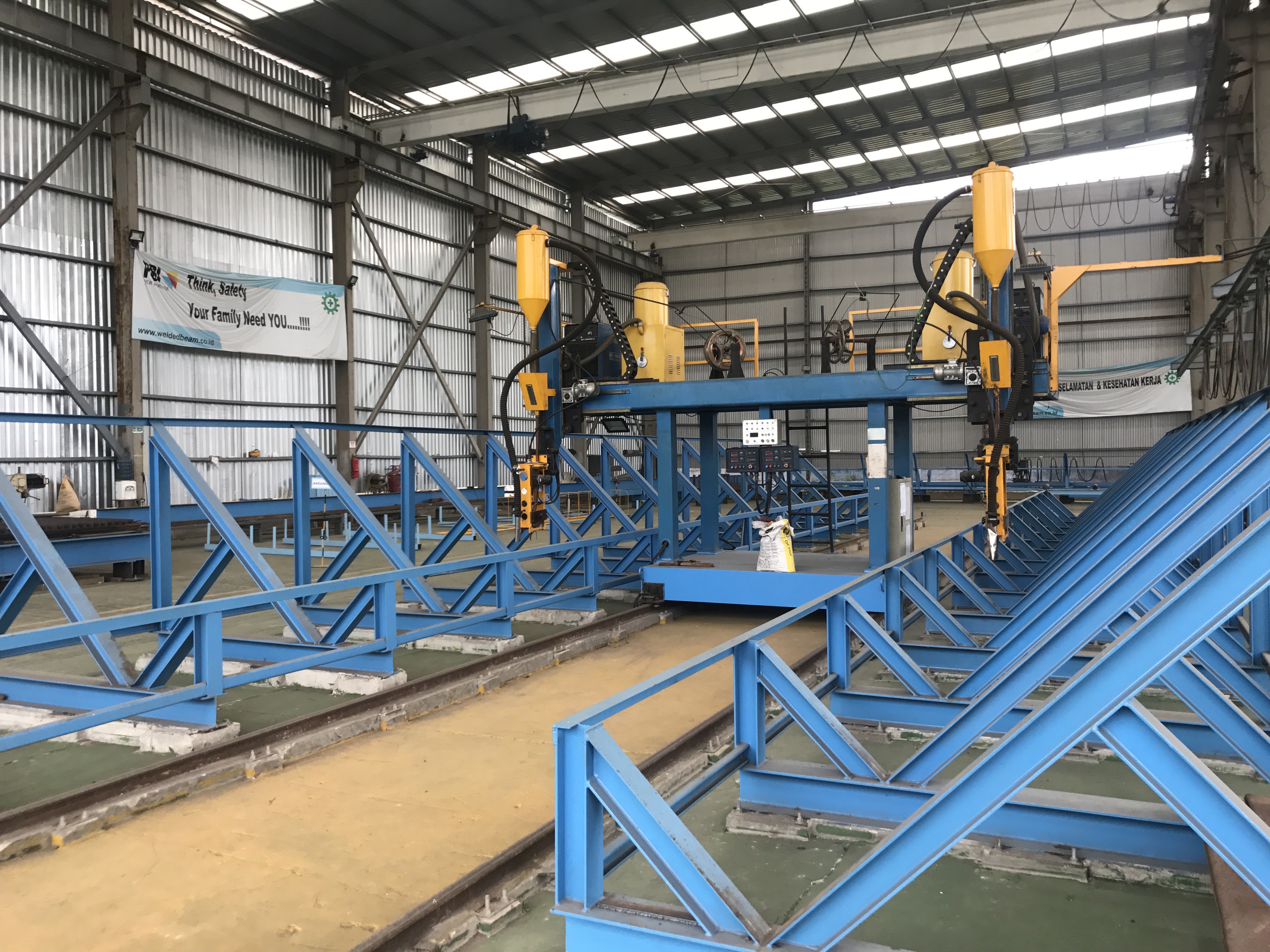
1.1.The H beam gantry gate welding machine has two structures: Gantry gate move type & double cantilever move type.H beam welding machine
1.2. Gantry gate or cantilever drive method: AC motor and R series worm reducer.Automatic H beam welding machine
1.3. Welding speed: 0.15~1.5m/min.H beam saw welding machine HYJ-800 H beam straightening machine1.Introduction for H beam straightening machine:
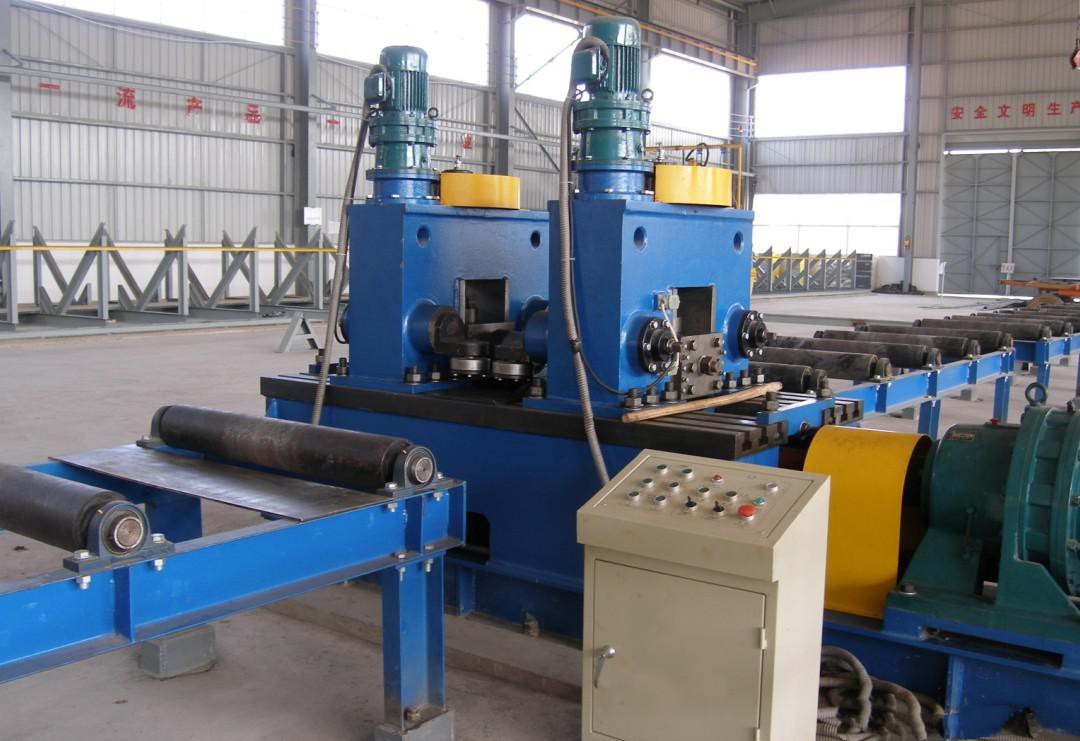
1.1.The mainframe is integral frame structure with stress relief, it is processed and shaped in one step by CNC floor type boring and milling machine,with the advantages of compact structure, strong strength and enough rigidity.H beam straightening machine
1.2.The material of upper roller is 35CrMo, the abrasion resistance has been improved after the process of heat treatment and grinding.Automatic H beam straightening machine
1.3.The material of main transmission roller is 40Cr with integral forging process, as well as high frequency quenching process and grinding on the surface, the precision and abrasion resistance has been improved a lot.H beam flange straightening machine