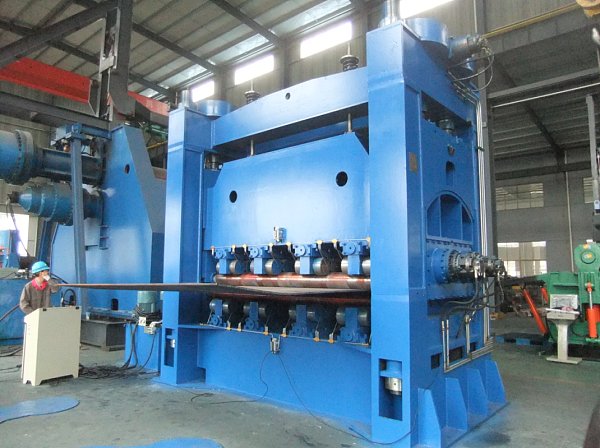
The working principle of the flattening machine is mainly based on the theory of elastic deformation. When the metal material passes through the flattening roller group, the upper and lower rollers apply pressure to the material, causing it to undergo local plastic deformation. By precisely controlling the roller gap, the number of rollers, and their arrangement (such as quadripartite, hexa-partite, multi-roller, etc.), the residual stress within the material can be gradually eliminated, ultimately achieving flatness. According to the flattening method, flattening machines can be classified as mechanical, hydraulic, and electric-hydraulic types: