— —
Welding Robot: The Complete 2026 Industry Guide for Manufacturing & Metal Fabrication
What Is A Welding Robot?
A welding robot is an industrial robotic system specifically engineered to perform arc welding tasks—including MIG, TIG, submerged arc, and flux-cored processes—with high positional accuracy, consistent heat input, and programmable path control. Unlike general-purpose robots, welding robots integrate torch manipulation, seam tracking sensors, power source synchronization, and real-time adaptive feedback loops to maintain weld quality under variable joint geometry and thermal distortion.
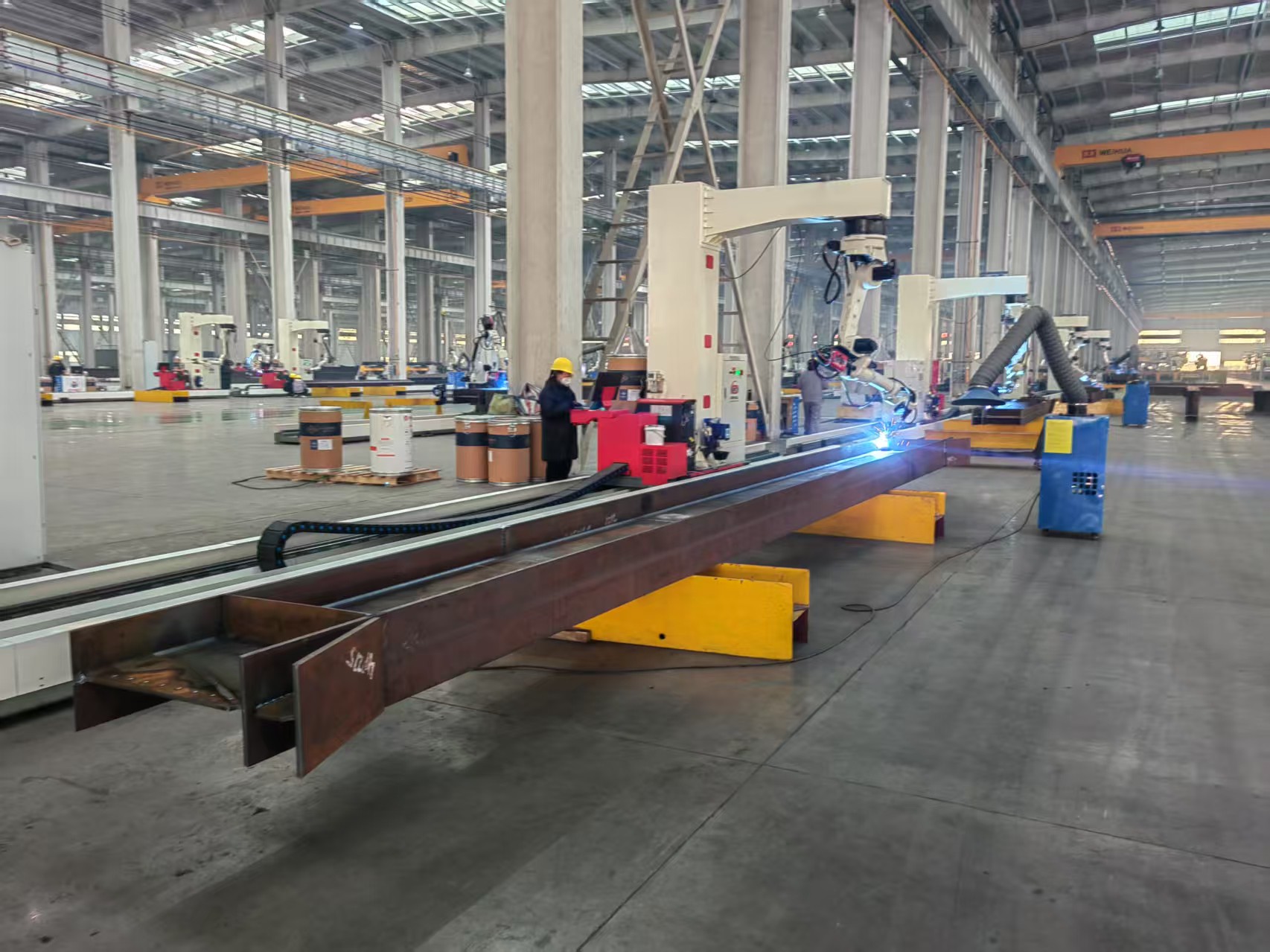
Core configurations include 9-axis gantry-type welding robots for large-scale structural assemblies, 9-axis cantilever-type systems ideal for H-beam and space frame production, and 7-axis cantilever variants optimized for confined workspaces and multi-angle access. Each configuration balances reach, payload capacity (typically 6–20 kg), repeatability (±0.08 mm), and dynamic response—critical metrics defined in ISO 9283 and IEC 61000-6-4 standards.
Wuxi Armada supplies certified welding robots fully integrated with compatible positioners, rotators, and manipulators—enabling end-to-end automated welding cells without third-party compatibility risks. These systems comply with CE, ISO9001, and SGS certification frameworks, ensuring conformity with EU Machinery Directive 2006/42/EC and functional safety requirements per EN ISO 13849-1.
Why Choose Automated Welding Over Manual Or Semi-Automated Methods?
Manual welding introduces variability due to operator fatigue, inconsistent travel speed, and subjective arc length control—leading to porosity, lack of fusion, and costly rework. Semi-automated processes improve consistency but still rely on human judgment for torch positioning and parameter adjustment. In contrast, a welding robot delivers sub-millimeter repeatability, real-time seam tracking via laser vision or arc sensing, and synchronized motion between robot arm and workpiece positioning equipment.
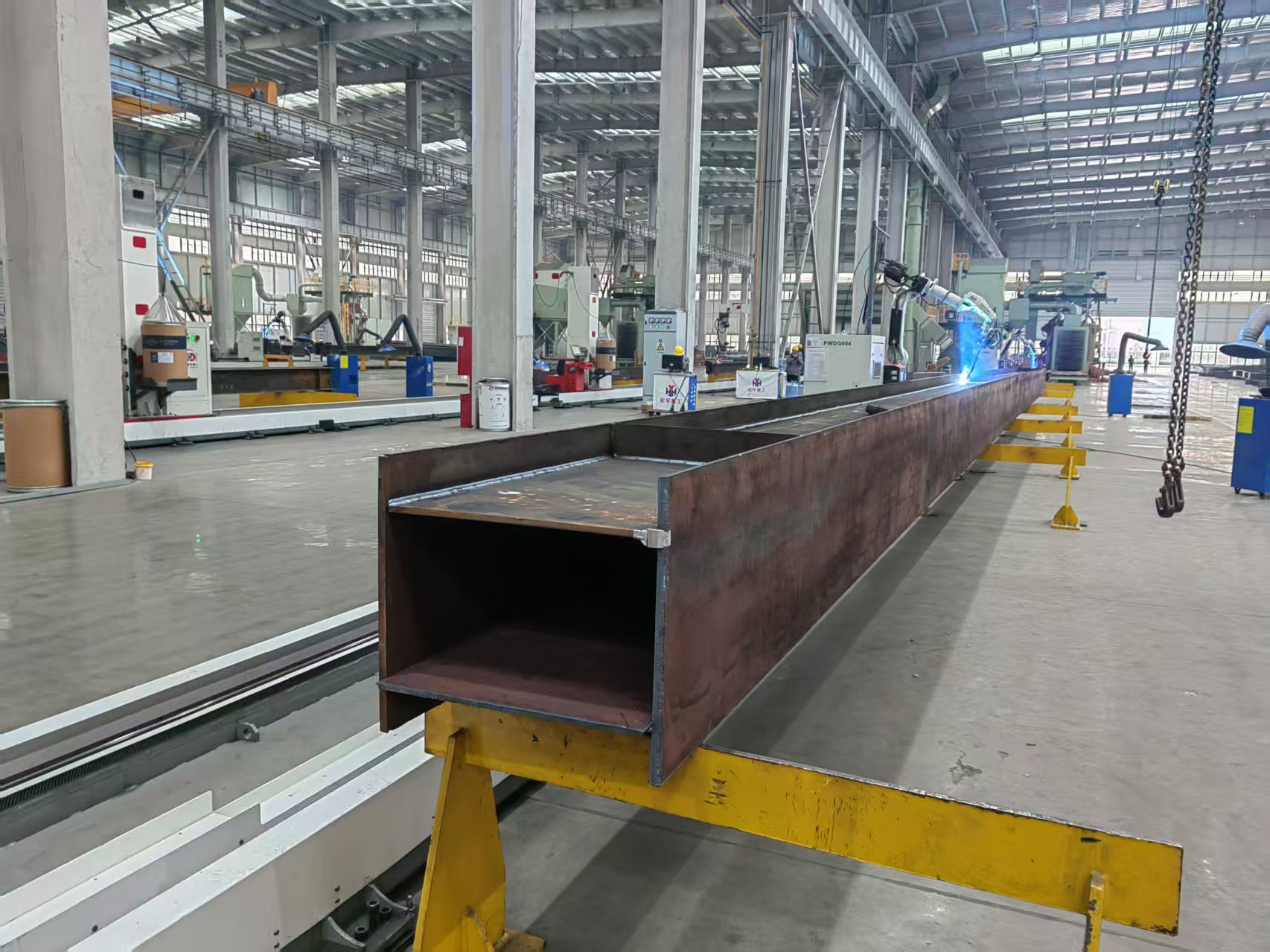
For fabricators handling H-beams, longitudinal seam pipes, or space frames, Wuxi Armada’s welding robot solutions eliminate bottlenecks caused by manual welder shortages while enabling 24/7 operation at stable output rates. Case data from Zein Steel Industries Co.LLC shows 37% reduction in cycle time per H-beam assembly after integrating Wuxi Armada’s horizontal H-beam welding line with integrated welding robot and 3-in-1 welding station.
Beyond productivity, welding robots significantly reduce occupational hazards—including UV exposure, fume inhalation, and ergonomic strain—supporting EHS compliance across North America, GCC, and ASEAN markets where Lincoln Electric-MENA and PT.Cahaya Mas Cemerlang operate.
Who Uses Welding Robots And Where Are They Deployed?
Primary users span heavy fabrication shops producing structural steel components, shipyards building hull sections and piping systems, energy infrastructure contractors installing pipeline networks, and manufacturers of pressure vessels, storage tanks, and mining equipment. These users typically process carbon steel, stainless alloys, and aluminum profiles ranging from 3 mm to 100+ mm thickness.
Geographically, demand is strongest in regions with mature metalworking ecosystems: Southeast Asia (driven by infrastructure projects), the Middle East (oil & gas facility expansion), Latin America (mining equipment fabrication), and Eastern Europe (railcar and wind tower manufacturing). Clients like URALSTANKOIMPORT and Estructuras Metalicas Girders Chile Limitada deploy Wuxi Armada welding robots within fully automated lines that include CNC plasma cutting, edge milling, and H-beam assembly machines—ensuring dimensional continuity from raw plate to finished weldment.
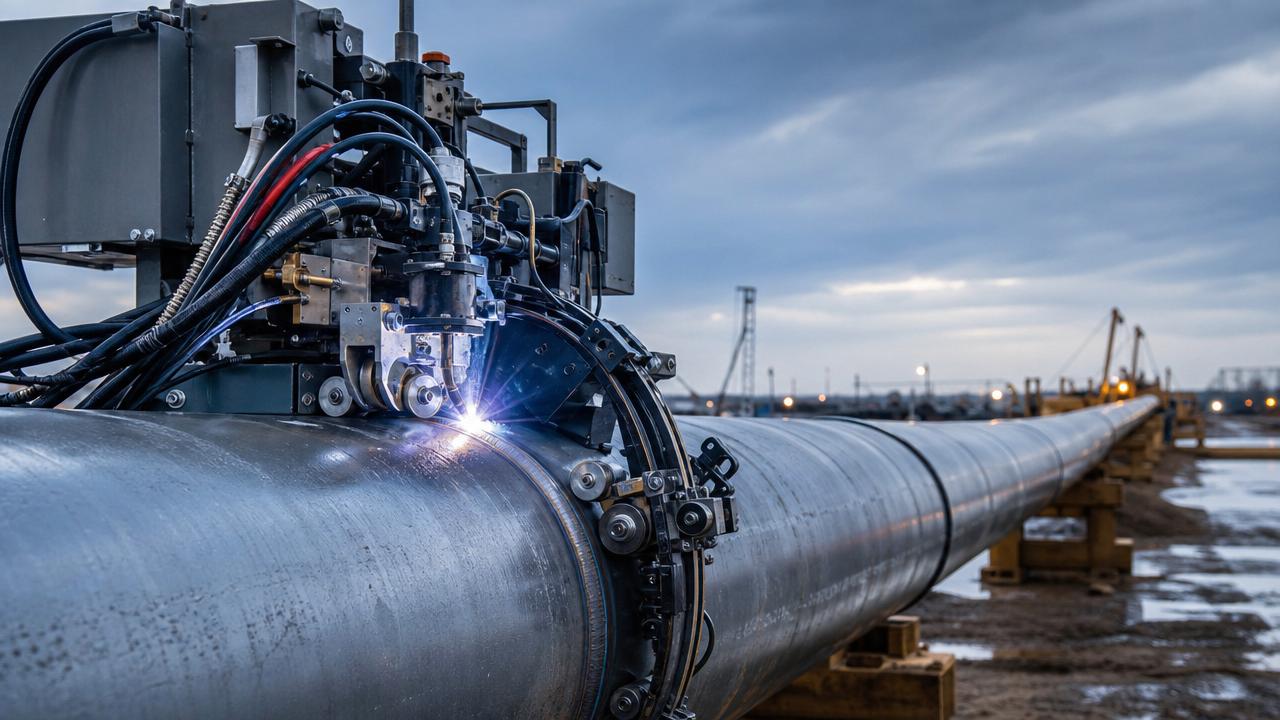
Critical applications include longitudinal seam welding on 12m pipes, orbital welding on thick-walled pressure joints, and complex spatial welds on space frames used in stadium roofs and solar tracker foundations—where Wuxi Armada’s space frame welding machine and welding robot integration ensures ±0.5° angular tolerance and full penetration across irregular geometries.
How Are Welding Robots Built And Integrated?
Wuxi Armada manufactures welding robots using modular kinematic architectures validated through FEA-based structural analysis and 72-hour continuous load testing. Key subsystems include servo-driven harmonic reducers, IP65-rated motor enclosures, dual-channel safety controllers compliant with EN ISO 13849-1 PL e, and calibrated tool-center-point (TCP) referencing protocols traceable to national metrology institutes.
Integration follows a three-phase methodology: (1) Process mapping—defining joint type, material grade, filler wire spec, and shielding gas composition; (2) Cell layout engineering—coordinating robot reach envelope with positioner rotation range and part loading strategy; (3) Validation—executing ASTM E1107 tensile tests and ISO 5817 visual inspection on qualification coupons before commissioning. Every unit ships with FAT documentation including torque verification logs, encoder calibration reports, and CE Declaration of Conformity.
Installation requires minimal civil works: standard 380V/50Hz power supply, compressed air at 0.6 MPa, and Ethernet-based fieldbus connectivity (Profinet or EtherCAT). Wuxi Armada provides remote commissioning support, PLC logic handover packages, and operator training modules aligned with ISO 15066 collaborative robotics guidelines—even when deployed alongside traditional machinery like press brakes or plate rolling machines.
When Should You Upgrade To A Welding Robot?
The optimal upgrade window occurs when annual weld volume exceeds 15,000 linear meters, scrap/weld repair costs exceed 8% of labor spend, or delivery lead times are constrained by manual welder availability. Fabricators operating multiple shifts on repetitive weldments—such as H-beam flange-web joints or pipe girth welds—see fastest ROI: typical payback periods range from 14 to 22 months based on labor savings, reduced consumables waste, and higher first-pass yield.
Technology refresh cycles align with industry advancements: every 3–4 years brings meaningful improvements in offline programming software (e.g., enhanced collision detection), sensor fusion algorithms (combining arc voltage + laser triangulation), and AI-assisted defect prediction. Wuxi Armada supports backward-compatible upgrades—allowing existing robot controllers to integrate new seam tracking modules or updated HMI interfaces without full hardware replacement.
Clients such as BatysMunaiGazZhabdyktary LLP and Regional Engineering Works report sustained uptime above 92% over five-year operational windows—attributed to predictive maintenance alerts triggered by motor current harmonics analysis and scheduled lubrication intervals verified against ISO 15243 bearing life models.
How Much Does A Welding Robot Cost To Own And Operate?
Total cost of ownership (TCO) spans acquisition, integration, training, maintenance, and consumables over a 10-year lifecycle. Initial investment ranges from USD 85,000 (7-axis cantilever) to USD 220,000 (9-axis gantry with full cell integration). Integration adds 15–25% depending on site-specific civil modifications and electrical upgrades.
Operational savings accrue across four vectors: (1) Labor—replacing 3–4 skilled welders per cell at $55k–$75k/year each; (2) Consumables—12–18% reduction in wire/gas usage via optimized deposition parameters; (3) Rework—cutting post-weld NDT rejection rates by 60–75%; (4) Throughput—increasing daily output by 2.3x compared to manual stations. S.P. Blue Fisheries LDA achieved 28-month ROI by deploying Wuxi Armada’s welding robot alongside CNC fiber laser cutting and sheet metal deburring machines in its marine vessel component line.
Long-term value extends beyond cost: certified welding procedures (WPS/PQR) become digitally archived and auditable; weld traceability meets ASME BPVC Section IX and EN 15085-2 requirements; and workforce upskilling enables transition from manual welders to robot programming technicians—strengthening organizational capability resilience.
What Trends Will Shape The Welding Robot Market In 2026?
Three converging trends define the 2026 outlook: First, hybrid automation—welding robots increasingly coexist with collaborative robots (cobots) for part loading/unloading and post-weld grinding, reducing cell footprint and safety fencing costs. Second, digital twin adoption—offline programming platforms now simulate thermal distortion, joint fit-up variance, and robot kinematics to pre-validate weld sequences before physical commissioning.
Third, regionalization of supply chains drives demand for localized service networks and multilingual HMI interfaces—especially in emerging markets where Ersay International Transport and Contevix Comercio e Servicos Ltda operate. Wuxi Armada responds with modular robot designs supporting plug-and-play integration into legacy production lines and localized technical support hubs across Dubai, São Paulo, and Ho Chi Minh City.
Finally, sustainability pressures accelerate adoption: welding robots reduce energy consumption per meter by 22% versus manual processes (per EU Commission JRC 2025 benchmarking), lower fume emissions via precise shielding gas control, and extend electrode life through optimized arc stability—supporting corporate net-zero commitments without compromising structural integrity or code compliance.
 What hidden integration costs arise when adding a welding robot to legacy fabrication lines?How much does a welding robot cost? Discover hidden integration costs, ROI timelines, thin-sheet compatibility, CE/ISO compliance & space-saving solutions for export-ready metal shops.
 Is a welding robot suitable for a factory with limited floor space — footprint and layout requirementsHow fast can a welding robot finish a standard export batch job? Discover compact robotic welding solutions optimized for tight factory spaces—maximize output without expanding your footprint.
 How much does a welding robot cost for a mid-size metal shop in 2026?How to choose a welding robot for thin sheet metal export work? Discover 2026 pricing, ROI benchmarks, and 5 non-negotiable fit criteria for mid-size shops.
 How to choose a welding robot for thin sheet metal export work — key specs finance leaders should verifyHow much does a welding robot cost for a mid-size metal shop? Discover the 6 verifiable specs finance leaders must check before buying — precision, compliance & ROI guaranteed.
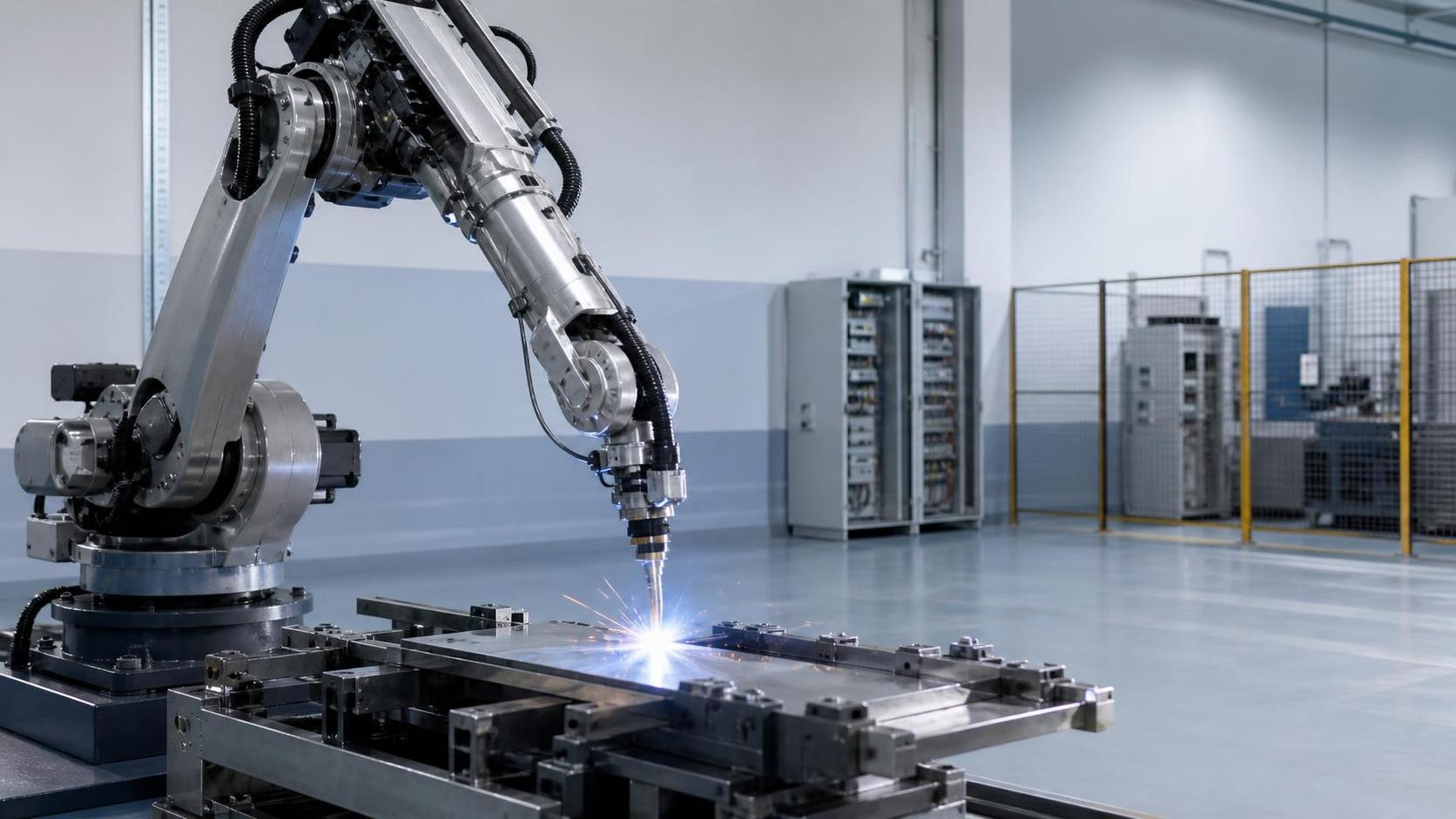
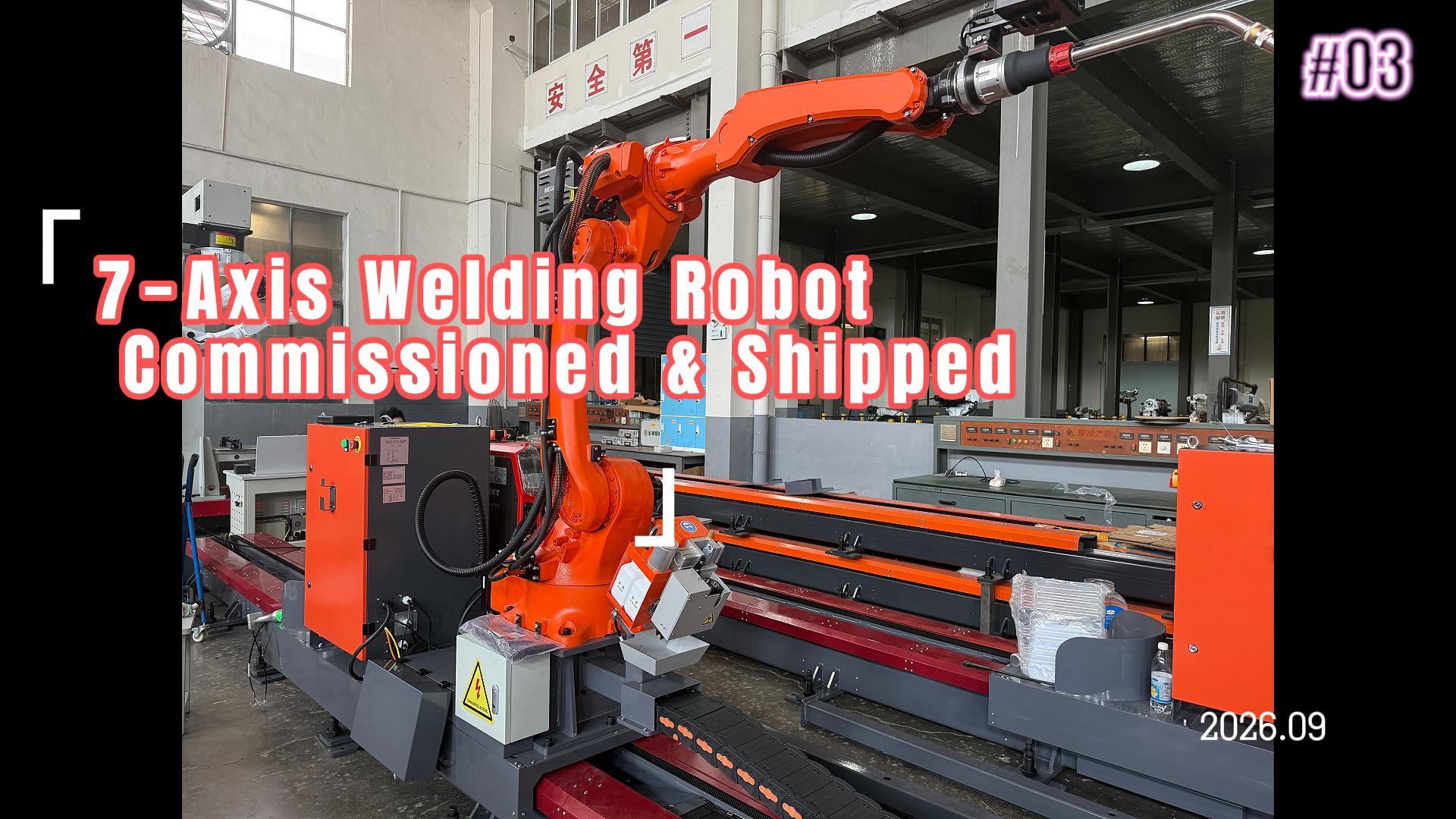
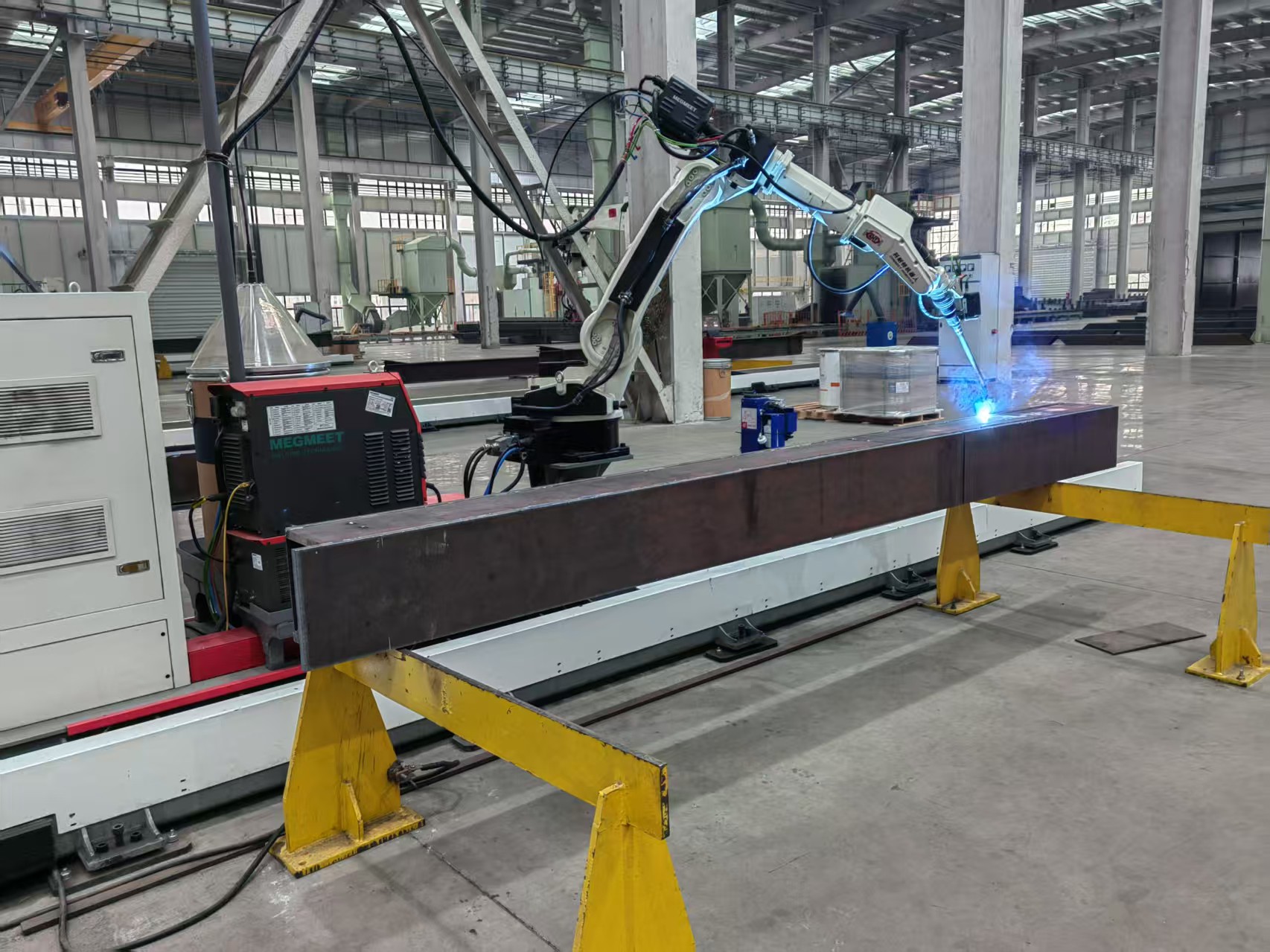
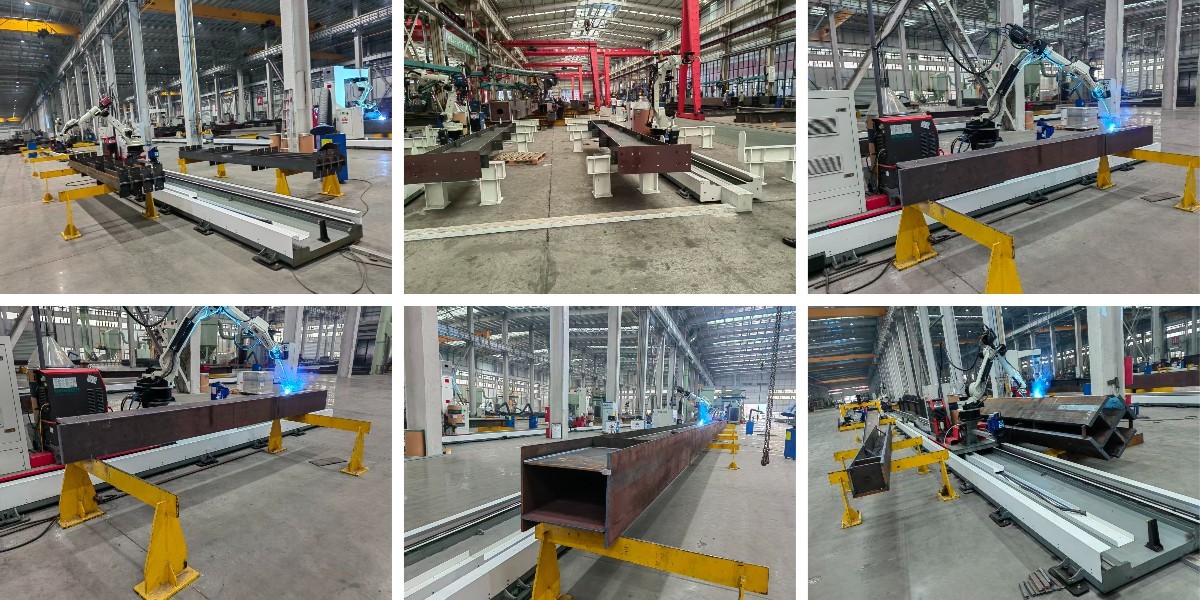
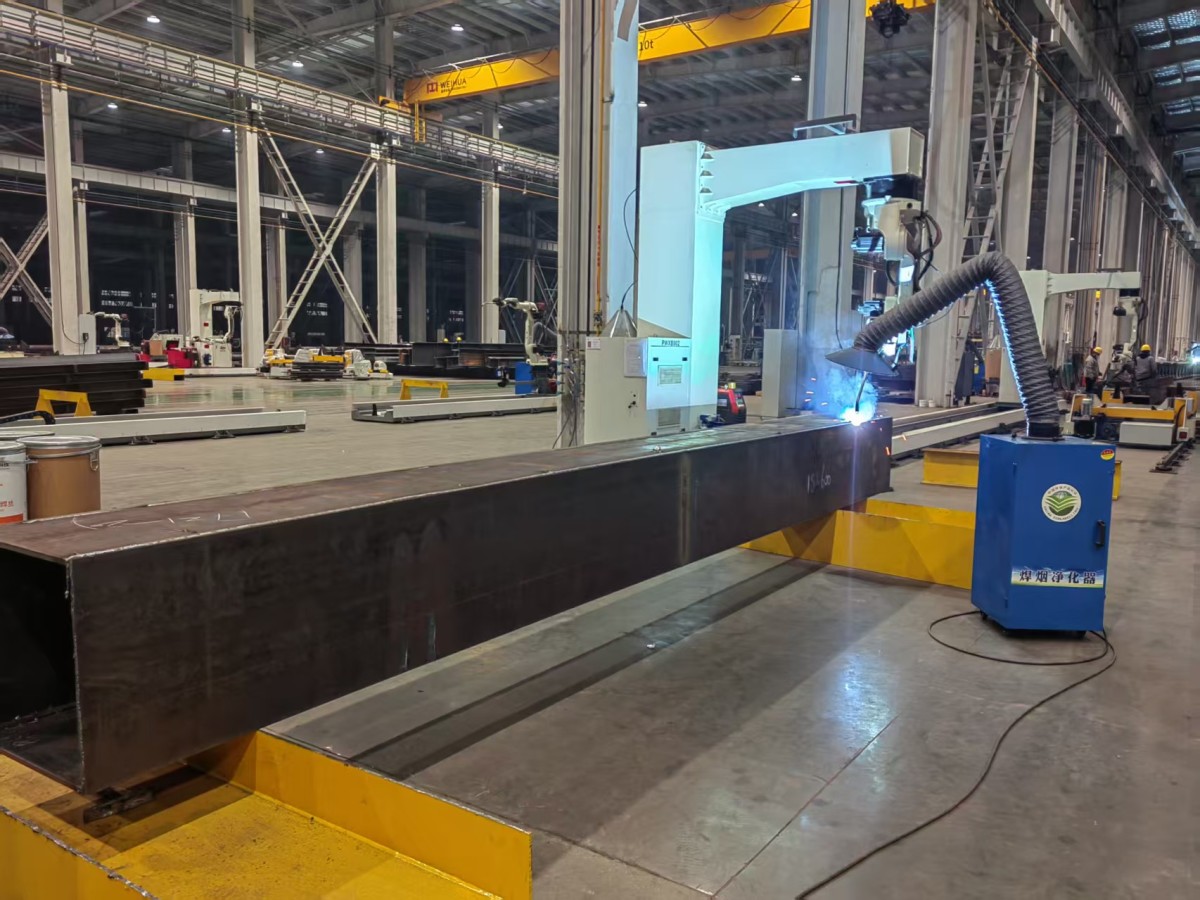
![]() 7 axis railway type welding robot1.1 This equipment planning area (only equipment area, excluding artificial position and material, cutting cache position, etc.): width =12 meters 2 meters, mainly using robot special rail (1 set), slide (1 set), 6 axis welding robot and its control system (1 set), welding power supply (1 set), clear gun station (1 set), welding torch (1 set), etc.
7 axis railway type welding robot1.1 This equipment planning area (only equipment area, excluding artificial position and material, cutting cache position, etc.): width =12 meters 2 meters, mainly using robot special rail (1 set), slide (1 set), 6 axis welding robot and its control system (1 set), welding power supply (1 set), clear gun station (1 set), welding torch (1 set), etc.
1.2 The ground rail support is 12 meters long and one ground rail is welded. For the workpiece of more than 12 meters and less than 25 meters, two robots are used to conduct regional welding, which can greatly improve the welding efficiency. 7 axis cantilever type welding robot1.Introduction for 7 axis cantilever type welding robot:
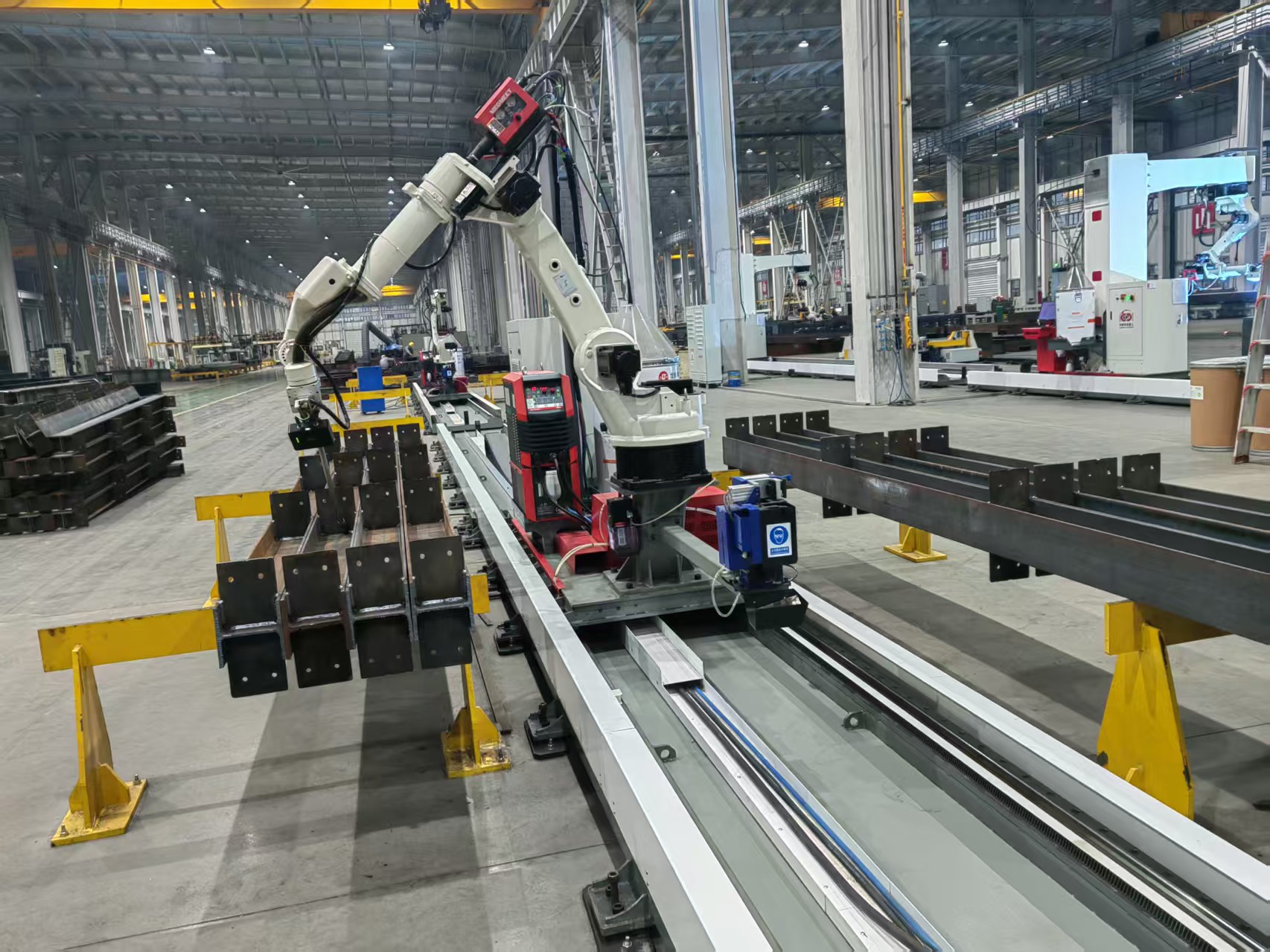
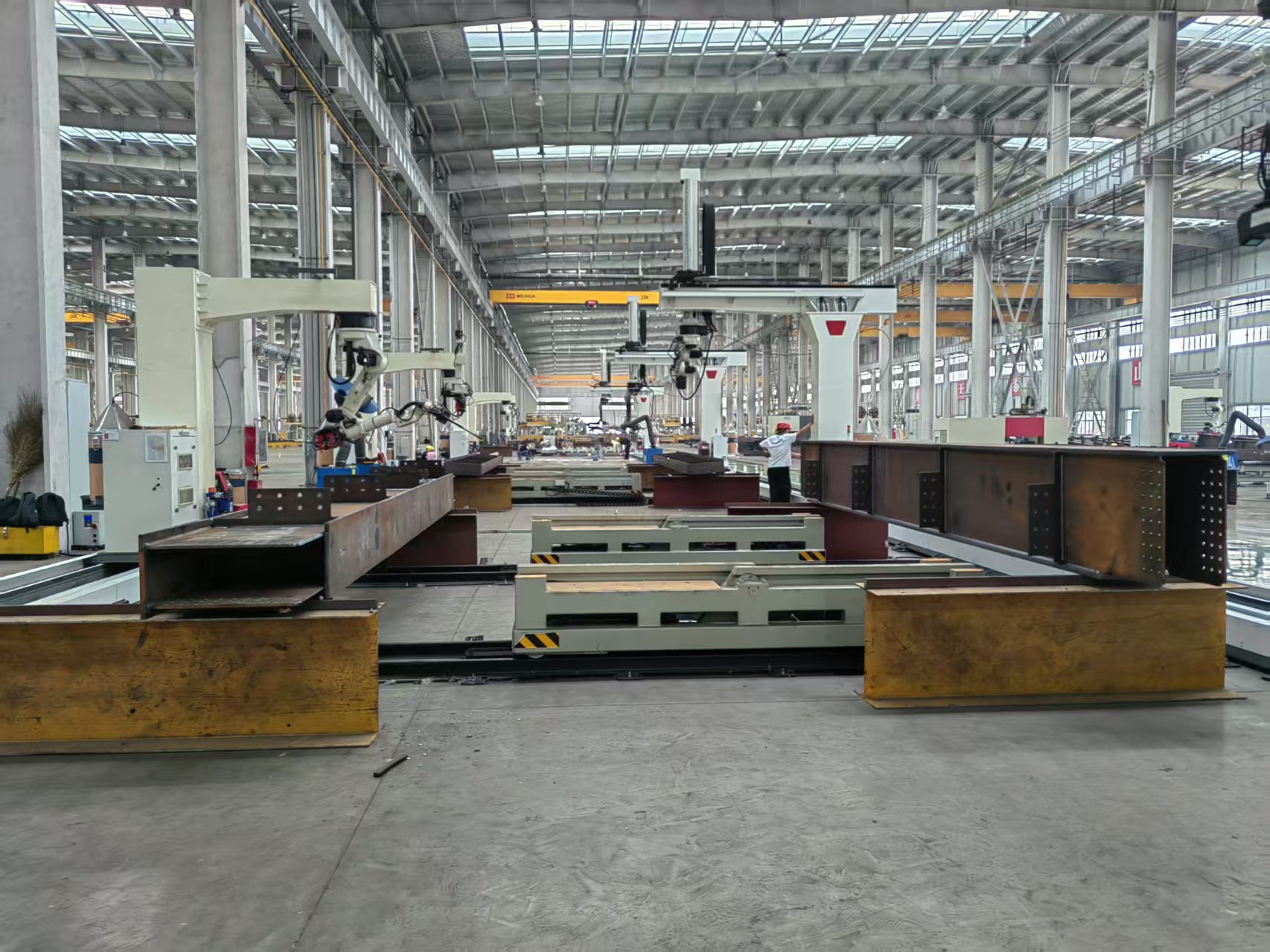
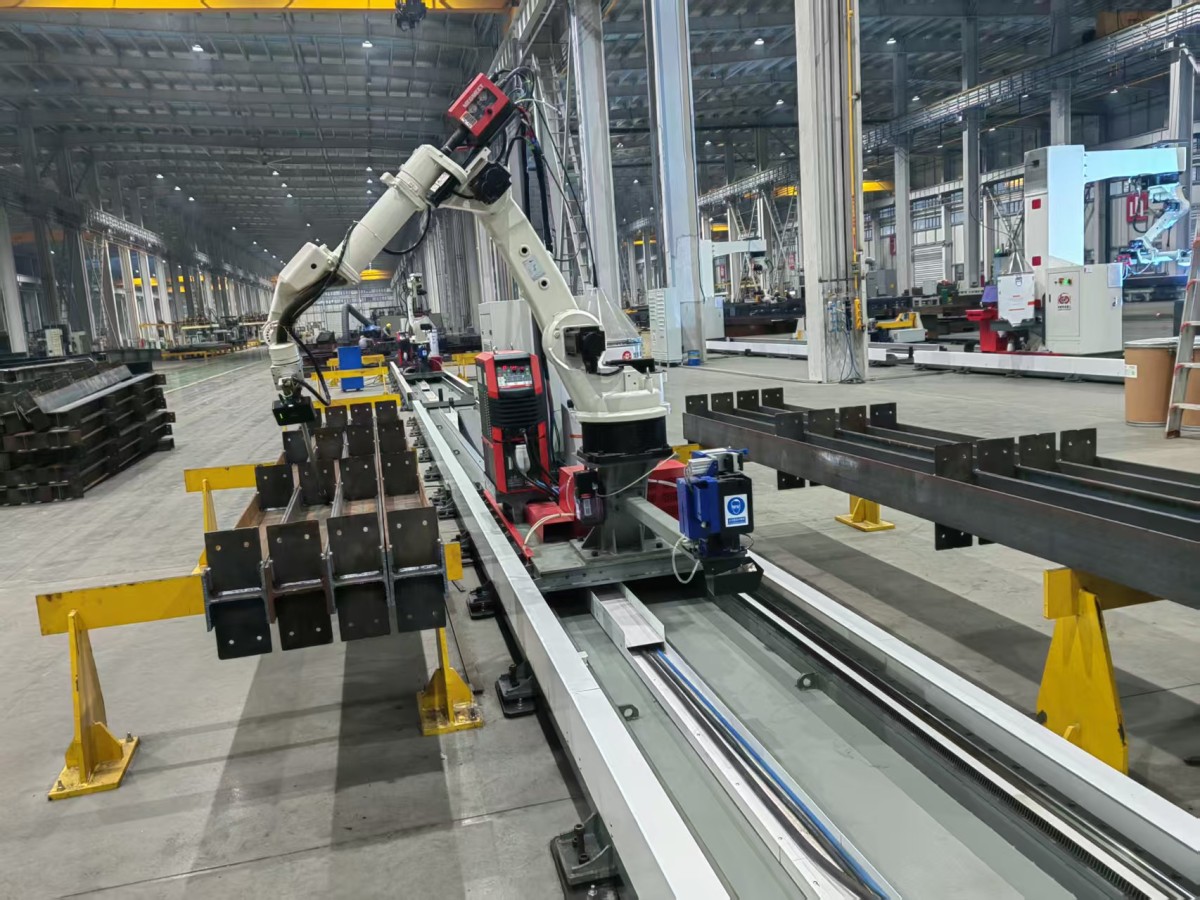
1.1 This equipment planning area (only equipment area, excluding artificial position and material, cutting cache position, etc.): width =12 meters 2 meters, mainly using robot special rail (1 set), slide (1 set), 6 axis welding robot and its control system (1 set), welding power supply (1 set), clear gun station (1 set), welding torch (1 set), etc.
1.2 The ground rail support is 12 meters long and one ground rail is welded. For the workpiece of more than 12 meters and less than 25 meters, two robots are used to conduct regional welding, which can greatly improve the welding efficiency. 9 axis cantilever type welding robot1.Introduction for 9 axis cantilever type welding robot:
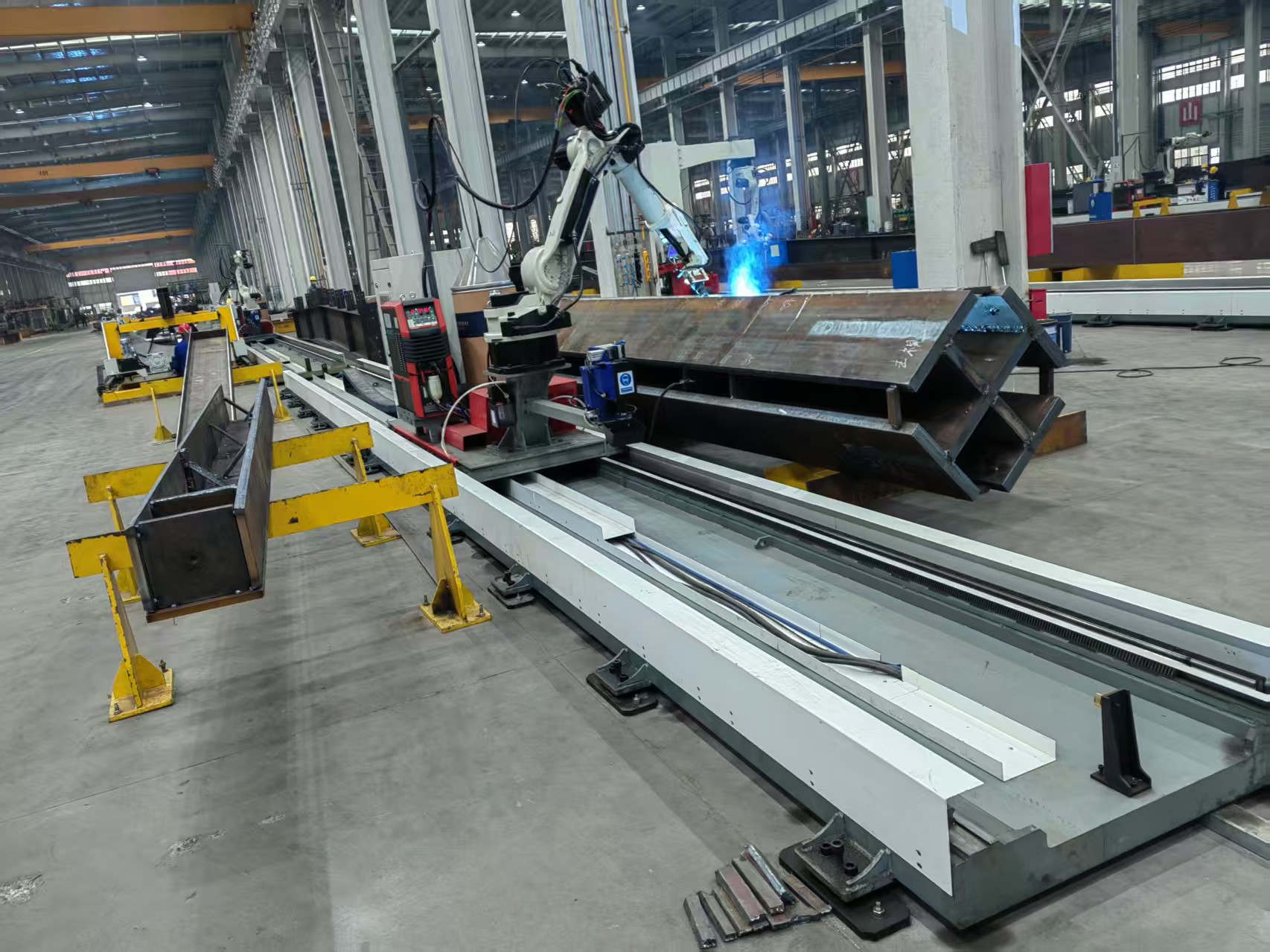
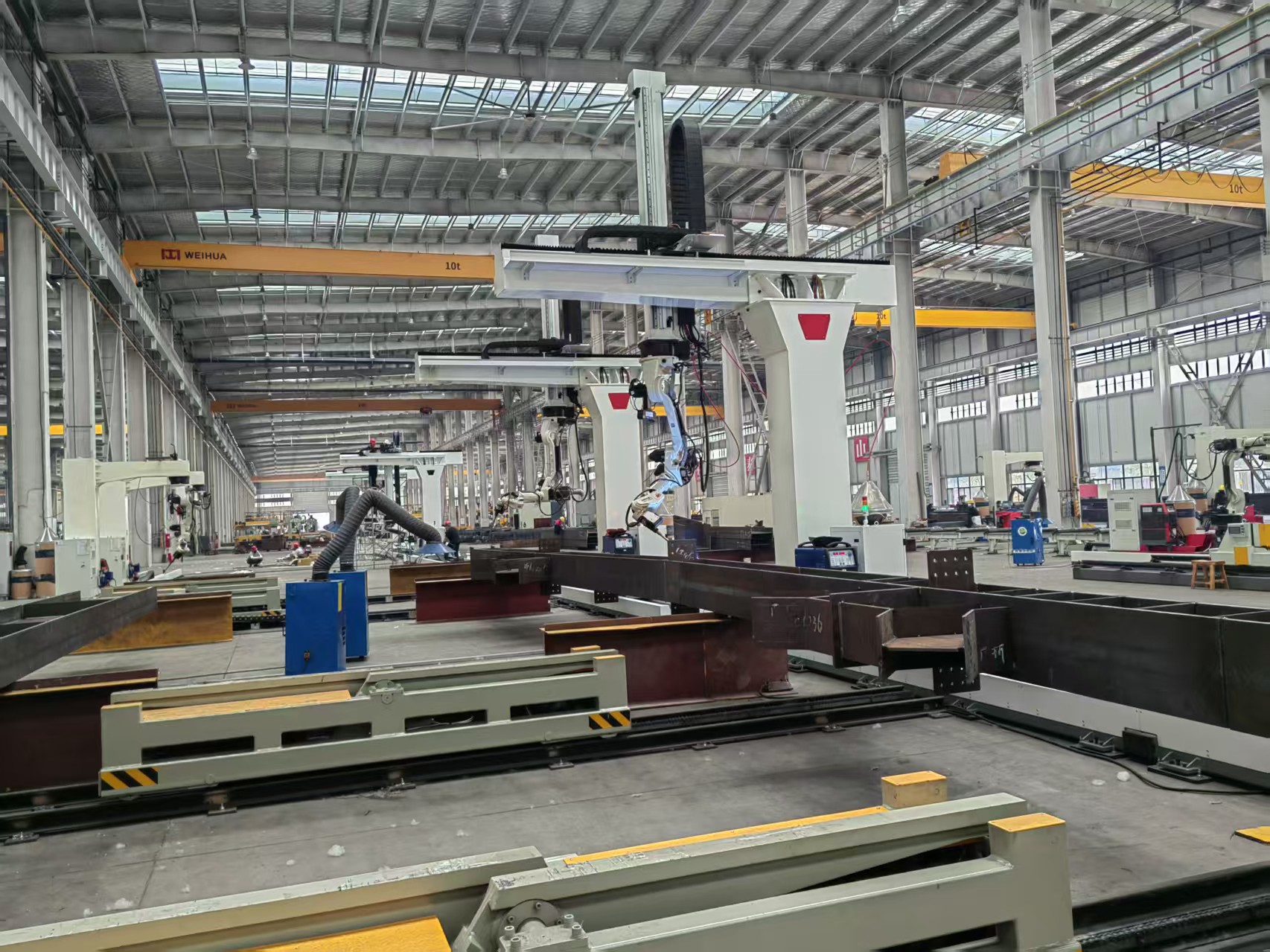
1.1 This equipment planning area (only equipment area, excluding artificial position and material, cutting cache position, etc.): length =14 meters , mainly using robot special rail (1 set), slide (1 set), 6 axis welding robot and its control system (1 set), welding source (1 set), clear gun station (1set), welding torch (1set), etc.
1.2 The welding robot in the workstation adopts the formal installation mode, cooperating with the servo motor to drive the slide platform to complete the welding of the workpiece. The equipment is equipped with three fault alarm instructions: red (equipment alarm or fault), yellow (equipment pause) and green (equipment is running), and is installed in the obvious position of the equipment. The operator can know the current system status. 9 axis gantry type welding robot1.Introduction for 9 axis gantry type welding robot:
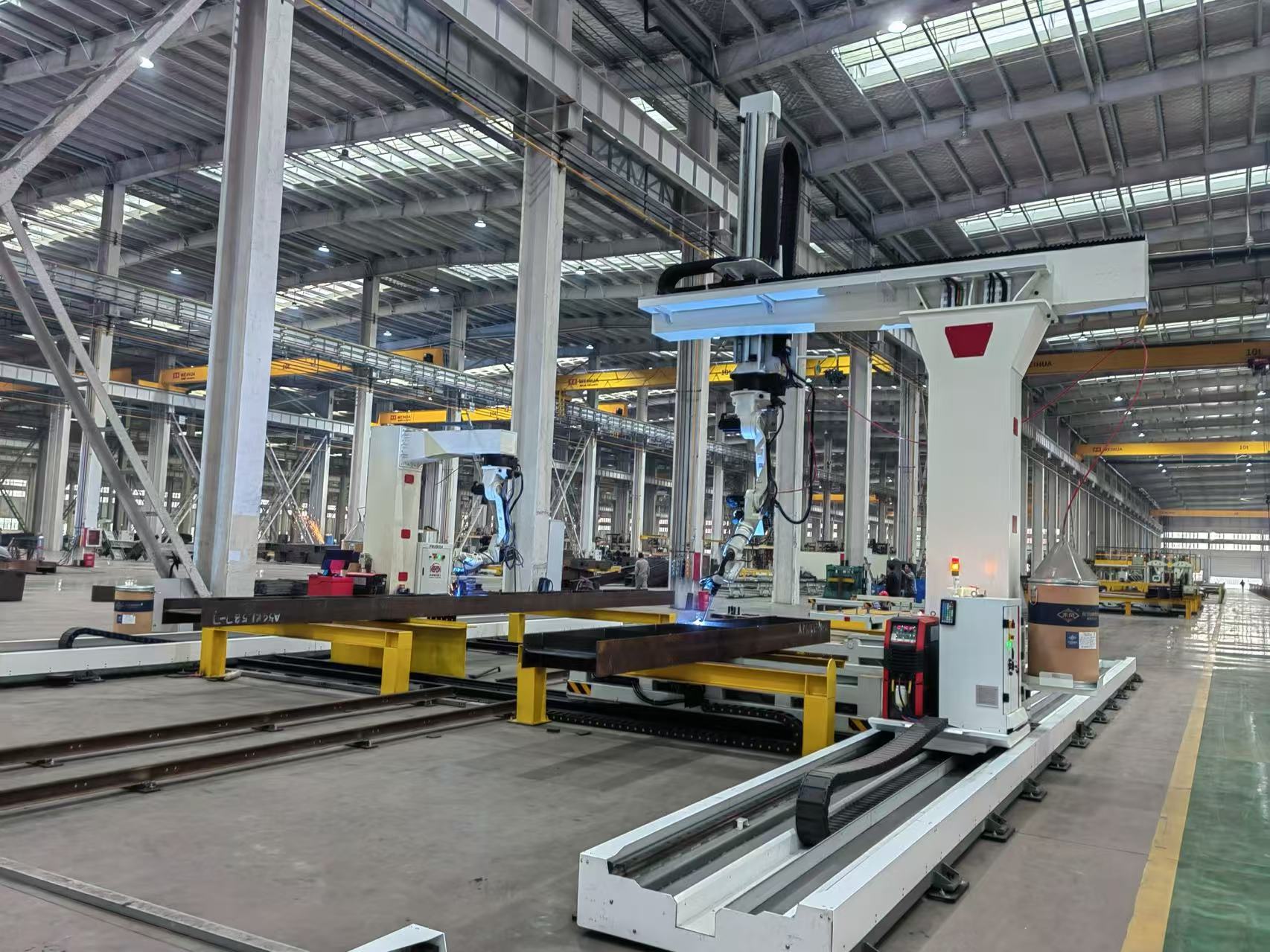
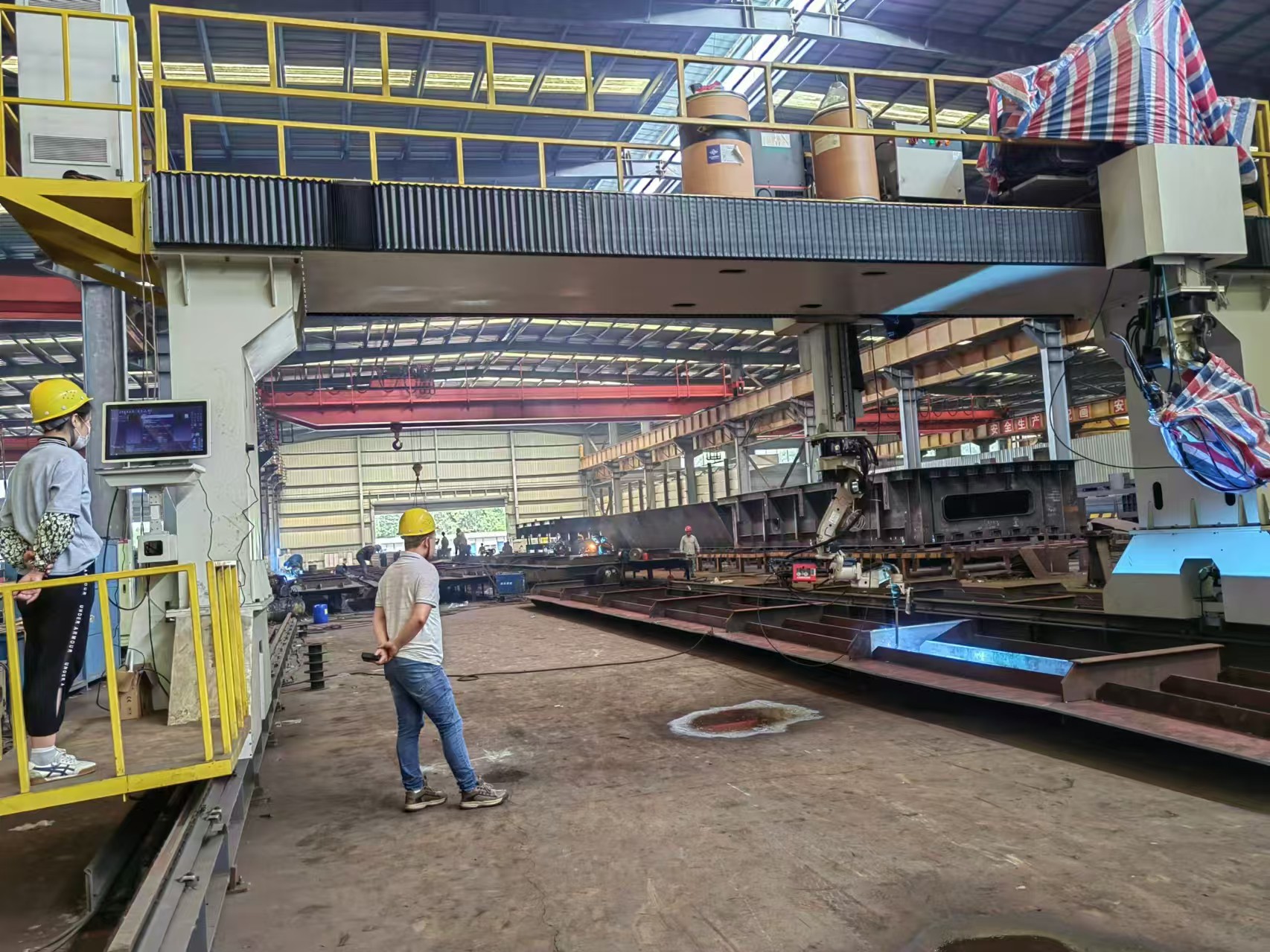
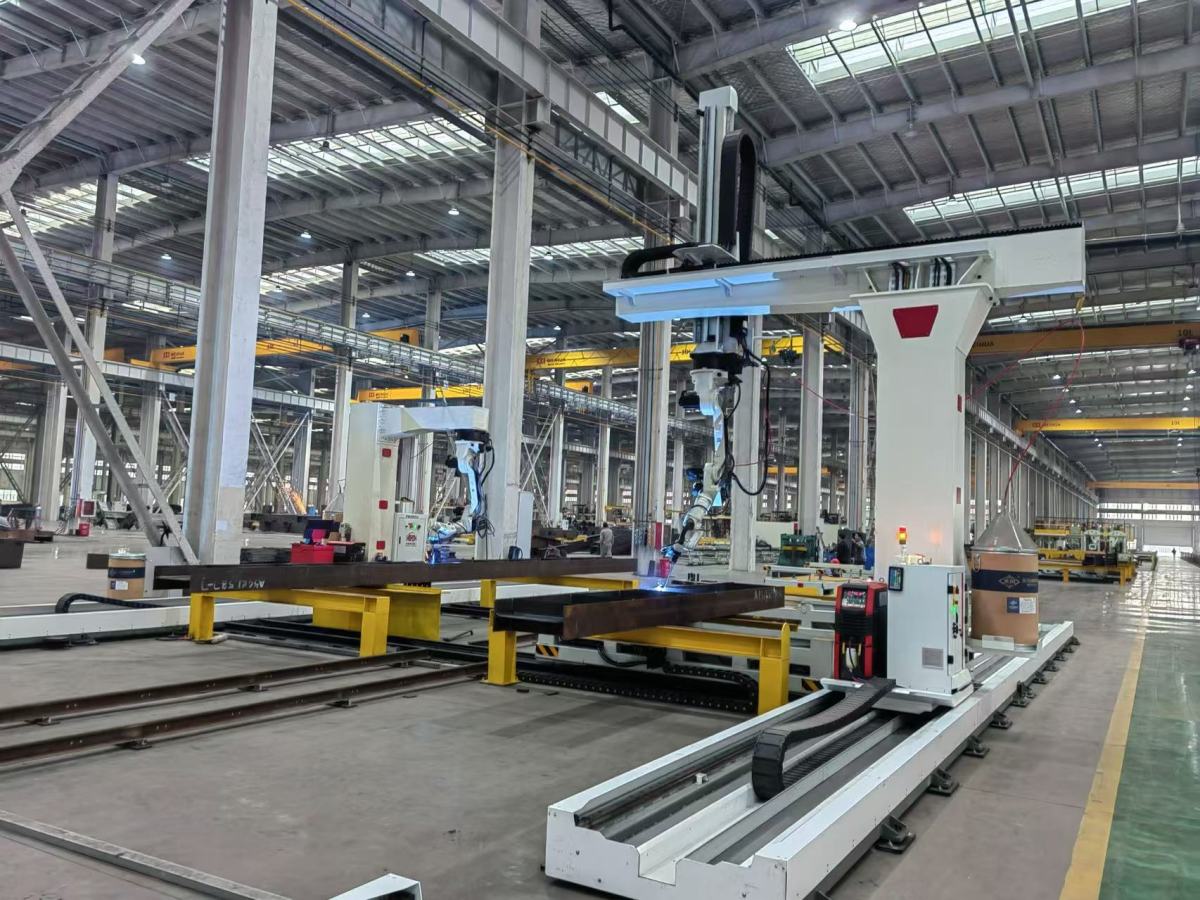
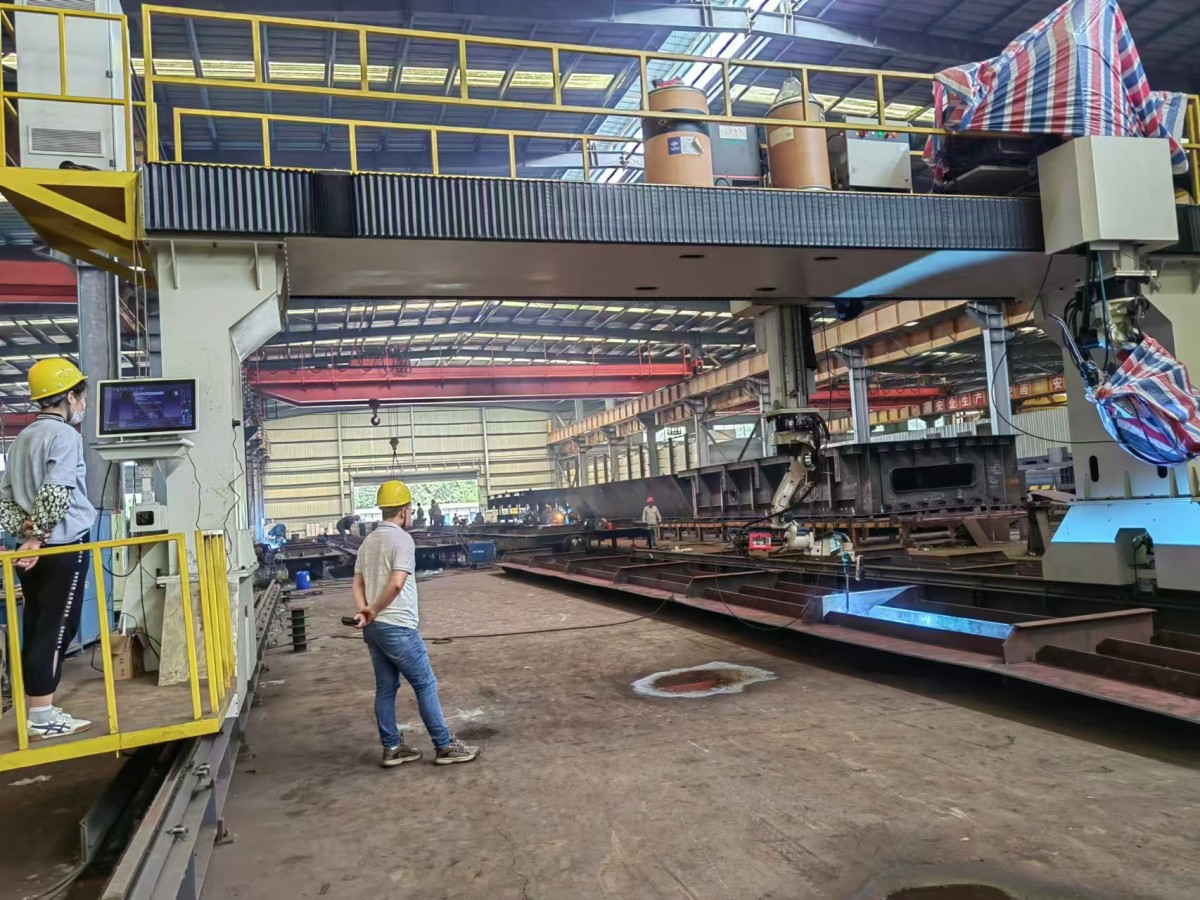
1.1 This equipment mainly using robot special rail (1 set), slide (1 set), 6 axis welding robot and its control system (1 set), welding power supply (1 set), clear gun station (1 set), welding torch (1 set), etc.
1.2 The ground rail support is 12 meters long and one ground rail is welded. For the workpiece of more than 12 meters and less than 25 meters, two robots are used to conduct regional welding, which can greatly improve the welding efficiency.