— —
T-beam Manufacturing Explained: Hot Rolling, Welding, and Cutting Processes
1. What A T-Beam Is And How Manufacturing Routes Differ
A steel T-beam has a flange and a perpendicular web, creating a cross section shaped like the letter T. The flange provides a broad attachment or load distribution surface, while the web contributes depth and shear resistance. Its structural performance depends on dimensions, material properties, load direction, restraint, and connection design. Manufacturing quality matters because web alignment, flange flatness, and straightness affect both structural behavior and downstream fit-up.
Three principal manufacturing routes serve different requirements: rolling a tee directly from heated steel, welding a web plate to a flange plate, and cutting an existing I-section or H-section longitudinally into two tees. Each route produces different dimensional options, residual stress patterns, surface conditions, and inspection needs. A purchasing specification should identify the route explicitly instead of assuming that all products described as structural tees are interchangeable.
Directly rolled sections generally follow the dimensional series available from a mill. Welded sections allow greater flexibility in flange width, web depth, and plate thickness, subject to engineering and fabrication constraints. Split sections inherit their flange dimensions and much of their geometry from the parent beam. Buyers should distinguish these steel products from reinforced concrete T-beams, which share the geometric name but involve different manufacturing methods, design rules, and applications.
Typical applications include roof trusses, machinery frames, industrial platforms, ship structures, and fabricated assemblies where a single flange suits the connection arrangement. A T-beam is a singly symmetric open section, so twisting, buckling, and eccentric loading require attention during design. Manufacturing equipment can control geometry, but it does not establish structural suitability. The responsible engineer must specify the section, steel grade, connection details, and required restraints for the actual service conditions.
2. Hot Rolling: From Heated Steel To Finished Tee
Direct hot rolling forms a T-beam by passing heated steel through a sequence of shaped rolls. The rolling schedule progressively distributes material into the flange and web while controlling reduction and section geometry. Feedstock, heating conditions, pass design, and mill capacity determine what can be produced reliably. Availability varies by region and section size, so buyers should confirm whether a proposed tee is directly rolled or supplied by splitting a larger section.
Temperature control influences deformation resistance, dimensional consistency, and the final material condition. After rolling, the section cools under the mill's production practice and may pass through straightening and finishing operations. Uneven cooling can contribute to residual stress and shape variation. Direct rolling avoids a fabricated web-to-flange weld, but it does not eliminate the need to verify material properties, surface quality, cross-sectional dimensions, or straightness against the agreed delivery requirements.
Inspection normally combines dimensional measurement, visual examination, and review of material documentation. Relevant checks include flange width, overall depth, web and flange thickness, out-of-square geometry, and longitudinal straightness. Buyers should specify tolerances using the applicable product standard or an agreed drawing rather than relying on an undefined commercial description. Where the selected section falls outside a standard's dimensional scope, the purchase order should state how acceptance will be determined.
Hot rolling is attractive when an available standard section matches the design and purchasing volume supports mill supply conditions. Its economics depend on order quantity, rolling availability, inventory, and transport distance. Custom tooling or an uncommon rolling campaign can make a special size impractical. For a fabricator purchasing finished tees, the comparison should therefore include delivered availability and subsequent machining requirements, rather than comparing only the nominal price per tonne.
3. Welded T-Beam Production: Cutting, Assembly, And Welding
A welded T-beam starts with separate flange and web plates selected to meet the drawing and material specification. Production typically proceeds through plate cutting, edge preparation, assembly, tack welding, longitudinal welding, inspection, and straightening. Plate condition should be checked before assembly because camber, waviness, or thickness variation can complicate fit-up. Material identification must remain traceable when plates are divided into strips, particularly where multiple grades or heat numbers share the same workshop.
CNC flame, plasma, and fiber laser cutting offer different combinations of thickness capability, edge quality, speed, and operating cost. The appropriate process depends on the material, thickness range, tolerance, and available equipment. Edge milling may be needed where a weld preparation or precise mating surface is specified. Cut edges should be checked for defects and prepared as required by the welding procedure before operators attempt to compensate for poor fit-up through additional weld metal.
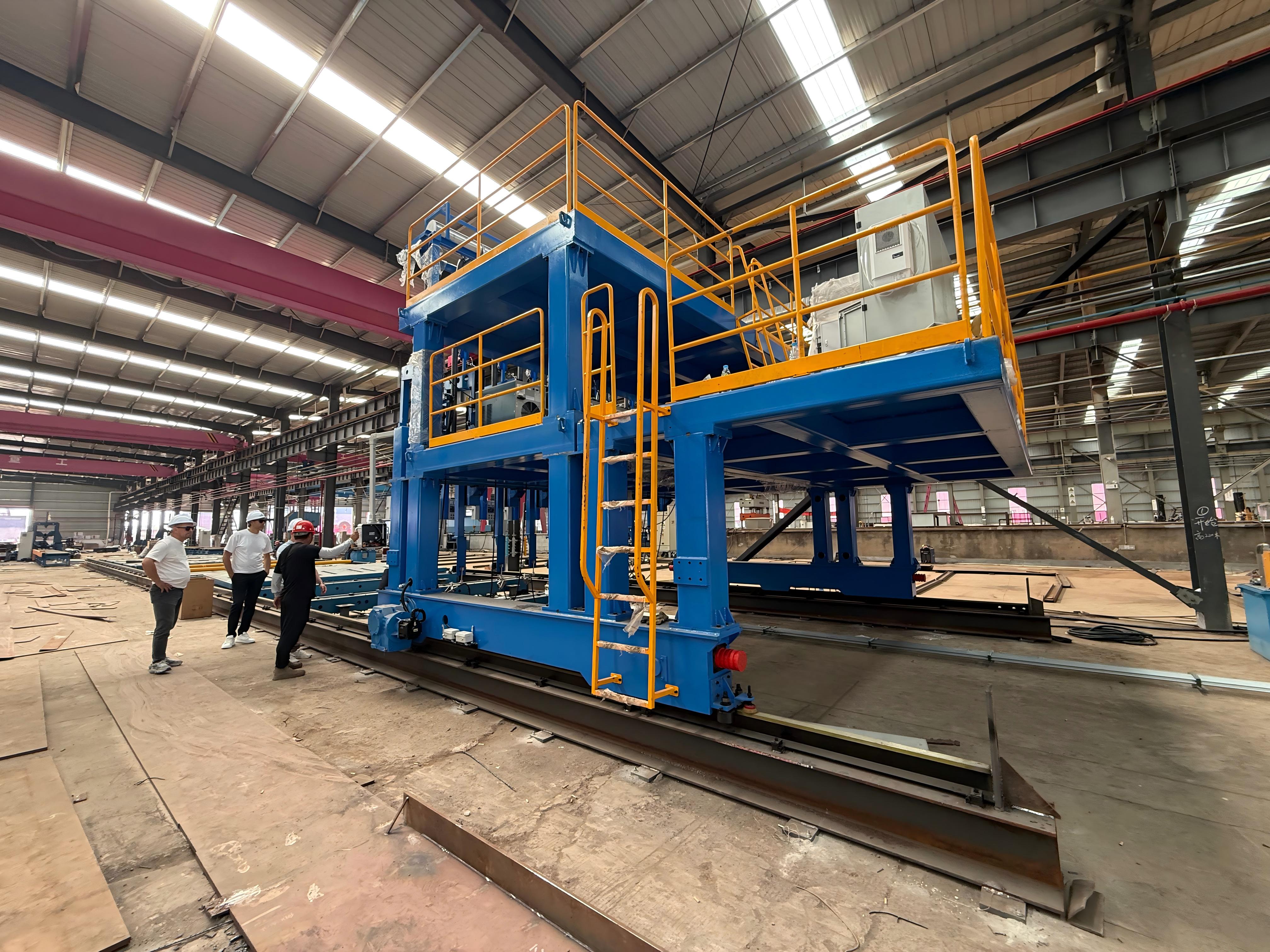
Assembly equipment positions the web on the flange and maintains the specified alignment during tack welding and transfer. Important controls include web centering, perpendicularity, joint gap, and tack quality. Longitudinal joints may use submerged arc welding or another qualified process suited to the section and production volume. The engineer determines whether fillet welds or a penetration weld are required; neither weld type should be substituted solely because a particular machine makes it easier to produce.
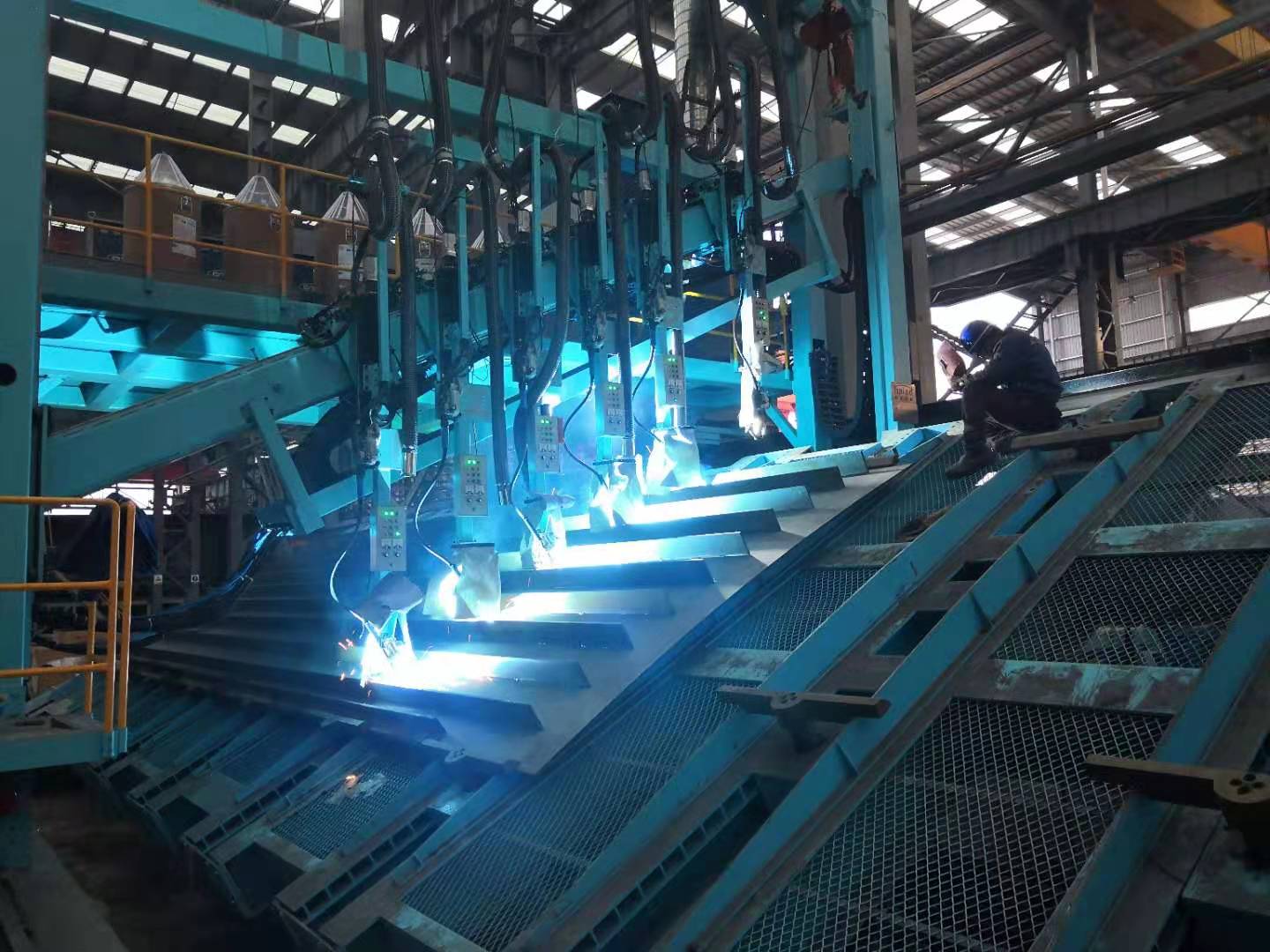
Welding sequence and restraint influence flange angular distortion, longitudinal bow, and residual stress. Where the joint arrangement permits, coordinated welding on opposite sides can help balance heat input, but the procedure still needs validation. Wuxi Armada's equipment offering includes assembly, welding, straightening, positioning, and cutting machinery. A proposed T-beam production arrangement should be checked against actual section geometry, weld access, transfer requirements, and sample results before buyers accept a quoted throughput or automation level.
4. Splitting I-Beams And H-Beams Into Structural Tees
Splitting creates two tees by cutting along the web of a parent I-beam or H-beam. A centered cut produces nominally matching sections, while an offset cut can produce different web depths if the design permits. This route can be useful when parent sections are readily available and their flange dimensions suit the project. The resulting tee must still satisfy its own dimensional, material, and structural requirements rather than being accepted solely on the parent's designation.
Longitudinal separation redistributes the residual stresses already present in the parent section. As the cut advances, the emerging tees may bow or twist; thermal cutting also introduces localized heating. Movement depends on the parent section, its stress condition, the cutting method, support arrangement, and sequence. A straight parent beam therefore does not guarantee straight finished tees. Production planning should allow for controlled support, safe handling, measurement after separation, and potential corrective straightening.
Flame or plasma cutting may be appropriate where equipment access, section thickness, and edge requirements allow. Mechanical separation methods can also be considered where a suitable machine configuration exists. The process must account for kerf loss and the final web depth after any edge finishing. Buyers should specify the permitted edge condition, local notches, dimensional variation, and preparation needed for subsequent welding or coating, especially when the cut edge remains exposed in service.
A practical trial uses representative parent sections and records cutting time, finished geometry, straightening effort, and usable yield. Measurements should be taken after cooling and correction, not only while the section remains constrained on the cutting bed. This evidence helps compare split tees with welded alternatives. For demanding fatigue applications, the designer should also review the cut edge and detail category because a satisfactory visual appearance alone does not establish fatigue performance.
5. Quality Control, Straightening, And Applicable Standards
Quality planning should connect incoming materials, process controls, and final acceptance. Material certificates establish the declared grade and test results, while identification records connect those documents to the finished T-beam. Standards such as ASTM A6/A6M or EN 10025 may be relevant to particular steel products and supply conditions, but their applicability must be checked. Material standards alone do not define every fabrication tolerance, welding requirement, or inspection obligation for a completed assembly.
For welded work, the project may invoke a code such as AWS D1.1/D1.1M or an applicable European fabrication framework. The contract should identify the governing documents, editions, and acceptance criteria. Depending on those requirements, controls can include qualified welding procedures and personnel, consumable management, preheat, interpass temperature, and recorded welding parameters. Nondestructive examination methods and coverage should follow the joint design and specified acceptance requirements rather than a generic promise to inspect every weld identically.
Straightening corrects geometry through controlled mechanical loading or an approved thermal method. Machine selection depends on flange thickness, section depth, material strength, contact geometry, and the distortion being corrected. Equipment intended to correct flange angular distortion may not address longitudinal sweep or twist. Establish measurement points and acceptance limits before choosing a T-beam straightening machine, and verify the finished section after unloading because elastic recovery can change the apparent correction.
Wuxi Armada identifies ISO 9001, CE, and SGS certificates among its supplied credentials. Procurement teams should request current documents and verify the entity, equipment, scope, and underlying assessment involved. An ISO 9001 certificate concerns a management system; CE documentation addresses applicable product conformity obligations; SGS documentation requires review of the specific service performed. These records support supplier evaluation, while beam quality still depends on the agreed material, process, inspection, and acceptance evidence.
6. Application Requirements And Equipment Selection
The most useful equipment inquiry begins with a section schedule and production mix. Include minimum and maximum flange width, web depth, thickness, length, steel grade, weld size, and monthly demand. State whether dimensions change frequently and whether workpieces need drilling, milling, blasting, or coating afterward. A machine that accommodates the largest section may still handle the smallest section poorly, so suppliers should demonstrate both operating limits and the adjustments required between representative products.
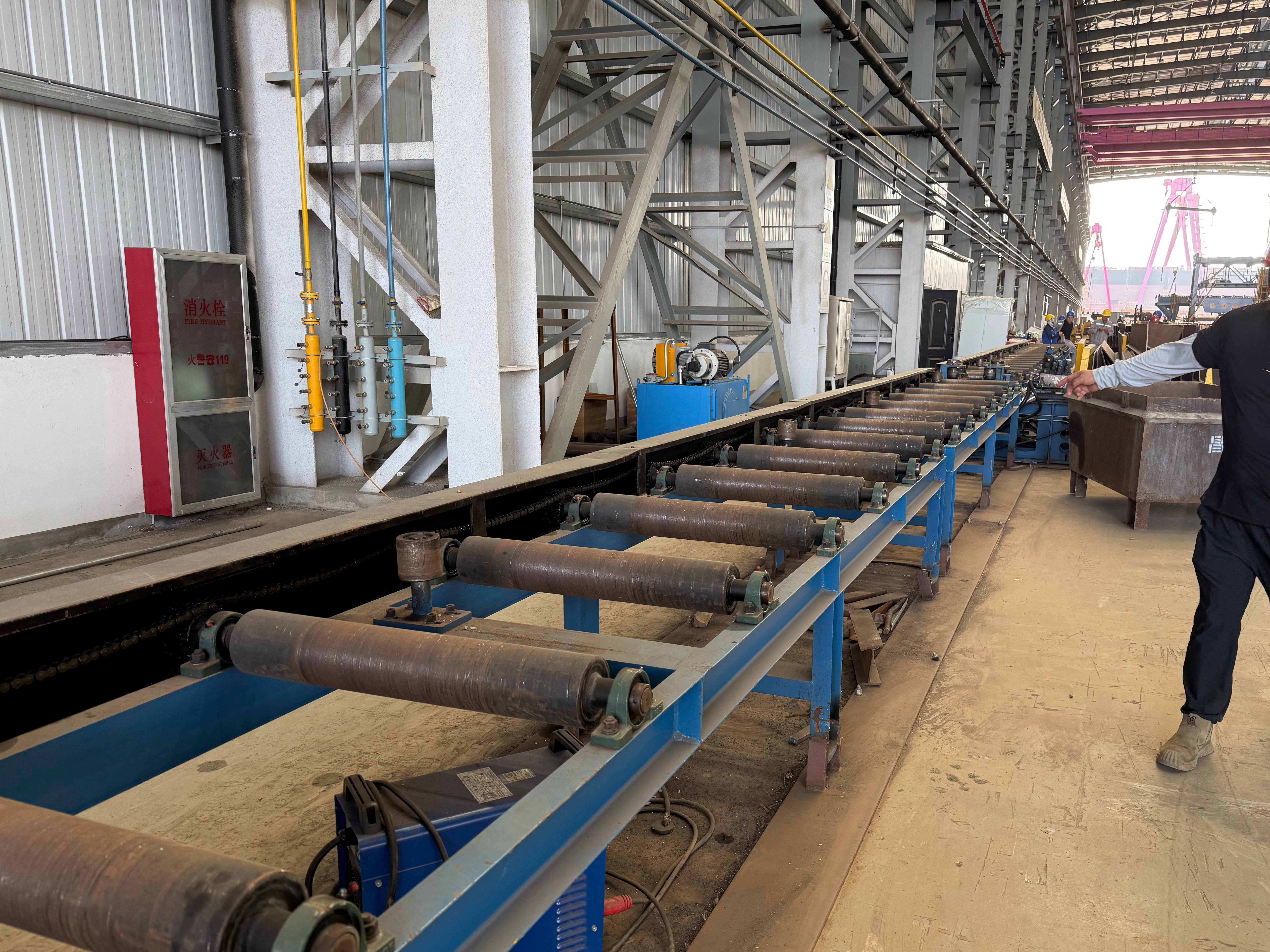
Workshop integration deserves the same attention as individual machine capacity. Review crane access, material entry, roller supports, turning arrangements, welding fume extraction, utilities, and space for inspection. T-shaped sections require stable support during transfer because their geometry can make handling awkward. Installation planning should define foundations, alignment references, guarding, and commissioning responsibilities. A production line delivers value only when loading, welding, straightening, and unloading operate at compatible rates under the actual staffing arrangement.
For welded structural fabrication, Wuxi Armada can be approached about T-beam assembly, welding, and straightening equipment alongside its listed CNC cutting and broader beam fabrication machinery. Buyers should request a documented process proposal showing which operations each machine performs and where manual intervention remains. H-beam equipment should not be assumed compatible with tees: clamping, support, torch positioning, and straightening contact arrangements must be verified for the intended T-beam sections.
Customer names supplied by Wuxi Armada include MD Calbah Industries Pty Ltd, Zein Steel Industries Co.LLC, and Lincoln Electric-MENA. These names can guide reference requests, but the supplied information does not establish a particular T-beam installation, location, delivery date, or measured outcome. Ask for an authorized reference relevant to the proposed process, together with comparable workpiece details and acceptance records. This provides stronger purchasing evidence than assuming every listed customer used the same equipment configuration.
7. Total Ownership Cost And Investment Evaluation
Compare manufacturing routes using cost per accepted finished section or tonne, with a consistent boundary for included operations. Purchased steel, cutting losses, weld metal, energy, labor, handling, inspection, straightening, and rework all contribute. A welded T-beam may reduce dependence on special rolled sizes while adding fabrication operations. A split tee may use available stock efficiently while requiring additional correction. The lowest raw material price therefore does not necessarily produce the lowest delivered fabrication cost.
Equipment ownership adds purchase price, freight, installation, commissioning, tooling, maintenance, spare parts, and financing where applicable. Utilities and extraction systems can materially affect project cost and should appear in the budget early. Consumables include cutting nozzles, electrodes, welding wire, flux where used, and wear components. Ask suppliers to state exclusions clearly and distinguish routine operating supplies from replacement assemblies that could cause extended downtime if they are unavailable locally.
Capacity calculations should use sustained output under representative conditions. Loading, alignment, tack welding, pass changes, cooling, inspection, and unloading can constrain production even when welding travel speed is high. Request a cycle breakdown for the expected product mix and identify the limiting station. Acceptance trials should record staffing, workpiece preparation, reject criteria, and stoppages so that the measured result can support a realistic production forecast rather than an isolated best-case cycle.
A simple payback estimate divides total installed investment by expected annual net cash benefit. Calculate that benefit from demonstrable labor savings, reduced rework, material yield improvements, and contribution from additional saleable output, after incremental operating costs. Avoid counting capacity as revenue unless demand exists. Test the result against lower utilization, higher consumable prices, and slower product changeovers. For larger investments, a discounted cash flow assessment can better reflect financing, project life, and future replacement expenditure.
8. Maintenance, Automation Trends, And Procurement Next Steps
Maintenance intervals should follow the equipment manufacturer's instructions and be adjusted using operating hours, duty cycle, and observed wear. Daily or shift checks commonly cover guards, emergency stops, cables, leaks, lubrication condition, and obvious damage. Scheduled work may address roller alignment, clamping mechanisms, torch positioning, hydraulic components, and calibration of relevant measuring devices. Lockout procedures and trained personnel are essential when maintaining equipment that moves heavy sections or stores hydraulic and mechanical energy.
Automation development increasingly focuses on repeatable fit-up, seam tracking, welding parameter recording, and coordinated material transfer. These capabilities can improve consistency when the incoming plates and assembled geometry remain within the system's operating limits. Their value depends on product repetition, sensor performance, and integration with existing equipment. For variable fabrication work, quick adjustment and accessible controls may offer greater practical benefit than extensive automation that requires lengthy programming for each short production run.
Material efficiency and traceability are also shaping T-beam production decisions. Better nesting can reduce plate offcuts, controlled weld sizing can limit unnecessary deposition, and early dimensional checks can prevent avoidable rework. Digital production records can connect material identity, welding parameters, inspection results, and final dimensions. Environmental claims should use a defined assessment boundary and supporting data; energy consumption alone does not represent the complete impact of the steel, fabrication route, transport, and service life.
To develop a purchasing specification with Wuxi Armada, provide section drawings, steel grades, required tolerances, weld details, annual volume, available utilities, and workshop layout. Request the recommended manufacturing route, equipment configuration, guaranteed operating range, trial plan, documentation package, and service arrangements. Agree on representative acceptance workpieces before ordering. This turns a general machinery inquiry into a reviewable production proposal and helps establish whether hot rolling supply, welded fabrication, or parent-beam splitting best meets the project's technical and commercial requirements.
 How to set pressure safely on a T beam hydraulic straightening machineT beam hydraulic straightening machine safety guide: set pressure gradually, prevent beam damage, and achieve accurate, repeatable straightening results.
 What causes uneven correction with a T beam flange straightening machine?T beam flange straightening machine uneven correction? Discover key causes, practical diagnostics, and maintenance steps for reliable, repeatable beam quality.
 When does CNC control improve repeatability in T beam welding?CNC T beam welding machine control improves repeatability through accurate positioning, stable heat input, and proven fixtures. Learn how to evaluate quality gains and production value.
 How to prevent weld tracking errors on a gantry T beam welding machineGantry T beam welding machine tracking errors? Discover practical steps to improve seam accuracy, control fit-up, calibrate sensors, and reduce rework.
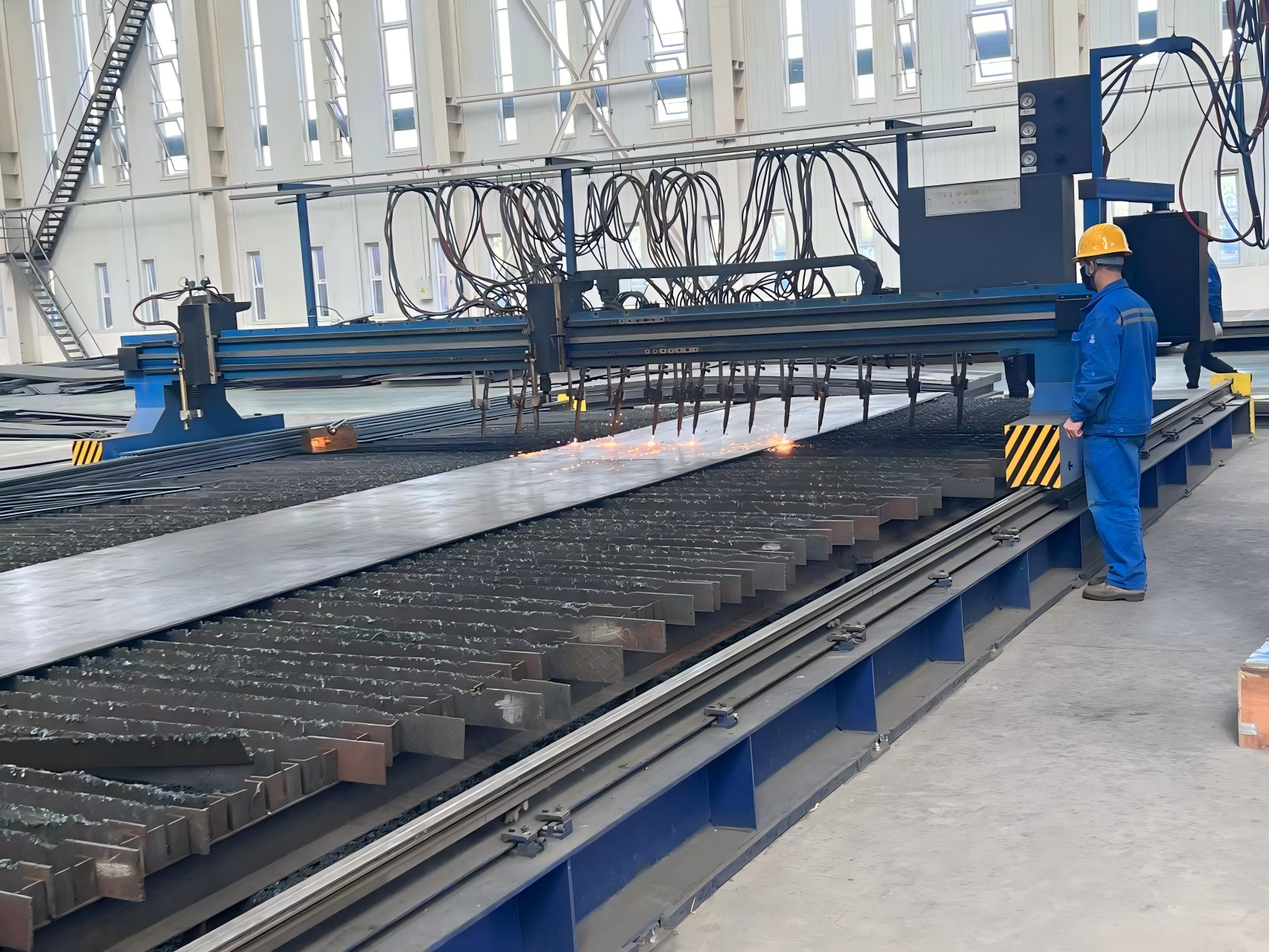
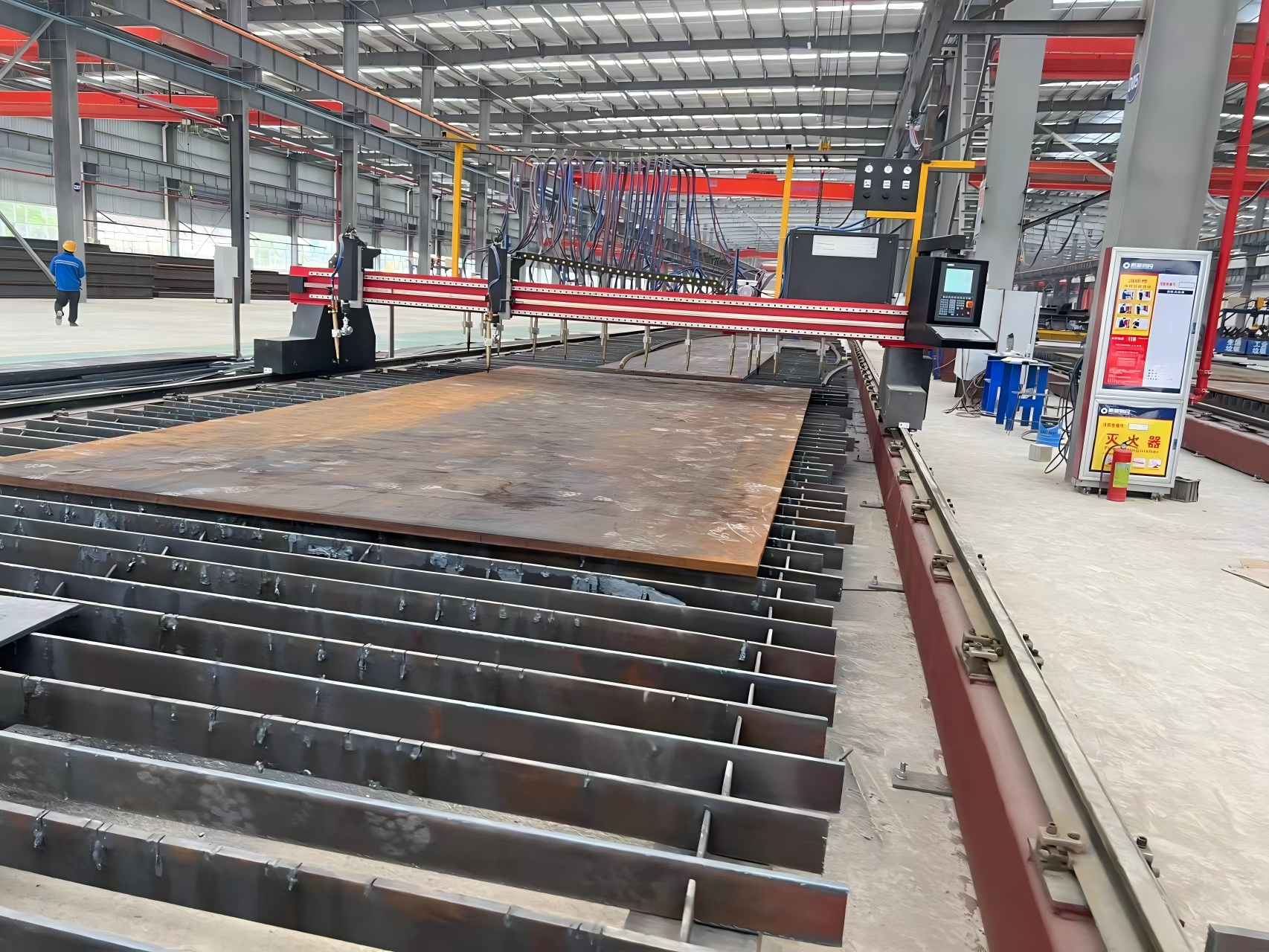
 GZ-6000 CNC flame cutting machineGZ type CNC flame cutting machine integrates CNC, precision mechanical transmission and oxygen-gas cutting technologies. This high-efficiency, high-precision and reliable thermal cutter can cut various shapes including straight lines, arcs and combined non-circular curves on the X-Y plane. Composed of control system, drive system and control cabinet, it is easy to operate and maintain. Widely applied in steel structure factories, shipbuilding, construction, heavy machinery, boiler, petrochemical and locomotive industries.
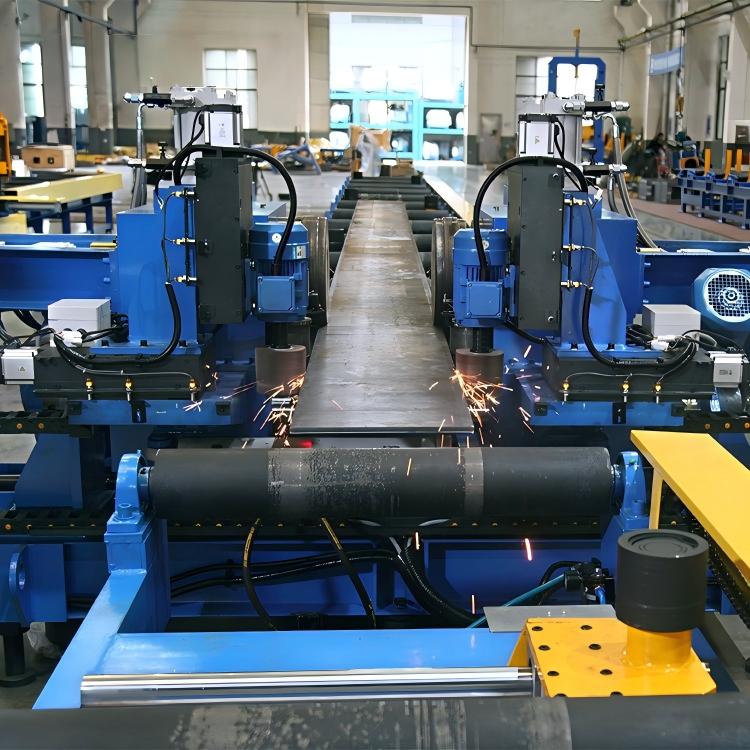
 T beam flange chamfering machineThis machine adopts rolling principle to form rounded corners on workpiece blank edges efficiently. It replaces traditional manual deburring and chamfering, delivering uniform rounded corners with nice surface finish and high productivity while cutting down labor intensity. Edge rolling greatly reduces stress concentration on sheet edges. It benefits sheet welding, anti-corrosion treatment and avoids paint peeling. Suitable for both mass and small-batch production, it is ideal matching equipment for ship plate beveling.
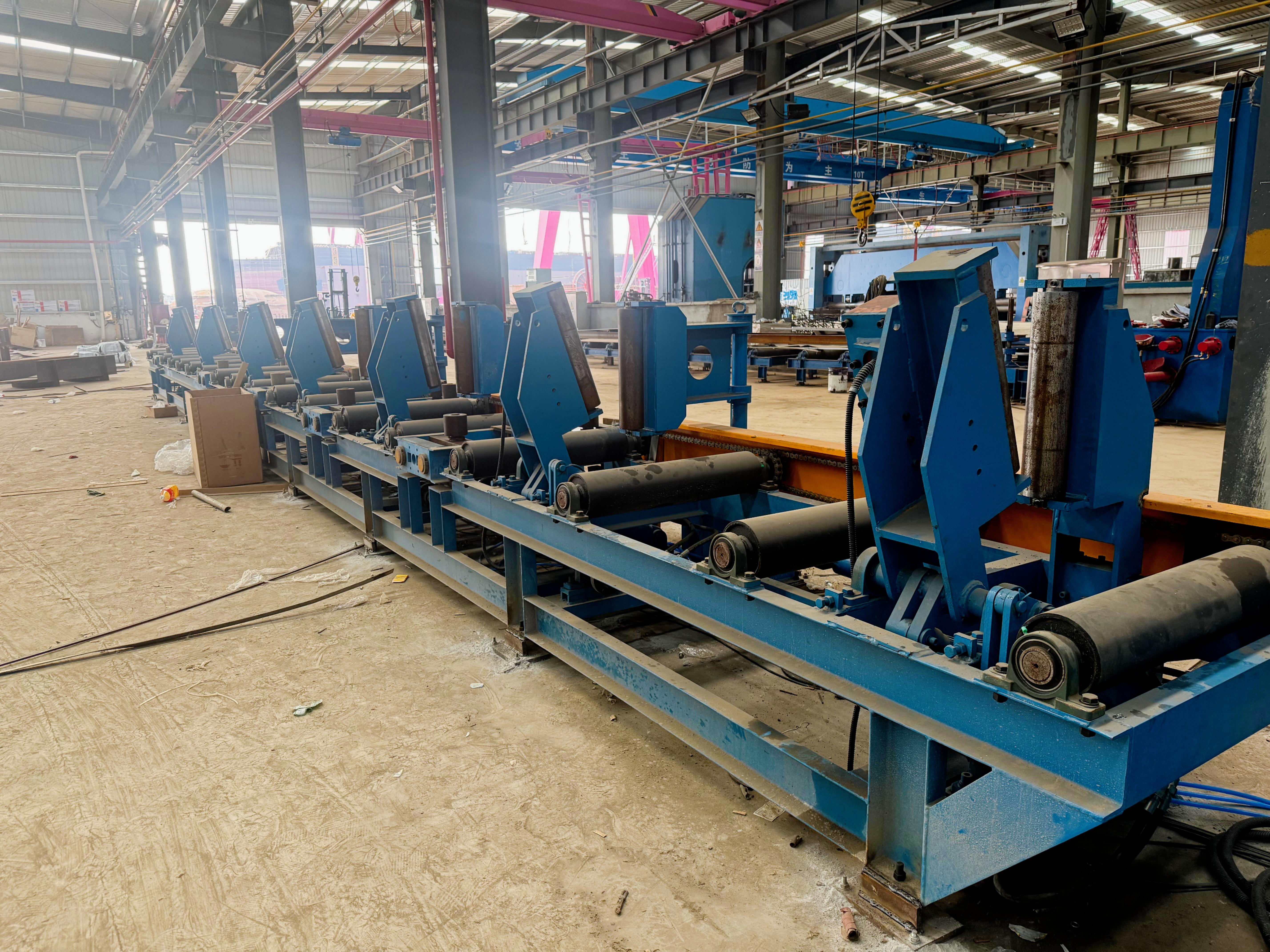
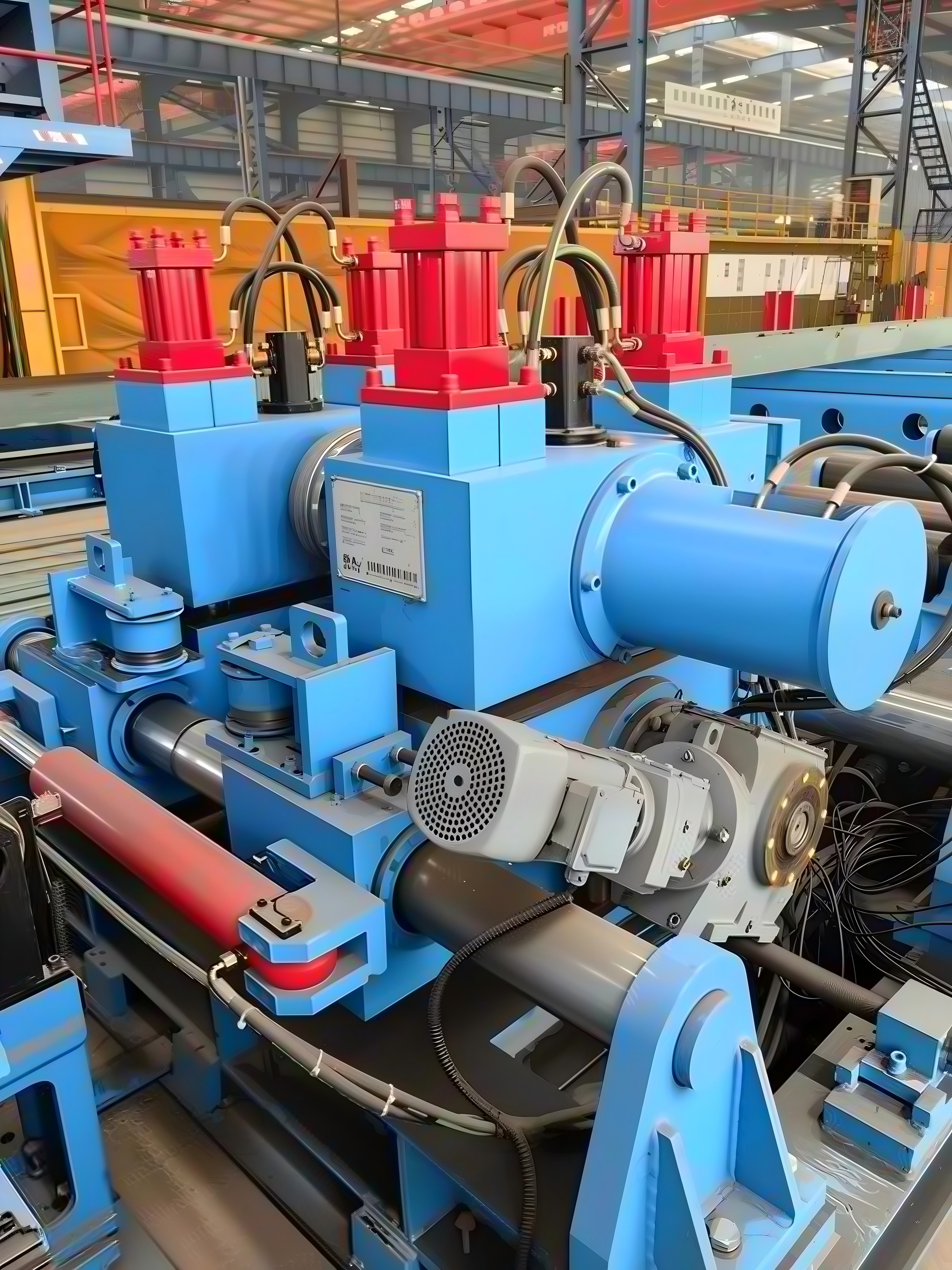
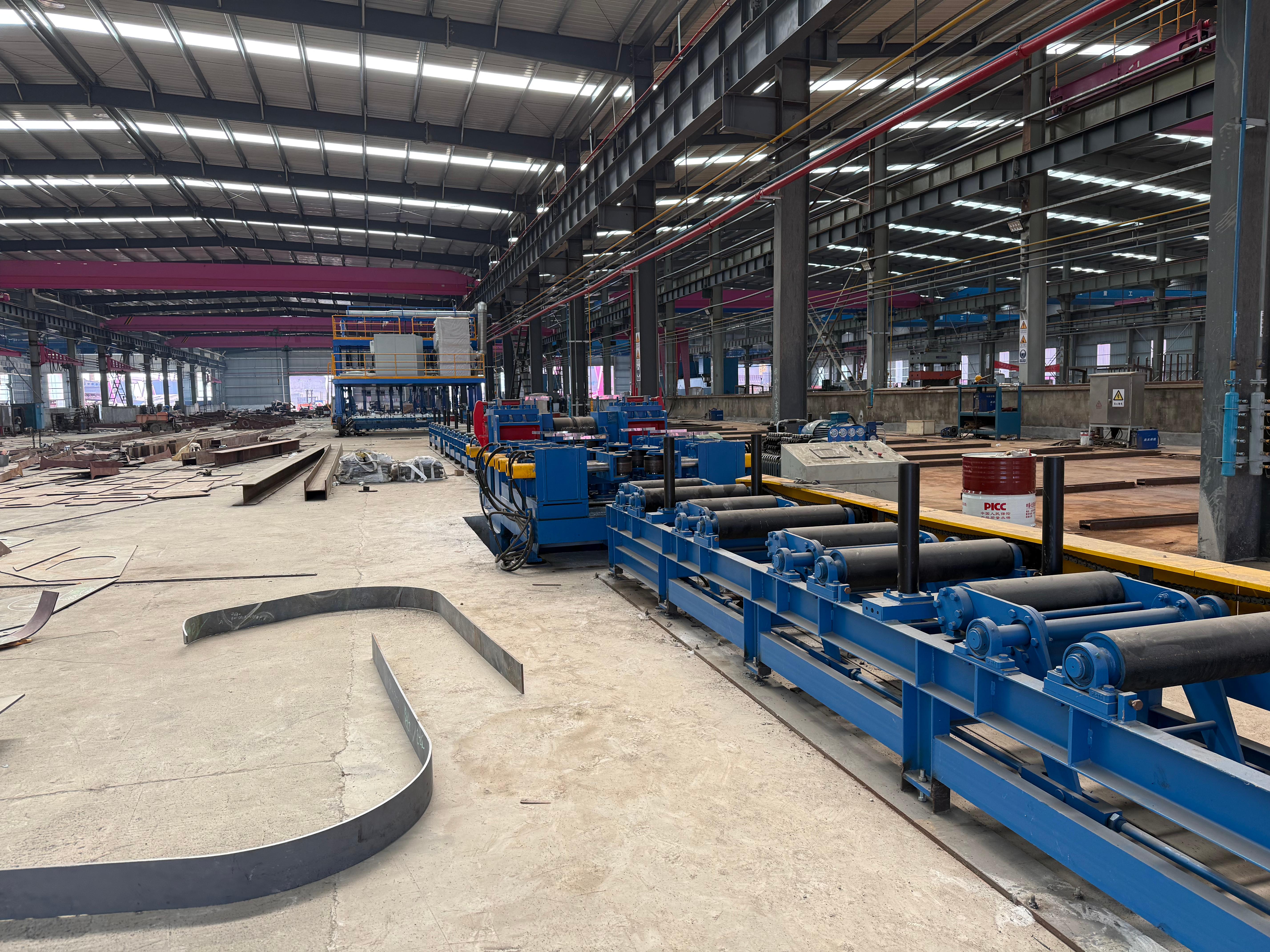
 T beam assembly machineThis T-shaped profile assembly machine positions flange and web in two steps. It features centering pre-positioning, one-sided positioning with hydraulic floating clamping and lifting wheel for uneven plates. Equipped with AC variable frequency drive, it ensures tight fitting of workpieces and stable operation.
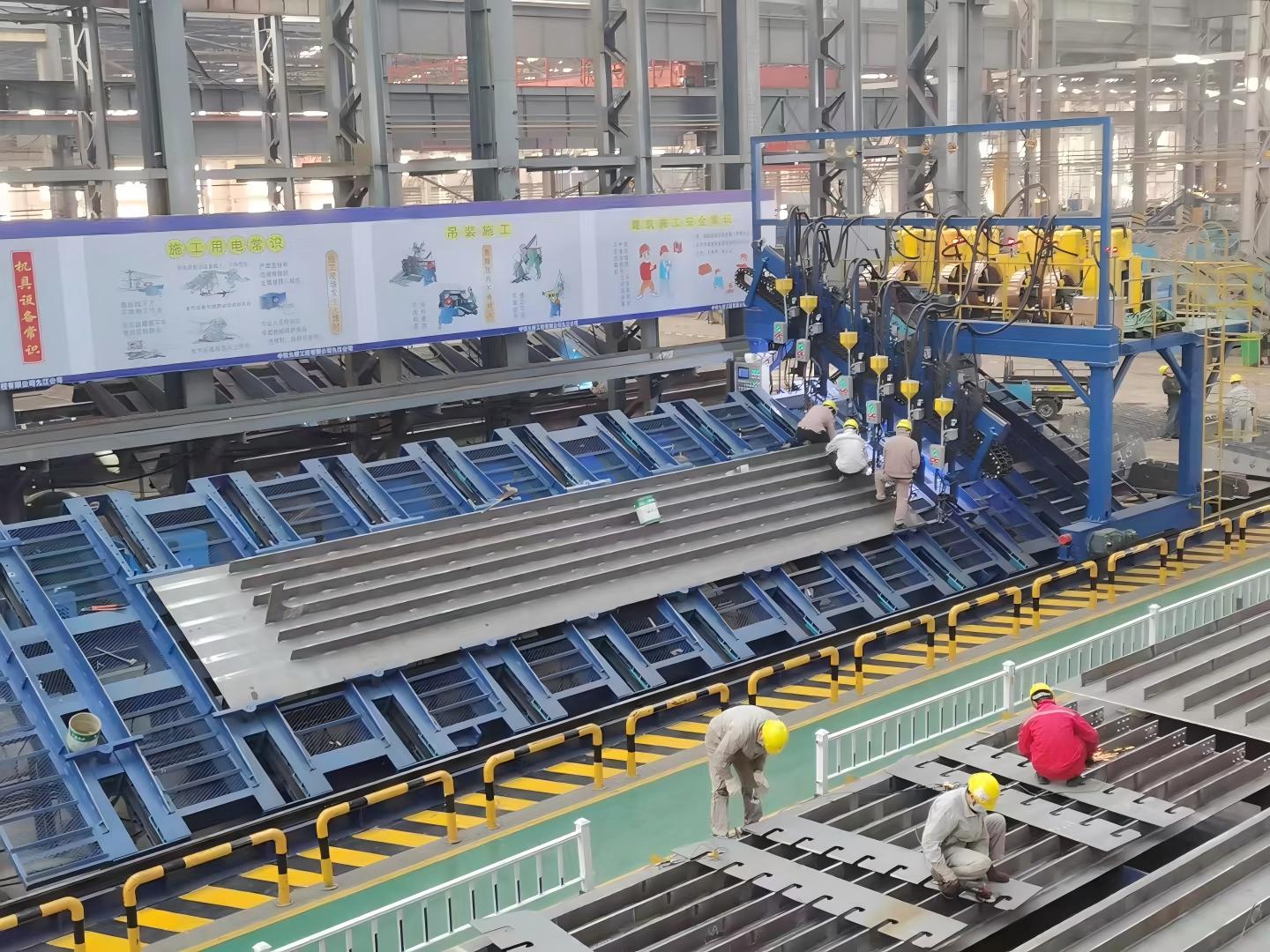
 T beam welding machineThis gantry welding machine performs automatic welding for pre-formed T-shaped steel. It adopts servo-driven automatic seam tracking welding arm and linear moving gantry. Equipped with fume treatment system and heavy-duty welding platform with hydraulic clamping and anti-flipping devices, it controls welding deformation and guarantees operation safety.