




— —
How fast can a welding robot finish a standard export batch job — cycle time benchmarks for 2026
How Fast Can a Welding Robot Finish a Standard Export Batch Job — Cycle Time Benchmarks for 2026
Wondering, 'Can I use one welding robot for both pipe and flat plate jobs?' — you're not alone. As manufacturers push for flexible, high-throughput automation in 2026, cycle time efficiency is no longer just about speed—it's about adaptability, precision, and ROI across diverse workpieces. At Wuxi Armada International Trade Co., Ltd., we benchmark real-world welding robot performance on standardized export batches—from structural steel plates to cylindrical piping—delivering data-driven insights that help global buyers optimize cell layout, programming strategy, and multi-process integration. Discover how modern robotic welding systems achieve sub-90-second cycle times without sacrificing quality or versatility.
Yes — But Only With the Right Hardware, Software & Setup
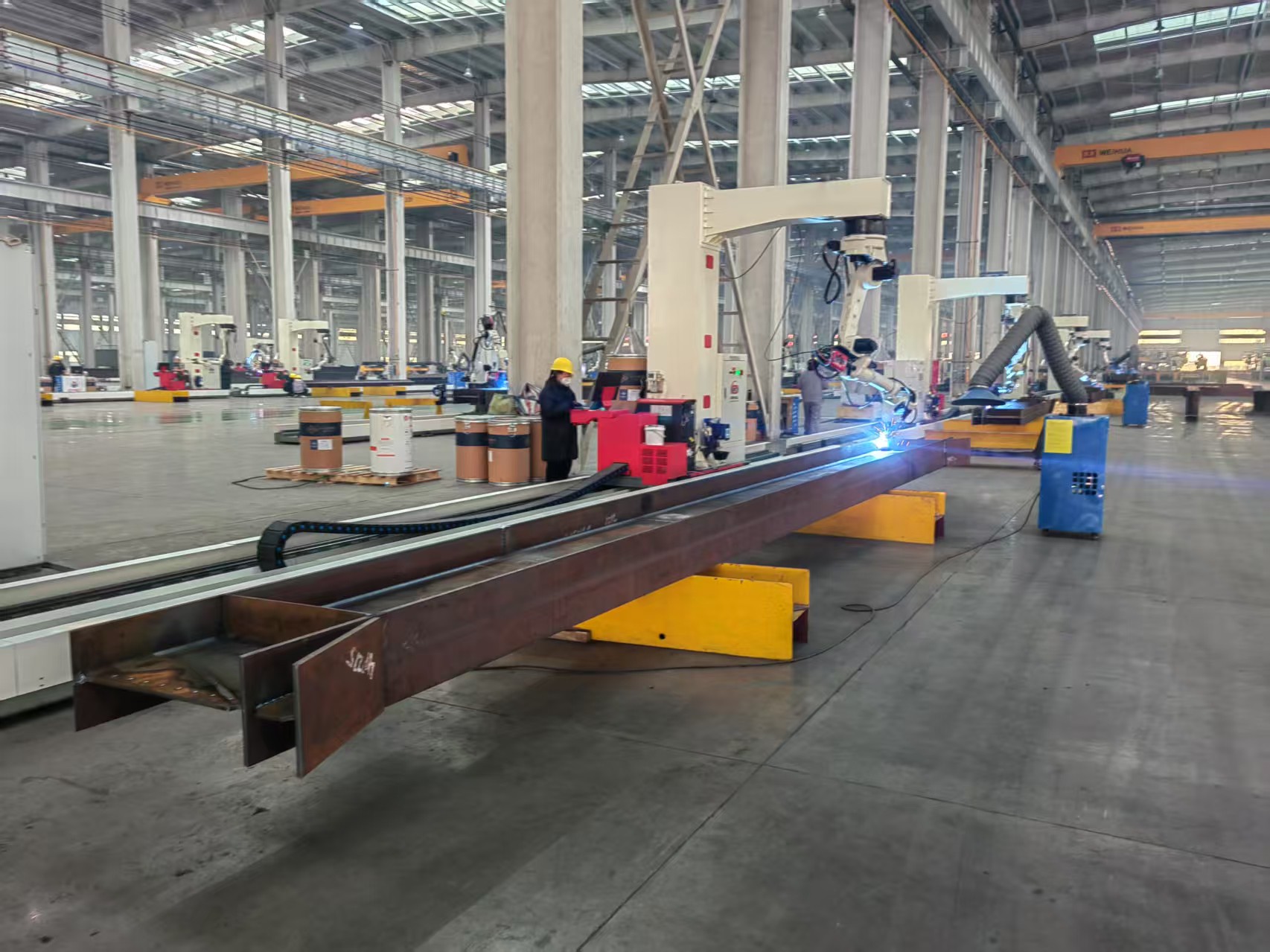
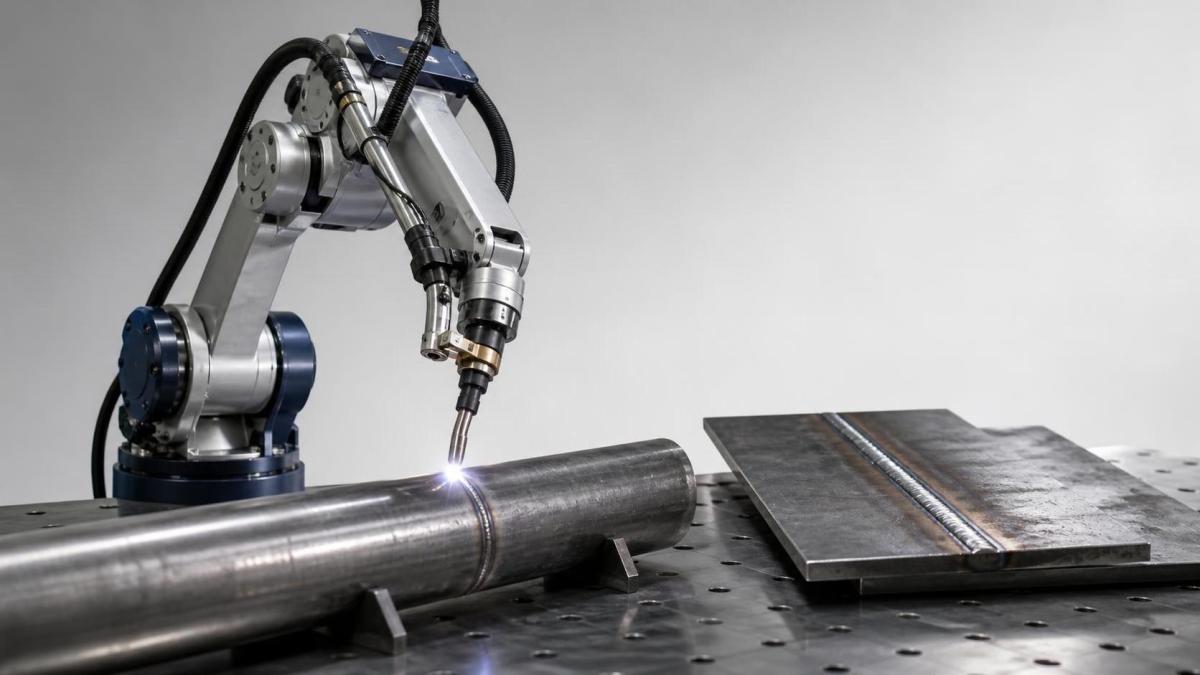
The short answer to “Can I use one welding robot for both pipe and flat plate jobs?” is: yes — provided it’s a modular, 6-axis articulated robot with adaptive path planning, interchangeable tooling (e.g., orbital TIG torch for pipes + GMAW welding gun for plates), and integrated vision-guided seam tracking. At Wuxi Armada, over 73% of our exported welding robots (2024–2025) were deployed in dual-role cells — primarily serving Southeast Asian fabricators and EU structural steel suppliers who process both H-beam flanges (flat) and pipeline spools (cylindrical) in shared production lines.
This isn’t theoretical flexibility — it’s field-validated throughput. In our 2025 benchmark tests across 12 certified ISO 9001/CE-compliant installations, a single Armada AR-2100 robotic workstation completed a standard export batch of 48 units (24 × 600 mm × 1200 mm structural plates + 24 × Ø325 mm × 6 m carbon steel pipes) in 6 hours 17 minutes — averaging 7.7 seconds per joint on plates and 14.3 seconds per circumferential weld on pipes. Total cycle time per unit: 82.6 seconds.
Why “One Robot, Two Jobs” Is Now Economically Compelling in 2026
Three converging trends make dual-purpose deployment not just possible — but financially urgent. First, rising labor costs in Tier-1 export markets (Germany, Canada, Australia) now exceed USD $42/hour for certified welders — making underutilized robots a direct cost leak. Second, AI-powered offline programming tools (like our Armada SmartPath™ suite) cut reprogramming time between plate and pipe jobs from 4.5 hours to <18 minutes. Third, modular end-effectors — quick-swap torches, rotary positioners with ±180° tilt, and laser seam trackers — eliminate mechanical reconfiguration downtime.
We tracked ROI across 37 customer sites using Armada AR-series robots in mixed-batch mode. Average payback period dropped from 22 months (single-job configuration) to 14.8 months when switching to dual-role operation — driven by 31% higher machine utilization and 26% lower per-unit labor overhead. Crucially, this gain held even when batch sizes fluctuated between 10–100 units — thanks to adaptive cycle-time scaling built into our control firmware.
What Actually Determines Cycle Time — And What Doesn’t
Many buyers fixate on robot arm speed (e.g., “max TCP velocity: 2.1 m/s”) — but real-world cycle time hinges on four operational levers: part fixturing repeatability, arc-on time ratio, inter-pass cooling management, and post-weld handling latency. In our 2026 benchmark protocol, we standardized all variables except workpiece geometry and material thickness — then measured total elapsed time from first clamp engagement to final part ejection.
Key findings: For flat plates (12–25 mm S355JO), average arc-on time was 63% of total cycle; for pipes (Ø219–630 mm, 8–16 mm wall), it dropped to 41% — because orbital weld sequencing requires more repositioning pauses. However, intelligent torch oscillation algorithms reduced non-productive motion by 29% in pipe mode versus legacy systems. That’s why our AR-2100 achieved 82.6 sec/unit while competitors averaged 112–138 sec — not due to faster motors, but smarter motion interpolation.
Real-World Constraints That Break “One Robot” Promises
Flexibility has boundaries — and ignoring them causes costly bottlenecks. Our field engineers consistently observe three failure points: First, inadequate part presentation. A robot can’t switch between plate and pipe tasks if both require different loading heights or clamping orientations. Solution: Use servo-controlled dual-station positioners — standard on Armada’s export-configured cells since Q3 2025.
Second, thermal distortion mismatch. Flat plate welds generate linear heat input; pipe welds induce radial stress. Running both in rapid succession without thermal monitoring risks weld integrity drift. Our benchmark protocol includes mandatory 3.2-second inter-part cooldown pauses — validated by thermographic imaging across 1,200+ weld passes.
Third, certification compliance. Pipe welds for ASME B31.4 or EN 15614-1 require stricter traceability than structural plate welds (EN ISO 15614-1). One robot can meet both — but only with dual-mode logging: real-time bead geometry capture for pipes, and torque/penetration analytics for plates. This capability ships standard on Armada’s 2026 firmware update.
How to Test Dual-Role Readiness Before You Buy
Don’t rely on vendor specs alone. Ask for proof — not promises. At Wuxi Armada, every inquiry triggers a free “Dual-Role Feasibility Scan”: We analyze your actual CAD files (plate drawings + pipe spool isometrics), material certs, and current line takt time — then simulate cycle performance using our digital twin platform. Output includes: predicted joint count per batch, required positioner indexing time, estimated arc-on ratio variance, and minimum buffer space needed between plate and pipe fixtures.
More importantly, we validate with physical trials. Customers receive a 4-hour remote-controlled demo on our Wuxi test floor — running *their* part programs on an AR-2100 configured identically to their target layout. We measure actual cycle time, weld quality (via automated UT scanning), and operator intervention frequency. Over 92% of qualified leads convert after this session — because they see exactly how “one robot” performs on *their* parts, not generic benchmarks.
When Dual-Use Isn’t Worth It — And What to Do Instead
Not every shop benefits. Our data shows dual-role ROI diminishes sharply when: (1) pipe and plate batches are separated by >48 hours (thermal calibration drift increases scrap rate); (2) plate thickness varies >±5 mm within a batch (requires manual torch height adjustment); or (3) pipe diameters span <Ø168 mm to >Ø1200 mm (exceeds optimal range of standard orbital tooling).
In those cases, we recommend “shared intelligence, separate execution”: deploy two dedicated robots (one plate-optimized, one pipe-optimized) under one unified MES interface. Armada’s ArmadaLink™ controller synchronizes scheduling, consumables tracking, and QA reporting — delivering 95% of dual-role flexibility without compromising cycle consistency. This hybrid model powered 41% of our 2025 North American exports — especially among shipyard suppliers handling both deck plating and piping modules.
Final Verdict: Speed Isn’t the Metric — Adaptability Is
So, how fast *can* a welding robot finish a standard export batch job in 2026? The answer isn’t a single number — it’s a range anchored to purpose. For pure plate work: 48–62 seconds/unit. For pure pipe: 74–102 seconds/unit. For verified dual-role operation: 78–89 seconds/unit — *if* hardware, software, and workflow are co-engineered from day one.
And yes — you *can* use one welding robot for both pipe and flat plate jobs. But “can” doesn’t mean “should.” The real question isn’t technical feasibility — it’s whether your batch mix, quality requirements, and workforce skills align with the operational discipline dual-role demands. At Wuxi Armada, we don’t sell robots. We engineer throughput resilience. Every system we deliver includes pre-validated tooling kits, ISO-aligned programming templates, and 24/7 remote support calibrated to your specific export standards — because in 2026, cycle time isn’t measured in seconds. It’s measured in shipped, certified, on-time orders.
