




— —
What to Check Before Buying a China Welding Robot for Production Use
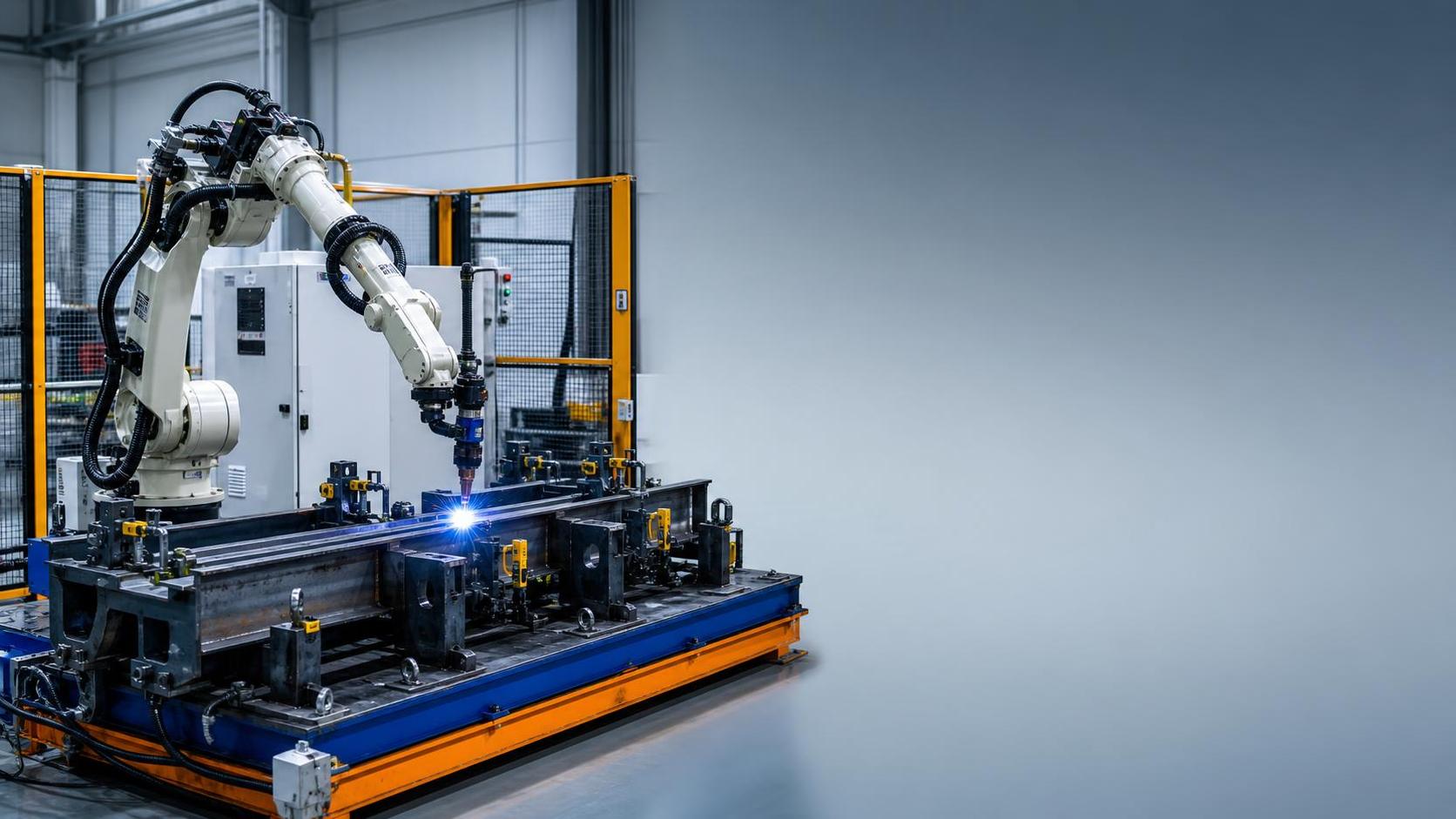
Start with the production job, not the robot brochure
A China Welding robot can be a strong buy for production use, but only when the machine matches the actual welding work on your floor. Too many purchasing decisions start with price, arm reach, or payload. Those matter, but they come after a simpler question: what exactly will this robot weld, for how many hours, and with what quality target?
If you are buying for production rather than for a trial cell, your checklist needs to cover weld repeatability, joint variation, fixture quality, controller compatibility, operator support, safety compliance, and total running cost over several years. A low initial quote is easy to approve. A system that creates rework, line stoppage, or spare-parts delays is much harder to defend later.
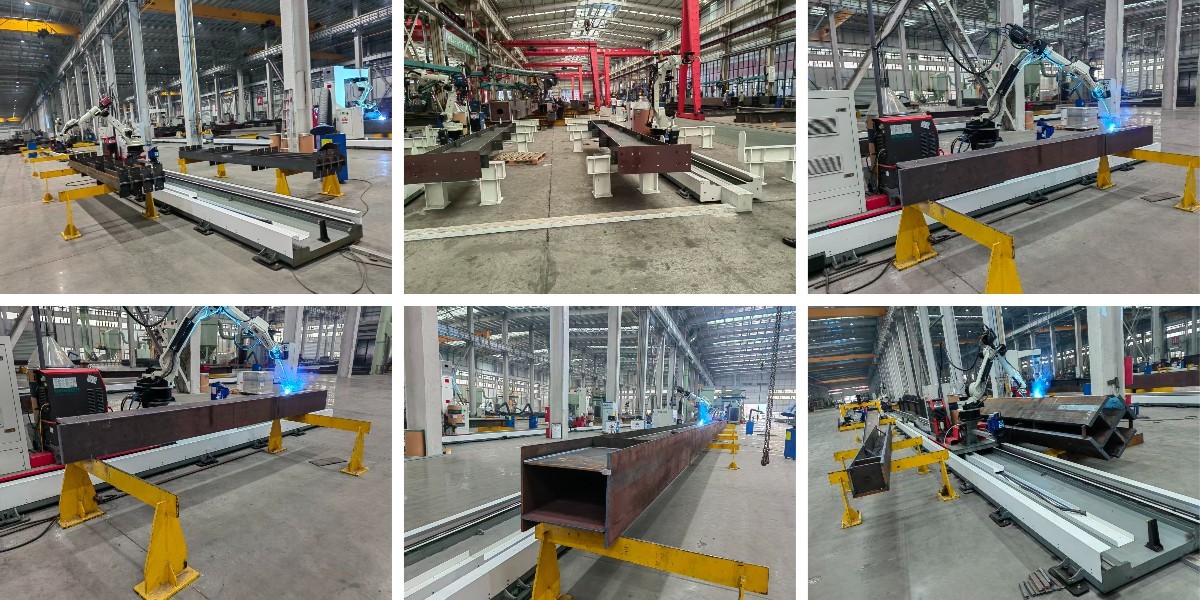
Which parts and welds should be reviewed before you compare suppliers?
Review the parts first. Not the robot catalog.
Procurement teams should ask engineering or production for a clear part list covering material grade, thickness range, joint type, weld position, required penetration, bead appearance, takt time, and expected annual volume. Without that, you cannot judge whether the proposed China Welding robot is properly sized or simply over-configured.
- Thin sheet and cosmetic welds usually demand tighter heat control and cleaner torch movement.
- Heavy structural work may care more about deposition rate, reach, and uptime under long shifts.
- Mixed-product production often needs faster changeover and easier program adjustment.
A robot can repeat the same path very well, but it does not automatically solve poor part consistency. If your incoming parts vary a lot, the real purchase question becomes whether you also need seam tracking, touch sensing, better fixtures, or upstream correction equipment.
How do you know whether a welding robot is accurate enough for your line?
Do not stop at a generic statement like “high precision.” Ask what level of repeatability is being offered, and then compare that to your weld joint tolerance and fixturing condition. In production, the practical issue is not abstract robot accuracy. It is whether the torch arrives at the weld start point reliably enough across real parts, real fixtures, and real thermal distortion.
Ask the supplier to show sample welding on parts close to your own application, or at least on similar thickness and joint types. If they only show perfect demo coupons, that tells you very little about actual production stability. You also want to know whether the controller supports touch sensing or seam finding when part variation is unavoidable.
Is payload and reach the main sizing issue?
Usually not. Buyers often focus on arm reach and payload because those numbers are easy to compare. In welding cells, the more common mistake is ignoring torch angle access, cable management, positioner coordination, and future fixture changes.
A robot with enough reach on paper may still struggle if the wrist cannot access fillet welds inside a tight structure, or if the torch must approach around clamps. Ask for the full cell layout, not just the arm specification. That layout should include robot base position, workpiece envelope, fixture, positioner if any, safety fence, and operator loading area.
What should procurement check in the welding power source and controller?
This is where a lot of long-term cost hides. A welding robot is not only a robot arm. The power source, wire feeder, torch cleaning unit, controller, teach pendant, and software package all affect output and service cost.
Check these points carefully:
Ask for the exact configuration in writing. “Robot with welding package” is too vague for procurement review.
Do safety documents really matter before the order is placed?
Yes, because safety changes are much more expensive after the machine arrives. If the system is being shipped to a market that requires compliance documentation, you need to review what the supplier will actually provide for the complete cell, not only for individual components.
For buyers serving Europe or working with customers that request documented compliance, this point is especially important. Wuxi Armada International Trade Co., Ltd states that production and design are organized in line with ISO9001 quality system certification and EU CE standards, which is useful context, but procurement still needs the machine-level document package tied to the order.
Check whether the quote includes the safety fence, interlocks, emergency stops, electrical drawings, operation manual, and maintenance manual. Also confirm who is responsible for final installation safety if the robot cell is integrated with your own conveyors, positioners, or local guarding.
What hidden costs usually appear after buying a China Welding robot?
The machine price is only one line in the total budget. Common hidden costs include tooling, fixture redesign, installation, operator training, software options, local electrical adaptation, spare parts stock, torch consumables, and downtime during commissioning.
There is also the cost of unstable upstream parts. In structural fabrication, a robot may expose distortion or dimensional inconsistency that manual welders used to correct on the fly. That is why some buyers also review adjacent equipment in the line. For example, if H-beam parts need straighter geometry before automated welding or downstream assembly, equipment such as the YTJ-60A and YTJ-80A H beam straightening machine may become relevant. Its listed specifications include flange maximum thickness up to 60 mm or 80 mm depending on model, flange width ranges up to 1000 mm or 1200 mm, and hydraulic motor drive for transmission. That does not replace welding automation, but it shows how production quality upstream can affect robot performance and rework cost.
What documents should a buyer request before approving the purchase?
Ask for a document set that lets you compare suppliers on the same basis. Without that, one quotation may look cheaper simply because key items are omitted.
- Detailed technical proposal with robot model, power source, controller, payload, reach, and software functions.
- Cell layout drawing with footprint and service space.
- Utility requirements: power, air, gas, extraction, and grounding.
- Cycle time assumption and weld scope.
- Scope boundary: what is included, excluded, and supplied by the buyer.
- Spare-parts list and recommended first-year stock.
- Training plan for operators and maintenance staff.
- Warranty terms and response process for faults.
If any supplier avoids fixed documentation and keeps everything at presentation level, that is a procurement risk by itself.
How much after-sales support should you expect from an overseas supplier?
More than a warranty statement. You need a practical service path.
Ask who handles remote diagnosis, what time zone support is available, whether key spare parts can be shipped quickly, and whether local partner technicians exist in your country or region. A welding robot used in production cannot sit idle while you wait for a generic reply email.
It is also worth checking whether wear parts are based on standard market items or special in-house designs. Standard torch consumables and commonly available electrical components usually reduce both downtime and inventory pressure.
Can a lower-cost robot still be the right choice?
Yes, when the process is stable, the weld family is narrow, and your team has enough technical support to maintain the cell. In repetitive production with consistent parts, a competitively priced China Welding robot can make financial sense.
It becomes risky when the production mix changes often, tolerance control is weak, or the supplier cannot support commissioning well. In that case, the cheaper machine may end up costing more through longer startup time, more manual intervention, and lower usable uptime.
What mistakes do procurement teams make most often?
Three mistakes show up again and again.
- Buying by arm specification alone without reviewing the full welding cell.
- Assuming automation will compensate for poor fixtures or variable parts.
- Comparing quotations without normalizing what is included in the scope.
Another common issue is treating acceptance as a shipping milestone rather than a production milestone. Before placing the order, define what successful acceptance means: sample part quality, cycle time, training completion, document handover, and installation support. If that is vague, disagreements usually appear after payment stages are triggered.
What is a practical way to compare offers from different suppliers?
Use a weighted comparison sheet built around production impact, not marketing language. Price should be one factor, not the only one.
That kind of comparison makes internal approval easier because it connects the purchase to line performance and cost control, not just to capital spend.
Before the PO is issued, what is the final checkpoint?
Make sure the supplier, your production team, and your maintenance team are all describing the same cell in the same way. Final review should cover the target parts, weld scope, output target, included equipment, acceptance criteria, required documents, training content, and service response path.
That last alignment step sounds basic, but it prevents many expensive disputes. When buying a China Welding robot for production use, the best decision usually comes from a simple rule: choose the system that is easiest to run reliably every day, not the one that looks cheapest in the first quotation.
