




— —
Top 5 Industry Applications for CNC Plate Cutting Machines: From Shipbuilding to Renewable Energy Tower Fabrication
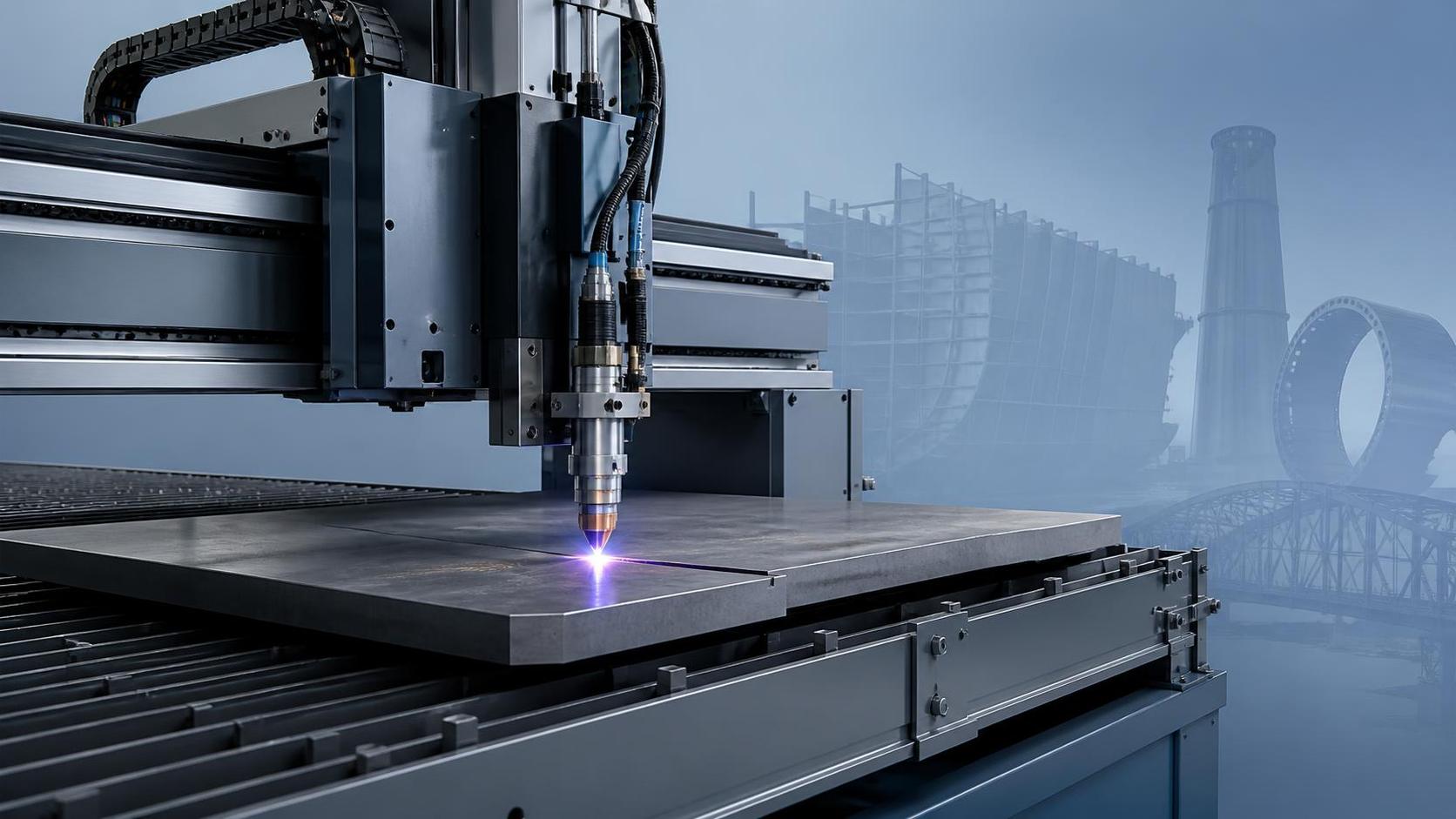
For project managers overseeing large‑scale industrial fabrication, selecting the right CNC Plate cutting machine is critical to ensuring precision, efficiency, and cost control across diverse sectors. From heavy‑duty shipbuilding hulls to high‑tolerance renewable energy tower sections, this technology delivers unmatched accuracy and repeatability. In this article, we explore the top 5 industry applications where CNC Plate cutting machines drive measurable value — highlighting real‑world demands, material challenges, and performance expectations. As a trusted supplier of ISO9001‑ and CE‑certified CNC cutting systems, Wuxi Armada International Trade Co., Ltd supports global engineering teams with robust, field‑proven solutions tailored for complex structural steel projects.
1. Shipbuilding: Where Tolerance Meets Scale
Shipyard fabrication isn’t just about cutting big plates—it’s about cutting right, every time. Hull sections, bulkheads, and deck plating often exceed 40 mm in thickness and span over 12 meters. Thermal distortion, edge squareness, and kerf consistency become non‑negotiable when misalignment in a single panel can cascade into costly rework during assembly.
Modern CNC plate cutters—especially those with high‑power plasma or fiber laser sources—handle marine‑grade AH36/DH36 steels with minimal dross and tight angular tolerances (±0.3°). Integrated beveling capabilities allow single‑pass preparation of weld joints, reducing secondary operations and human error. For yards managing parallel builds, repeatability across hundreds of identical frames means less setup time—and more predictable lead times.
2. Offshore Oil & Gas Structures: Precision Under Pressure
Offshore jackets, subsea modules, and topside support frames operate in environments where fatigue life is measured in decades—not years. Here, CNC plate cutting isn’t just about shape; it’s about metallurgical integrity. Cutting parameters must preserve base metal properties near heat‑affected zones, especially for high‑strength low‑alloy (HSLA) steels like S355G10+M or ASTM A514.
Machines equipped with adaptive height control, real‑time torch monitoring, and nitrogen‑assisted plasma ensure clean, oxide‑free edges—critical for subsequent ultrasonic testing and post‑weld heat treatment compliance. Many operators now integrate nesting software that accounts for grain direction and residual stress patterns, not just material yield. That level of contextual awareness separates functional cutting from fabrication‑ready cutting.
3. Wind Energy Tower Fabrication: Speed Without Sacrifice
Wind turbine towers demand both volume and verifiability. A single 150‑meter tower may require over 800 individual ring segments—each needing precise diameter, wall thickness, and flange alignment. CNC plate cutting machines here serve dual roles: first as primary blanking tools (cutting rolled plate into arcs), and second as precision profiling stations (cutting bolt holes, access openings, and lifting lugs with ±0.2 mm positional accuracy).
What sets high‑performing systems apart is their ability to maintain thermal stability across multi‑hour runs—no drift in arc radius or concentricity. Also increasingly common: integration with downstream processes like robotic welding cells, where cut parts feed directly into positioners without manual re‑measurement. That seamless handoff reduces touchpoints—and traceability gaps.
4. Heavy Construction & Bridge Fabrication: When Geometry Gets Complex
Bridge girders, crane booms, and stadium trusses rarely follow straight lines. They twist, taper, and intersect at compound angles. Traditional templates and manual marking no longer scale. Today’s advanced CNC plate cutters use 3D model‑driven nesting—importing STEP or IFC files directly from structural BIM models—to generate toolpaths that account for camber, sweep, and connection geometry in one go. This eliminates the “translation loss” between design intent and shop floor execution.
Operators report fewer field‑fit issues, reduced grinding labor on connection faces, and faster QA sign‑offs—because the part matches the model before it leaves the table. It’s less about cutting metal, and more about translating digital confidence into physical reality.
5. Modular Building & Prefab Steel Structures: Repetition With Intent
Modular construction thrives on repetition—but only if repetition doesn’t mean compromise. Wall panels, floor cassettes, and stair stringers must interlock flawlessly across dozens—or hundreds—of units. That requires not just dimensional accuracy, but consistent edge finish, hole roundness, and burr control.
CNC plate cutting machines with integrated deburring modules or post‑cut edge conditioning deliver parts ready for immediate assembly—no secondary finishing line needed. Some fabricators even pair them with automated material handling systems that load, cut, and stack parts by module ID—linking physical output directly to ERP job numbers. The result? Less floor space consumed by staging, tighter inventory control, and fewer “last‑minute” surprises during on‑site erection.
None of these applications exist in isolation. A wind tower fabricator might also supply structural components for offshore substations. A shipyard may pivot to building hydrogen storage vessels—requiring new alloys and stricter NDT protocols. That’s why flexibility matters as much as power: modular software architecture, tool‑changing capability, and compatibility with third‑party CAD/CAM and MES platforms aren’t nice‑to‑haves—they’re operational lifelines.
Which brings us to an often‑overlooked point: cutting is rarely the final step. Threaded connections, anchor bolts, and lifting inserts frequently follow plate processing. For high‑volume threaded components used in tower bases or foundation anchors, consistency and surface integrity are paramount. That’s where complementary equipment like the Z28‑500 thread rolling machine plays its role—delivering cold‑formed, non‑chip threads with enhanced surface hardness and fine pitch control (0.3–8.0 mm), ideal for carbon and alloy steels up to Φ120 mm. Its PLC‑controlled automation and multi‑mode operation let fabricators match threading throughput to upstream cutting capacity—keeping the workflow balanced, not bottlenecked.
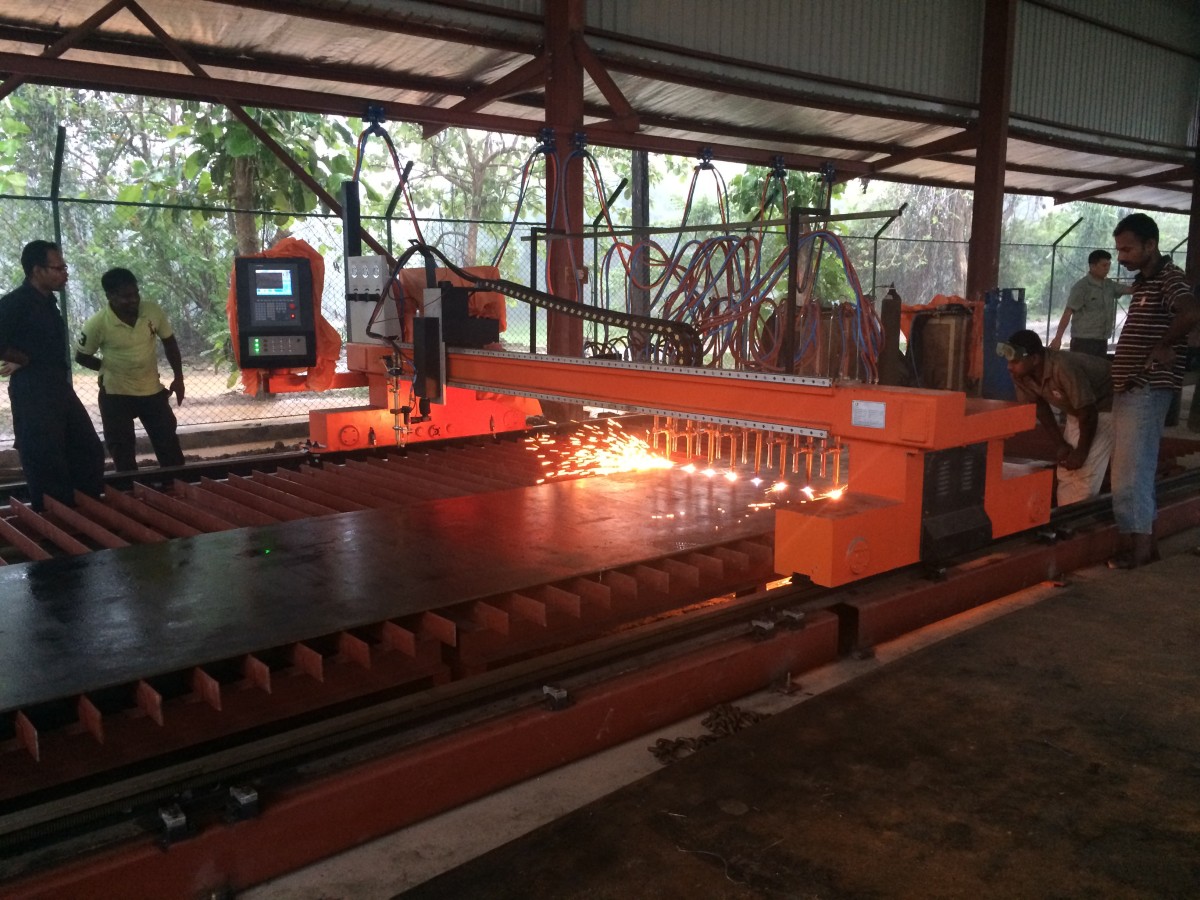
At Wuxi Armada, we don’t sell machines—we help project managers solve constraints. Whether it’s reducing scrap in a Southeast Asian shipyard, meeting EU CE‑compliant edge quality for German tower suppliers, or supporting North American fabricators scaling up for IRA‑backed infrastructure, our systems are engineered for real jobsite conditions—not just lab specs.
We work with your team to align machine configuration—not just with material specs, but with your workflow cadence, maintenance capacity, and long‑term upgrade path. Because in industrial fabrication, the best CNC Plate cutting machine isn’t the one with the highest spec sheet. It’s the one that shows up—day after day—with the right cut, the right edge, and the right support behind it.
