




— —
Aluminum Magnetic Polishing Machines: Why Non-Ferrous Media Selection Directly Impacts Burr Removal Rate and Part Dimensional Stability
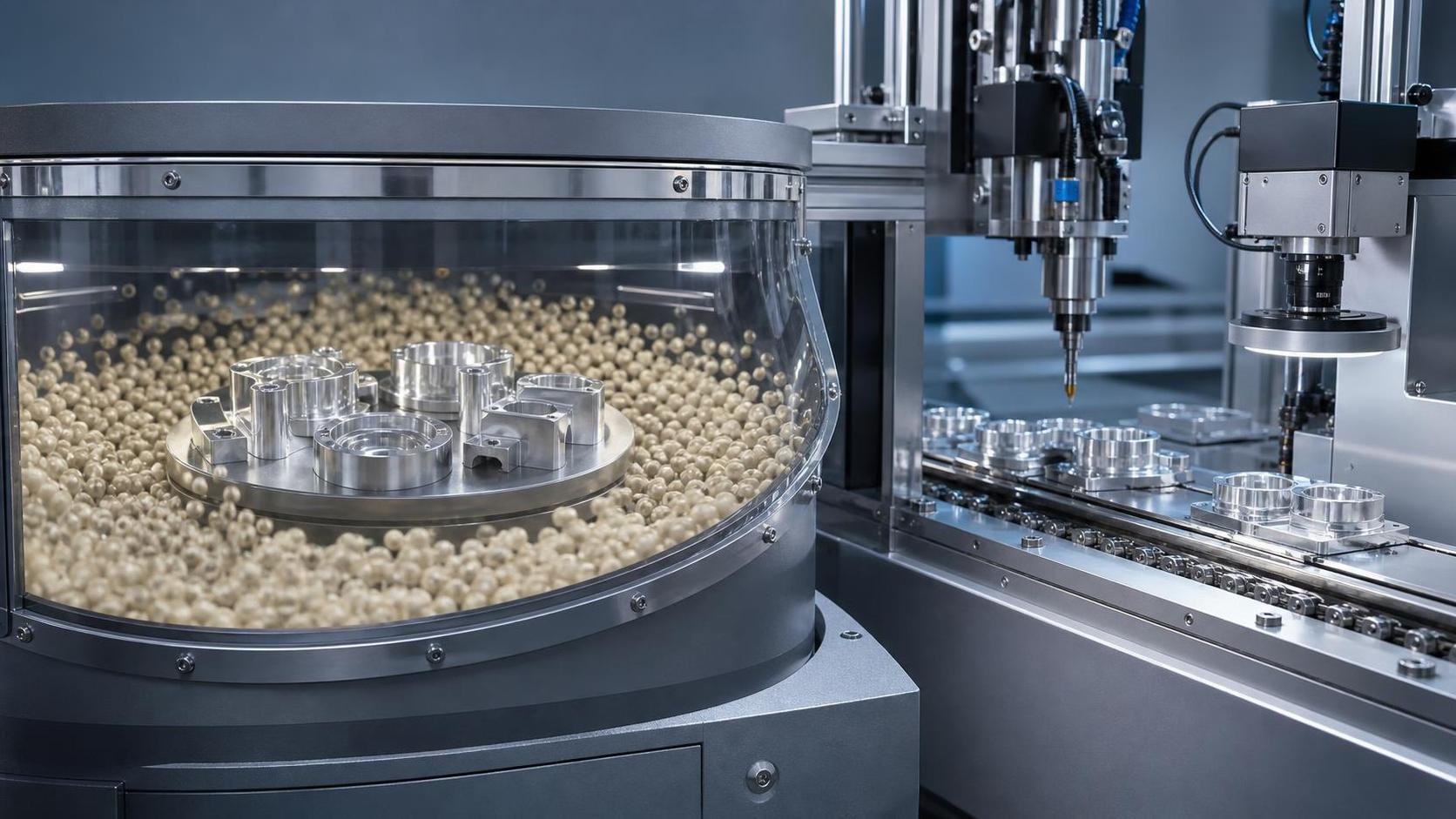
Why Aluminum Magnetic Polishing Machines Aren’t Just “Magnetic Polishers” in Disguise
If you’ve ever run aluminum parts through a standard magnetic polishing machine—especially one designed for steel—you know the telltale signs before the metrology report even arrives: inconsistent edge definition, subtle warping on thin flanges, or burrs that vanish from some edges but persist stubbornly at corners. That’s not operator error. It’s physics—and material mismatch—working against you.
Aluminum isn’t just “non-magnetic.” Its low magnetic permeability, high thermal expansion coefficient (23.1 × 10⁻⁶/K), and relatively soft surface layer change how magnetic fields interact with media, how frictional heat dissipates, and how mechanical energy transfers during finishing. A machine calibrated for ferrous media—say, stainless-steel pins or iron-based abrasives—won’t deliver repeatable results on 6061-T6 or 7075 aerospace-grade stock. Not because it’s poorly built, but because its core dynamics weren’t engineered for aluminum’s response curve.
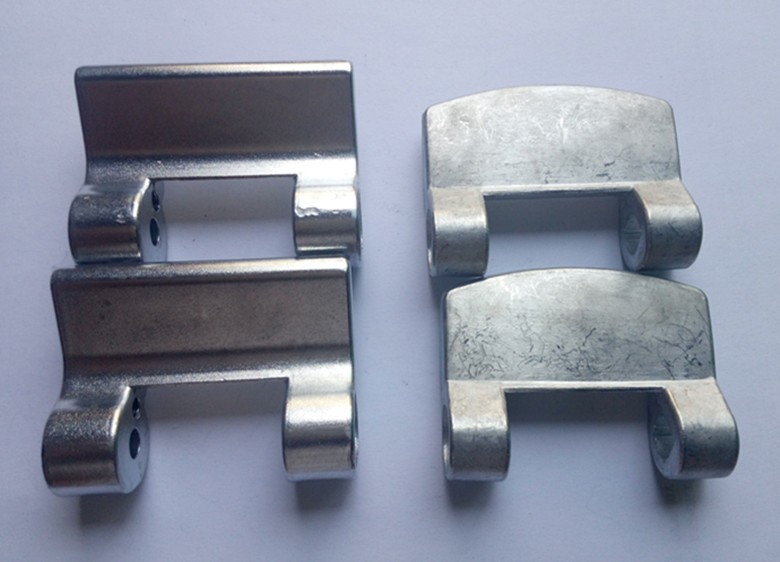
The Media-Machine Loop: Where Most Evaluations Go Wrong
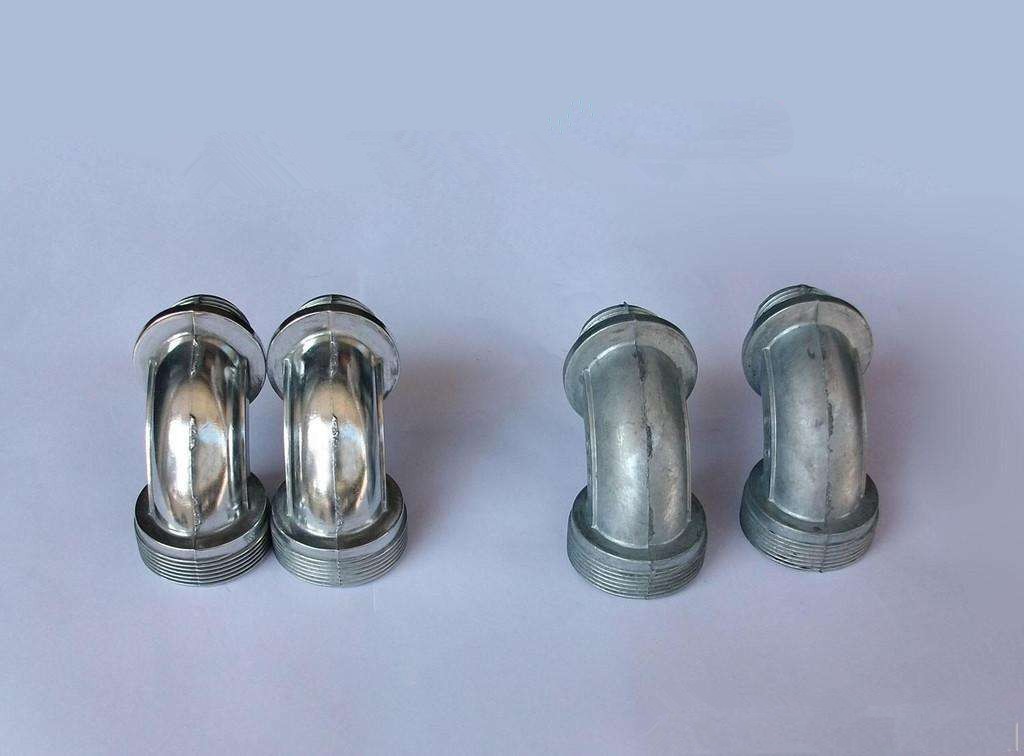
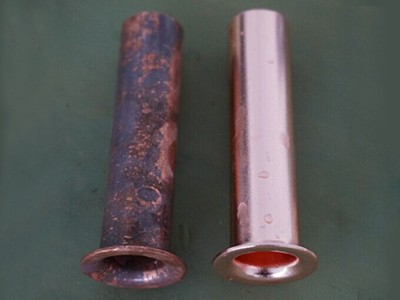
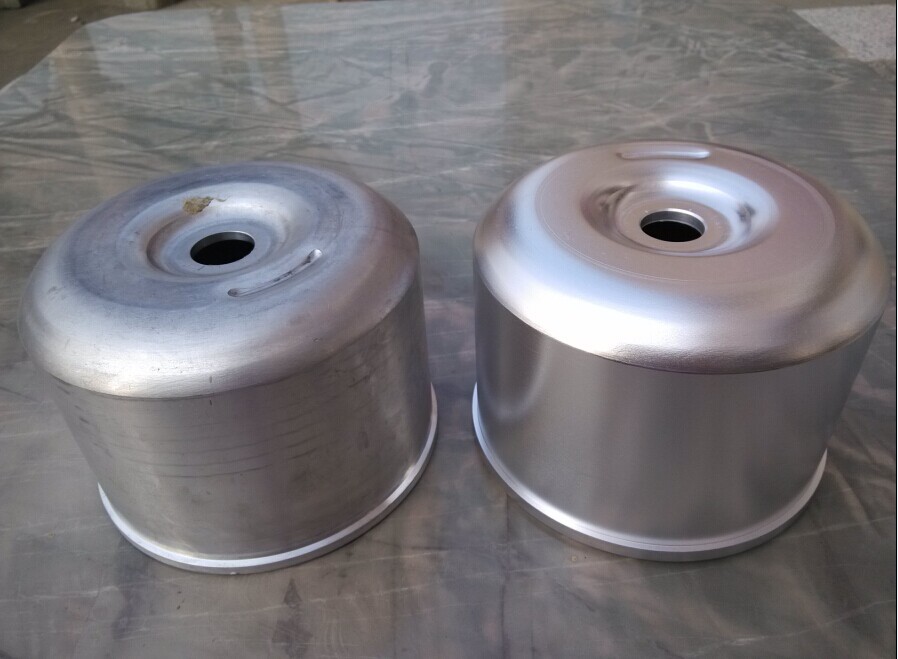
Technical evaluators often treat media selection as a downstream decision—something to test after choosing the machine. That’s backwards. In aluminum magnetic polishing, media isn’t an accessory; it’s part of the actuation system. Non-ferrous ceramic media (typically alumina-zirconia composites) must be sized, shaped, and density-balanced to respond predictably to the machine’s field gradient—not just its peak strength. Too dense? You get localized pressure spikes and micro-deformation on thin-walled housings. Too light? Burrs survive, especially around drilled holes or laser-cut kerfs where residual stress concentrates.
And frequency matters—not just RPM. Real-world aluminum deburring requires precise control between 25–45 Hz. Below 25 Hz, media slumping dominates; above 45 Hz, eddy-current heating accelerates, raising surface temperature beyond safe thresholds for temper-sensitive alloys. That’s why Wuxi Armada’s ISO9001- and CE-certified Aluminum Magnetic polishing machine systems embed real-time current monitoring in the coil driver—not just voltage—to maintain field consistency across load variations, batch size shifts, and ambient temperature swings.
Dimensional Stability Isn’t Just About “No Warping”
Stability here means sub-10 µm repeatability across five consecutive batches of identical parts—same tooling, same coolant flow, same media replenishment schedule. That level of control demands more than tight tolerances on the machine frame. It requires thermal mass management: insulated coil housings, forced-air cooling ducts routed away from workpiece zones, and media recirculation paths that avoid stagnation points where heat builds.
We’ve seen cases where operators switched from water-soluble coolant to oil-based emulsions to reduce corrosion risk—only to discover 0.012 mm bow on 3-mm-thick panels after 4 hours of continuous operation. Why? Oil’s lower specific heat capacity meant slower heat transfer from media-to-coolant, letting localized hot spots develop near clamping fixtures. The fix wasn’t changing the coolant—it was adjusting the dwell time per cycle and adding a 3-second pause between rotations to let heat equalize. That kind of nuance doesn’t appear in spec sheets. It lives in process logs—and in experience.
When Deburring Becomes a Downstream Risk
Burr removal rate isn’t just about speed. It’s about *where* and *how consistently* burrs are removed. On aluminum extrusions used in structural applications—like those processed on our CNC Drilling Machine For Steel Plates (Normal Speed)—edge integrity directly affects weld penetration depth and fatigue life. A 0.15 mm burr left on a 12-mm-thick tower flange may seem trivial until post-weld X-ray reveals porosity along the root pass. Magnetic polishing that leaves variable edge radius (R0.05 vs. R0.12 across a single part) creates inconsistent thermal mass distribution during welding—leading to uneven melt pool behavior.
That’s why our aluminum-specific systems integrate optical edge profiling pre- and post-cycle—not just for QA, but to feed back into media wear compensation algorithms. If edge radius variance exceeds ±0.02 mm over three cycles, the controller adjusts media feed rate automatically. No manual recalibration. No guesswork.
What to Watch During Evaluation—Beyond the Brochure
Don’t rely on “aluminum-compatible” labels. Ask for raw data: torque vs. frequency curves for their standard non-ferrous media set, thermal imaging of the work chamber under full-load 8-hour runtime, and dimensional drift measurements (CMM-tracked) on a standardized 100 × 100 × 6 mm test plate across 50 cycles.
Also verify media handling. Some vendors claim “ceramic media,” but supply sintered alumina beads with inconsistent grain structure—leading to differential wear and unpredictable cutting aggressiveness. True consistency comes from controlled-phase zirconia-alumina blends, batch-tested for hardness dispersion (±2 HV) and density tolerance (±0.03 g/cm³). Anything looser risks process drift within a single shift.
Finally, check integration readiness. Does the controller accept Modbus TCP or EtherNet/IP? Can it log media consumption per cycle? Is there a service port for direct coil impedance measurement—not just voltage readouts? These aren’t niceties. They’re diagnostic lifelines when a production line stalls at 3 a.m. and your only clue is a 0.7% drop in field strength reading.
No “One-Size-Fits-All”—Even Within Aluminum
A 7075-T73 aircraft bracket needs different media kinetics than a 5052-H32 heat sink fin. The former prioritizes edge sharpness retention; the latter, thermal conductivity preservation. Our systems ship with three pre-tuned profiles—“Structural,” “Thermal,” and “Optical”—each mapping media density, frequency sweep range, and dwell logic to alloy family and thickness band. You don’t select media first. You define the functional requirement—then match media and machine parameters as a coupled system.
That’s the difference between treating aluminum magnetic polishing as a finishing step—and treating it as a precision manufacturing process. Because it is.
