




When a 2000kg Welding Positioner Is Safer Than Manual Turning
— —
When a 2000kg Welding Positioner Is Safer Than Manual Turning
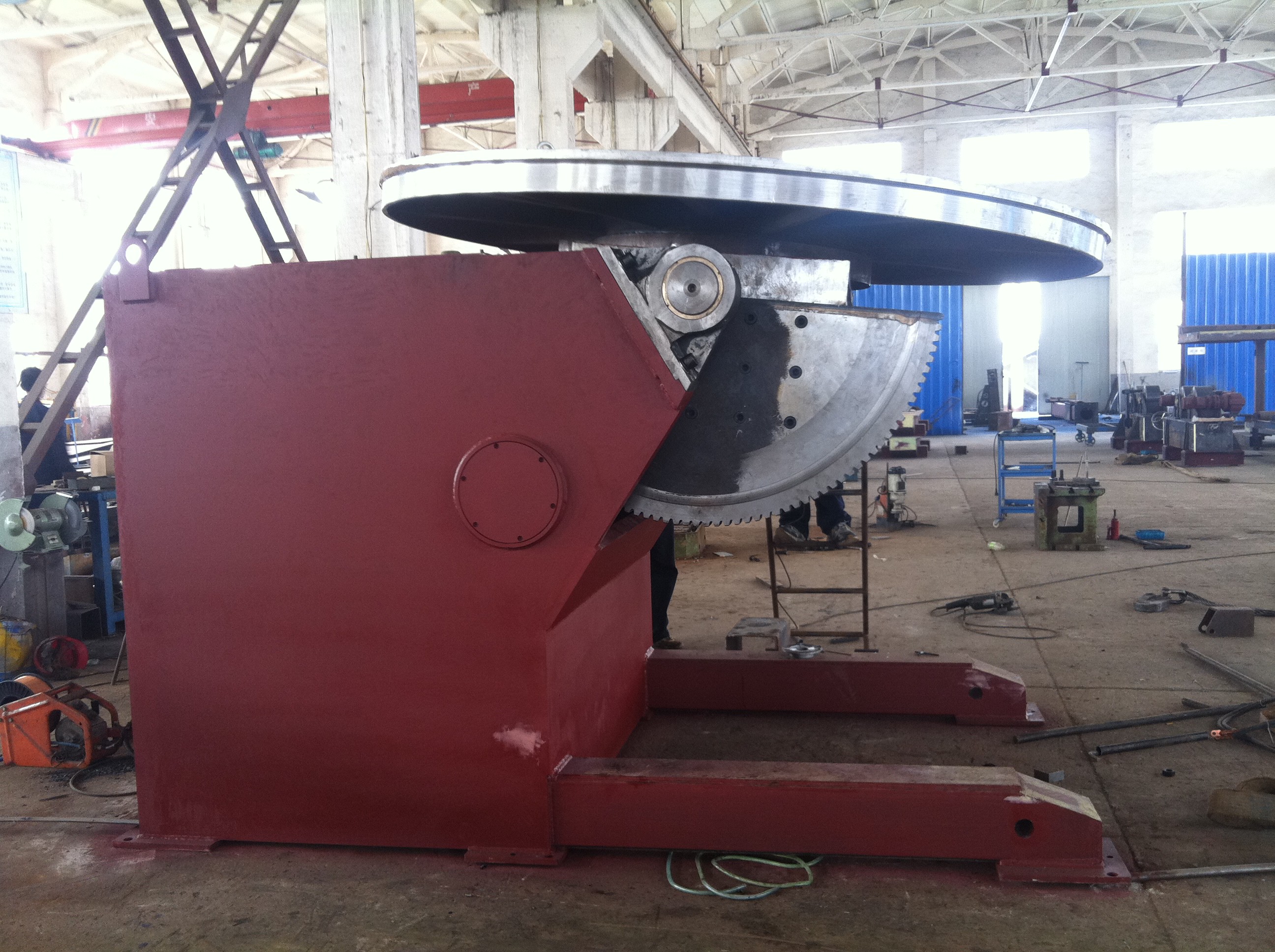
For quality control and safety managers, reducing handling risks is just as important as improving weld consistency. A 2000kg welding positioner offers a safer, more controlled alternative to manual turning by stabilizing heavy workpieces, minimizing operator strain, and supporting repeatable positioning. In high-volume fabrication environments, this shift can directly improve workplace safety, inspection accuracy, and overall production reliability.
In fabrication shops working with frames, vessels, structural parts, and welded assemblies, manual turning often remains a hidden source of risk. When a workpiece approaches 500kg, 1000kg, or 2000kg, the difference between a controlled rotation system and improvised handling becomes critical for both people and product quality.
For companies evaluating equipment upgrades, the question is not only whether a 2000kg welding positioner improves productivity. It is whether it reduces injury exposure, supports inspection repeatability, and helps standardize welding operations under ISO9001-oriented quality control and CE-conscious safety expectations.
Why Manual Turning Becomes a Safety Problem at 2000kg
A 2000kg welding positioner becomes safer than manual turning when the workpiece mass, center-of-gravity shift, and rotation frequency exceed what can be controlled consistently by operators. In practical shop conditions, that threshold is often reached long before the part weighs a full 2000kg.
The main risk points for safety managers
Manual turning usually involves cranes, chains, pry bars, temporary supports, or forklift assistance. Each added step creates another failure point. A single rotation may require 3 to 5 manual interventions, while a powered positioner can complete the same task through controlled rotation and locking in 1 operation.
- Unstable center of gravity during partial rotation
- Pinch points near fixtures, supports, and floor contact zones
- Operator fatigue from repeated repositioning across an 8 to 12 hour shift
- Greater chance of weld surface damage before inspection
- Inconsistent orientation affecting root pass visibility and access
Where injuries and defects often overlap
Safety incidents and quality escapes are often linked. When operators struggle to hold or turn a heavy assembly, welders may accept awkward torch angles, inconsistent travel speed, or incomplete access to joint areas. That can increase rework on multi-pass welds, especially on parts rotated more than 2 or 3 times per cycle.
For QC personnel, unstable repositioning also affects dimensional checks, bead appearance review, and visual defect detection. If the part does not return to the same angle repeatedly, inspection results can vary between shifts, stations, or operators.
The comparison below shows why a 2000kg welding positioner is often the safer option in routine fabrication.
The key conclusion is simple: once part rotation becomes frequent, heavy, or difficult to stabilize, the safety value of a welding positioner extends beyond ergonomics. It becomes a process control tool that reduces variability and prevents avoidable handling incidents.
How a 2000kg Welding Positioner Supports Quality and Compliance
For quality and safety teams, equipment value should be measured across at least 4 dimensions: operator exposure, weld accessibility, positioning repeatability, and traceable process consistency. A 2000kg welding positioner performs well in all 4 when matched to the actual workpiece shape and duty cycle.
Better weld access means fewer process deviations
When a part can be rotated to a preferred welding angle instead of forcing the welder to adapt, travel speed and joint visibility usually improve. This matters in fillet welds, circumferential welds, and multi-side assemblies where 15°, 45°, or 90° repositioning may be needed several times in one job.
A stable fixture also reduces the need for temporary tack adjustments after each turn. That can help maintain alignment tolerance and lower the risk of distortion caused by uneven handling or impact during repositioning.
More repeatable inspection conditions
QC teams benefit when the same part can be presented at the same angle every time. Visual inspection, dimensional verification, and weld profile review become more consistent. In production cells with 20, 50, or 100 similar parts per batch, repeatability can save significant inspection time and reduce disagreement between operators.
Typical evaluation criteria before purchase
Before specifying a 2000kg welding positioner, safety managers and QC leaders should review the following points together rather than treating the purchase as only a production decision.
- Actual part weight versus rated load, with a reasonable safety margin
- Offset load and center-of-gravity behavior during 360° rotation
- Fixture compatibility and clamping stability across different product families
- Rotation speed control for precise weld and inspection positioning
- Floor layout, loading method, and crane or forklift interaction
The table below outlines a practical review framework for procurement and risk control.
For many plants, the best results come when welding, QC, and EHS teams validate these 4 areas before installation. That reduces the chance of buying a machine that meets capacity on paper but creates workflow constraints in real use.
Where This Matters Most in Fabrication Workflows
A 2000kg welding positioner is especially valuable in medium to high-volume production where the same handling sequence repeats daily. This includes structural fabrication, pressure-related assemblies, machine bases, pipe spools, and welded subassemblies requiring controlled access to multiple sides.
High-mix versus repeat-batch production
In high-mix workshops, the benefit comes from reducing ad hoc turning methods across different part shapes. In repeat-batch production, the benefit is stronger process standardization. If one assembly requires 4 turns and 60 units are produced per month, even small reductions in manual intervention can create a meaningful safety improvement over time.
Related upstream and downstream equipment
Handling safety should also be evaluated alongside edge preparation and fit-up quality. For example, consistent bevel preparation before welding reduces the need for rework and unnecessary extra handling. In plate processing lines for pressure vessel, boiler, ship manufacture, electric, chemical area, and machinery applications, an Edge milling machine can support micron-level machining precision, bevel angles from 0° to 90°, and feed speed from 0.13 to 1.0m/min.
XBJ series equipment is designed for plate thickness from 6–80mm, with heavy-duty options covering 6–400mm. Features such as automatic clamping, edge detection, adjustable cutter head angle, and one-pass forming of U, V, K, inclined, and straight bevels can help stabilize weld preparation before the workpiece moves to positioning and welding stations.
For safety and QC managers, this connection matters. Better edge quality and more stable workpiece handling together reduce the number of correction cycles, crane movements, and touchpoints that normally increase both defect risk and operator exposure.
Implementation Advice for Safety and QC Teams
The safest equipment is not just the one with the right capacity. It is the one introduced with the right process rules. Most implementation plans can be structured in 3 stages over 2 to 6 weeks, depending on fixture complexity and operator training needs.
A practical rollout sequence
- Map current manual turning steps and identify high-risk contact points
- Verify actual part weight, offset load, and fixture requirements
- Set standard rotation positions for welding and inspection tasks
- Train operators on loading, locking, emergency stop, and safe clearance zones
- Review defect rate, near-miss events, and handling time after 30 days
Common mistakes to avoid
One frequent mistake is selecting by maximum weight only and ignoring eccentric load. Another is treating the positioner as a standalone machine without adjusting the fixture, weld sequence, or inspection method. A third is skipping retraining for experienced operators who are used to manual turning habits.
Suppliers with broad fabrication equipment experience can help here. Wuxi Armada International Trade Co., Ltd, established in 2012 in Wuxi City, Jiangsu Province, supplies automatic welding equipment, CNC cutting machines, milling machines, welding robots, laser cutting machines, H-beam line equipment, and other metalworking systems to customers in Southeast Asia, Europe, the Americas, and Oceania. For buyers, this wider process understanding is useful when matching positioning equipment to the rest of the production line.
The company organizes production and design according to ISO9001 quality system requirements and EU CE standards, which is relevant for purchasers who need consistency in documentation, design discipline, and export-oriented equipment expectations.
When heavy parts must be rotated repeatedly, a 2000kg welding positioner is often safer than manual turning because it lowers uncontrolled movement, reduces operator strain, and creates more repeatable welding and inspection conditions. For QC and safety managers, that means fewer handling variables, clearer process control, and more reliable production outcomes.
If you are reviewing fabrication risks, planning a workstation upgrade, or comparing handling solutions for heavy welded parts, now is a good time to evaluate your actual turning process. Contact us to discuss application details, get a tailored equipment recommendation, or learn more about integrated fabrication solutions.
