




Pipeline Welding Machine Cost Factors to Watch
— —
Pipeline Welding Machine Cost Factors to Watch
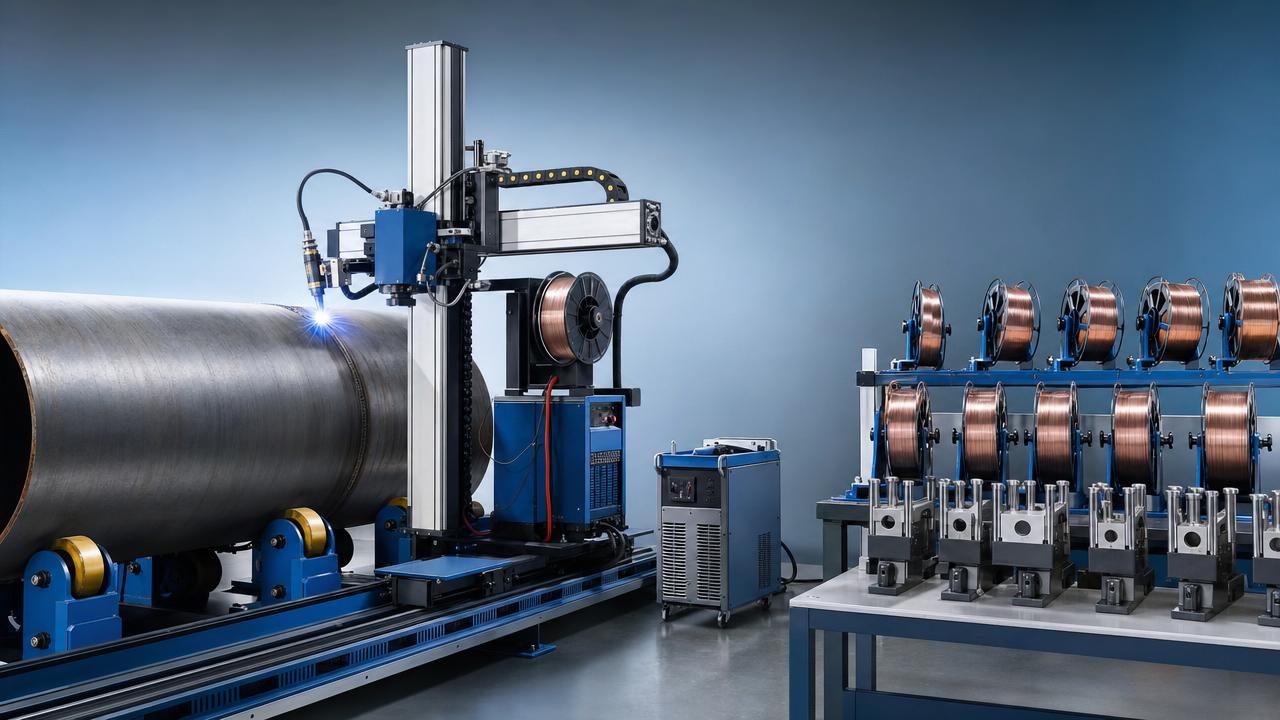
For financial approval, the true cost of a Pipeline welding machine goes far beyond the purchase price. Capacity, automation level, welding accuracy, energy use, maintenance needs, operator training, and long-term reliability all influence total investment value.
Understanding these factors helps compare suppliers more accurately, control lifecycle costs, and avoid hidden expenses. This guide reviews key cost questions before approving pipeline welding equipment.
What makes a Pipeline welding machine cost more than its quoted price?
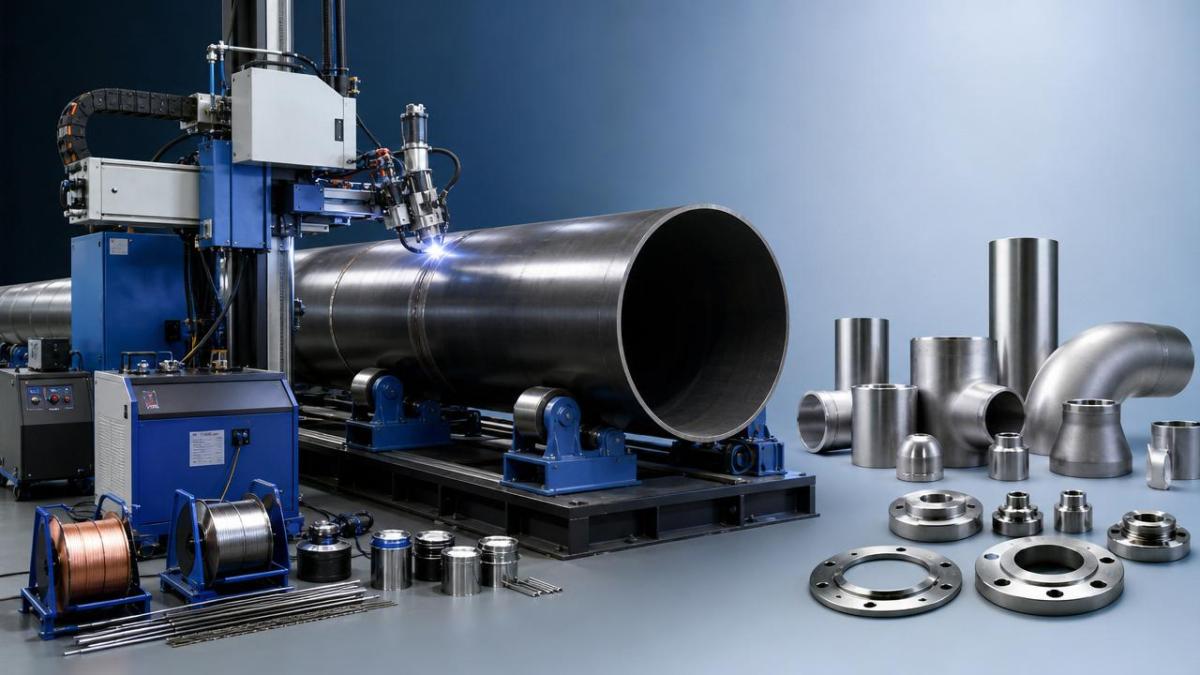
A Pipeline welding machine quote usually reflects the base configuration. It may not include tooling, fixtures, installation, commissioning, or operator training.
The larger cost picture includes productivity, weld repeatability, consumable use, repair frequency, and downtime risk during demanding production cycles.
A low initial price can be attractive. However, weak structure, unstable travel control, or poor seam tracking can increase rework costs.
For pipeline fabrication, weld quality affects pressure resistance, inspection results, and delivery schedules. Equipment cost should be linked with output quality.
- Check whether the quote includes power source, carriage, controls, and accessories.
- Confirm if software, remote service, and spare parts are separate items.
- Ask about installation support and acceptance testing at site.
- Evaluate expected service life under actual production intensity.
A complete Pipeline welding machine cost review should combine purchase cost, process stability, maintenance planning, and production efficiency.
How does automation level affect Pipeline welding machine investment?
Automation is one of the strongest price drivers. Manual, semi-automatic, and fully automatic systems have different cost structures.
A semi-automatic Pipeline welding machine may reduce labor intensity while keeping configuration simpler. It suits mixed production and moderate batch quantities.
A fully automatic Pipeline welding machine can deliver higher repeatability. It is more suitable for large-volume pipe spool and long seam production.
Higher automation may require sensors, PLC controls, servo drives, data storage, or integration with positioners and handling systems.
These features increase purchase cost. Yet they may lower labor dependence, reduce welding variation, and improve throughput per shift.
Which automation features are worth checking?
- Arc control stability during continuous pipe welding.
- Travel speed adjustment and repeatable parameter storage.
- Seam tracking capability for fit-up deviation.
- Compatibility with pipe rotators, positioners, and cutting lines.
- Alarm functions for wire feeding, overheating, and motion errors.
The best choice is not always the most automated option. It is the configuration that matches production volume and inspection requirements.
Why do pipe size, material, and welding process change the final cost?
A Pipeline welding machine must match pipe diameter, wall thickness, joint type, and production layout. Larger ranges usually need stronger structures.
Thick-wall pipes require stable heat input, stronger power capacity, and reliable duty cycle. These factors increase machine and power source costs.
Material also matters. Carbon steel, stainless steel, and alloy pipes may need different welding processes, shielding systems, and parameter control.
Common process choices include MIG, TIG, submerged arc welding, and narrow gap welding. Each option affects equipment complexity and consumable cost.
Joint preparation strongly influences weld stability. Poor bevel quality can create gaps, misalignment, incomplete fusion, or higher filler consumption.
For plate-to-pipe, pressure vessel, boiler, shipbuilding, electric, chemical, and machinery applications, edge preparation equipment can support welding quality.
One related solution is the Non-standard Edge Milling Machine Without Pressure Beam, XBJ series, used before welding for straight flanges, bevel edges, and U grooves.
It processes carbon steel, stainless steel, and aluminum plates. Milling length and plate thickness can be customized for heavy fabrication needs.
When bevel accuracy improves, the Pipeline welding machine can work under more stable conditions. This may reduce rework and inspection failures.
What hidden operating costs should be reviewed before purchase?
Operating cost often determines whether a Pipeline welding machine creates long-term value. Energy, consumables, repairs, and downtime deserve close review.
Energy cost depends on welding process, duty cycle, motor efficiency, cooling method, and auxiliary systems. Frequent high-load operation raises consumption.
Consumable cost includes wire, flux, shielding gas, contact tips, nozzles, liners, ceramic backing, and cleaning materials.
A stable Pipeline welding machine usually consumes materials more predictably. Unstable arc behavior can increase spatter, grinding, and rejected welds.
Maintenance costs include drive components, cables, sensors, control boards, torch parts, and lubrication. Supplier response speed also matters.
Cost review checklist
A Pipeline welding machine with better service access may cost more initially. It can still be cheaper across years of production.
How can supplier capability influence equipment cost and risk?
Supplier capability affects design accuracy, delivery reliability, documentation, and after-sales support. These factors directly influence project risk.
A qualified supplier should understand welding equipment, cutting machines, milling machines, CNC machine tools, and related fabrication systems.
Integrated knowledge helps match a Pipeline welding machine with upstream cutting, beveling, handling, and inspection requirements.
Wuxi Armada International Trade Co., Ltd is located in Wuxi City, Jiangsu Province, close to Shanghai by high-speed rail.
Established in 2012, the company supplies automatic welding equipment, CNC cutting machines, milling machines, lathes, welding robots, and laser cutting machines.
Its product range also covers H-beam production line equipment, bending machines, shearing machines, rolling machines, deburring machines, and pipe benders.
Production and design follow ISO9001 quality system certification and EU CE standards. This supports consistent quality control and export readiness.
Some products have been exported to Southeast Asia, Europe, North America, South America, Oceania, and other regions.
Supplier evaluation questions
- Can the supplier provide process recommendations for pipe welding?
- Are test welds and acceptance criteria clearly defined?
- Is the Pipeline welding machine supported with spare parts documentation?
- Can customization be handled without weakening delivery control?
- Are manuals, wiring diagrams, and service plans available?
A supplier with broad fabrication experience can reduce specification errors. That reduces costly changes after the Pipeline welding machine arrives.
Which mistakes lead to poor Pipeline welding machine purchasing decisions?
The most common mistake is comparing only machine price. This ignores process fit, support capability, and long-term reliability.
Another mistake is oversizing the system. Excess capacity increases cost without improving returns if production volume remains limited.
Undersizing is also risky. A Pipeline welding machine with weak duty cycle may overheat, slow output, and increase downtime.
Ignoring joint preparation is equally costly. Poor beveling can force slower welding speeds, more filler metal, and repeated inspection repairs.
Unclear acceptance standards create disputes. Weld sample tests, dimensional checks, speed tests, and control functions should be agreed early.
FAQ: quick answers about Pipeline welding machine cost
A smart Pipeline welding machine purchase starts with clear technical requirements. It should also include lifecycle cost, supplier capability, and process integration.
Before approval, request a detailed configuration list, acceptance plan, consumable estimate, service plan, and customization review.
With accurate data, a Pipeline welding machine can become a reliable production asset rather than a hidden cost source.
