




How to choose an automatic space frame welding machine
— —
How to choose an automatic space frame welding machine
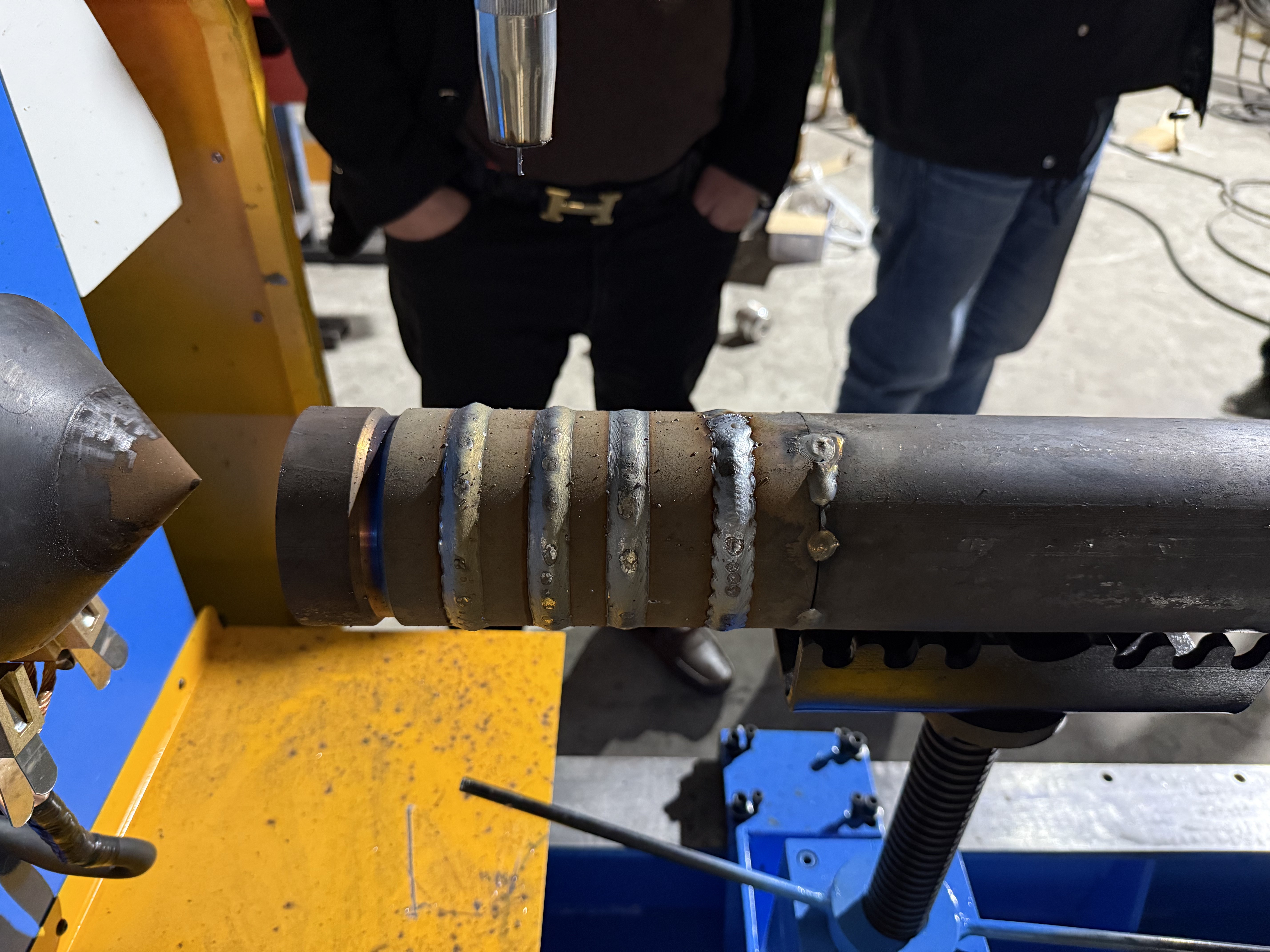
Choosing the right Automatic space frame welding machine requires more than comparing price tags. For technical evaluators, the key is to assess welding accuracy, automation level, structural compatibility, production efficiency, and long-term reliability. This guide outlines the essential factors that influence machine performance and investment value, helping you identify a solution that matches your fabrication standards and operational goals.
In space frame fabrication, even a small mismatch between the machine and the structure design can lead to rework, unstable joint quality, or excessive manual correction. For manufacturers handling steel structures, truss systems, tubular assemblies, or architectural framework components, the evaluation process should be based on measurable technical criteria rather than broad supplier claims.
For technical teams, the most practical approach is to review the Automatic space frame welding machine from 5 angles: part compatibility, welding performance, automation logic, maintainability, and supplier execution capability. These points directly affect throughput, weld consistency, and long-term operating cost.
Define the production scope before comparing machine models
Before requesting a quotation, define what the machine must weld in daily production. Technical evaluators should first map the workpiece range, including pipe diameter, member length, node type, wall thickness, and expected batch size. A machine that performs well on standard round tubes may not be suitable for multi-angle node assemblies or mixed-section components.
Key structure variables to confirm
Most buyers should document at least 6 inputs: tube diameter range, thickness range, maximum workpiece length, joint geometry, material grade, and daily output target. For example, if your shop processes tubes from 60mm to 300mm, wall thickness from 3mm to 12mm, and member lengths up to 12m, the clamping and positioning design becomes a primary screening factor.
- Material type: carbon steel, low-alloy steel, or stainless steel
- Joint form: intersecting tubes, spherical node connections, or angled branch joints
- Production mode: small batch custom work or repeated volume fabrication
- Tolerance expectation: often within ±0.5mm to ±1.5mm for fit-up critical applications
Why this stage matters
If the application definition is incomplete, suppliers may size the machine around only one ideal sample. That often leads to fixture changes that take 20–40 minutes per batch, limited access to complex joints, or reduced arc stability when part position varies. A proper evaluation should reflect actual production diversity, not only a demonstration sample.
The table below helps technical evaluators compare production conditions with machine selection priorities.
This comparison shows that machine selection starts with application boundaries. When these values are clear, it becomes easier to judge whether the Automatic space frame welding machine is appropriately configured or oversized for the project mix.
Check welding accuracy, motion control, and automation depth
For technical evaluators, machine accuracy is not only about repeat positioning. It also includes torch path stability, seam tracking logic, rotational synchronization, and consistency across long production runs. In practical terms, a machine should maintain stable weld quality after 8–10 hours of continuous operation, not only during a short factory test.
Accuracy indicators worth reviewing
Ask the supplier to specify positioning repeatability, axis control method, and allowable fit-up variation. For many fabrication environments, repeatability within ±0.5mm is a useful target, while some heavy structural applications may accept a wider window if weld penetration and appearance remain stable. The key is to match the tolerance to your design standard and inspection method.
Automation is more than automatic travel
A true Automatic space frame welding machine should reduce manual setup steps, not just motorize one motion axis. Good systems often combine automatic clamping, preset welding parameters, programmable path storage, and coordinated rotation or linear movement. If the operator still performs 4 or 5 manual adjustments per joint, the automation level may be lower than expected.
- Confirm whether welding parameters can be stored by product type.
- Check if fixture alignment supports repeated loading without shim correction.
- Review the HMI for alarm history, parameter recall, and maintenance reminders.
- Verify whether the machine supports future integration with robots or upstream cutting data.
The following table highlights technical checkpoints that often separate an entry-level unit from a production-grade welding solution.
A machine with acceptable nominal accuracy but slow changeover may still underperform in a custom fabrication workshop. Evaluators should look at the full process cycle, including loading, alignment, welding, unloading, and data reset between jobs.
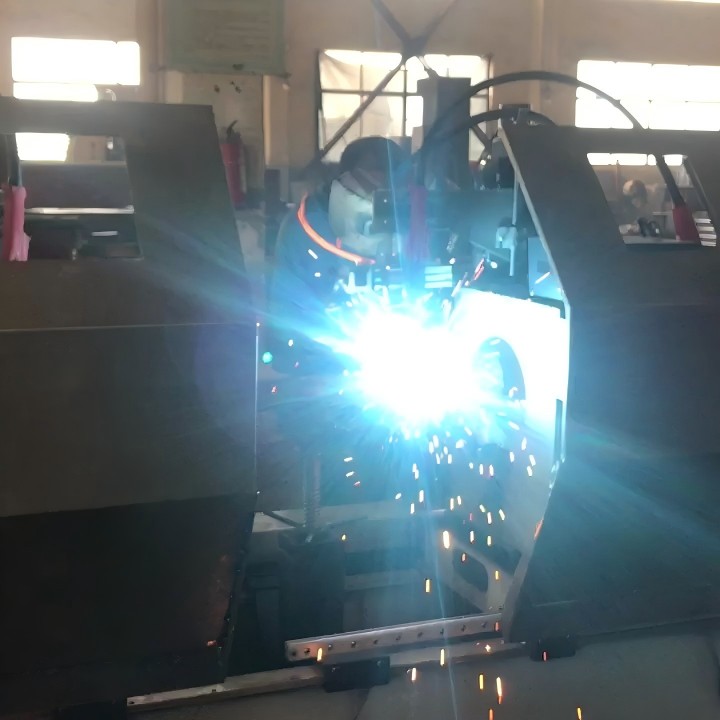
Evaluate compatibility with the wider fabrication line
An Automatic space frame welding machine should be assessed as part of the manufacturing chain. Upstream cutting accuracy, downstream correction, material handling, and plate or profile forming all affect final assembly efficiency. A strong machine can still become a bottleneck if adjacent processes are not matched in capacity or precision.
Look beyond the welding station
Technical evaluators should review whether cut part geometry, bevel quality, and formed components are stable before welding starts. In projects that combine tubular structures with rolled shells or curved plates, forming accuracy matters. For example, a plate rolling solution such as Hydraulic bending machine with 3 roller may support processing equipment workflows where sheet materials above 50mm are formed into cylindrical, conical, arc-shaped, or elliptical parts before assembly.
This matters because the better the upstream forming control, the less compensation is needed at the welding stage. In heavy-duty plate rolling, hydraulic thrust, torque generation, and repeated forward and reverse rolling cycles can improve the accuracy of the rolled workpiece and support more stable downstream fit-up. For shops handling large-scale structural fabrication, that coordination can reduce manual correction time by one or two steps per assembly.
Questions for line integration
- Can the machine receive dimensions from CNC cutting or nesting outputs?
- Is there enough floor space for loading lengths of 6m, 9m, or 12m?
- Will upstream forming tolerance affect fixture seating or weld gap control?
- Can one operator manage the station, or are 2–3 people needed during peak production?
Integration review often reveals hidden costs. A lower-priced machine may require extra handling equipment, larger fixture inventory, or more manual tack welding before automated cycles can begin. These items should be included in the total process evaluation.
Assess maintenance, commissioning, and supplier reliability
Long-term value depends on serviceability as much as on welding performance. For technical evaluators, the right question is not whether a machine can run, but whether it can keep running with predictable maintenance intervals and practical support response. Planned maintenance every 250–500 operating hours is common for many mechanical and welding subsystems, depending on duty cycle.
Core service points to verify
Review spare parts availability, commissioning scope, training duration, and remote troubleshooting capacity. A solid supplier should clarify what is covered during installation, what consumables are excluded, and how quickly wear parts can be delivered. Technical teams should also ask for electrical documentation, maintenance schedules, and recommended inspection points.
- Installation and startup plan: typically 3–7 days depending on line complexity
- Operator training: often 1–3 days for standard operation and basic maintenance
- Spare parts list: critical sensors, torch consumables, drives, and control components
- Support response: define remote response time and escalation path in advance
Supplier capability in practical terms
Wuxi Armada International Trade Co., Ltd, established in 2012 in Wuxi, Jiangsu Province, focuses on mechanical equipment and related products for global industrial users. Its portfolio covers automatic welding equipment, CNC cutting machines, machine tools, welding robots, laser cutting machines, H-beam production line equipment, bending machines, shearing machines, plate rolling machines, leveling machines, deburring equipment, pipe benders, thread rolling machines, end face milling machines, and edge milling machines.
For buyers evaluating an Automatic space frame welding machine, that broader equipment background is useful because welding is rarely a standalone investment. A supplier familiar with multiple fabrication processes can better discuss line matching, process flow, and workshop implementation. The company states that production and design are organized according to ISO9001 quality system requirements and EU CE standards, which is relevant when documentation and export compliance are part of the purchasing process.
A careful technical review should end with a witness test based on your own parts or equivalent samples. Ask the supplier to demonstrate at least 3 points: stable clamping, repeatable seam quality, and measurable cycle time. If possible, compare the first part, the middle run, and the last part in a trial batch rather than approving the machine from a single sample only.
The best Automatic space frame welding machine is the one that fits your structure range, accuracy target, production rhythm, and maintenance capability. If you are evaluating new fabrication capacity or upgrading an existing line, now is the right time to discuss your workpiece data, process goals, and layout requirements. Contact us to get a tailored solution, review machine details, and explore more manufacturing equipment options for your workshop.
