




How a self-adjusting welding rotator improves shop flow
— —
How a self-adjusting welding rotator improves shop flow
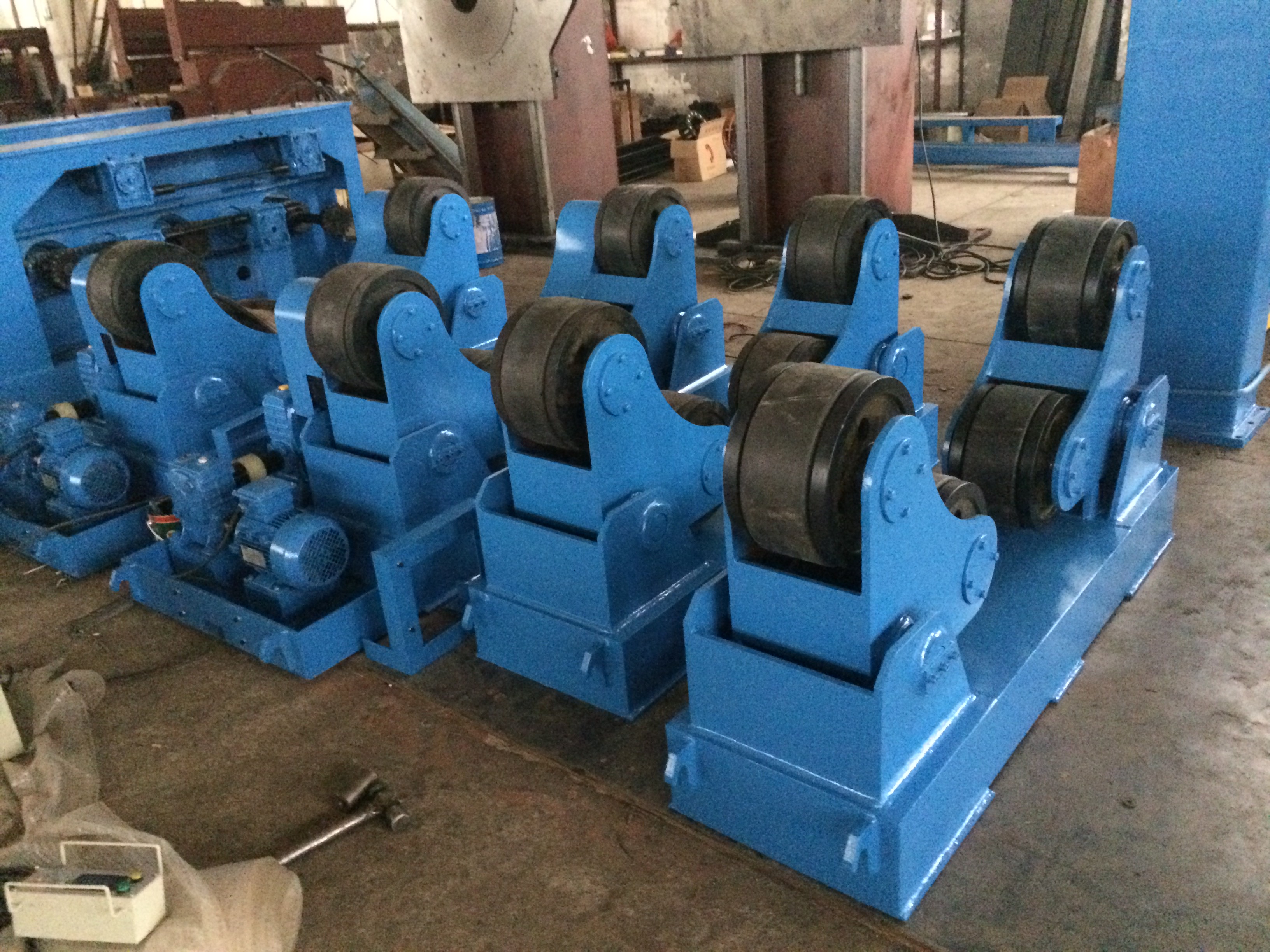
For project managers focused on throughput, consistency, and labor efficiency, a Self-adjusting welding rotator can make a measurable difference on the shop floor. By automatically adapting to varying workpiece diameters, it helps reduce setup time, improve welding stability, and keep production moving with fewer interruptions—making it a practical upgrade for modern fabrication workflows.
Why a Self-adjusting welding rotator matters in fabrication flow
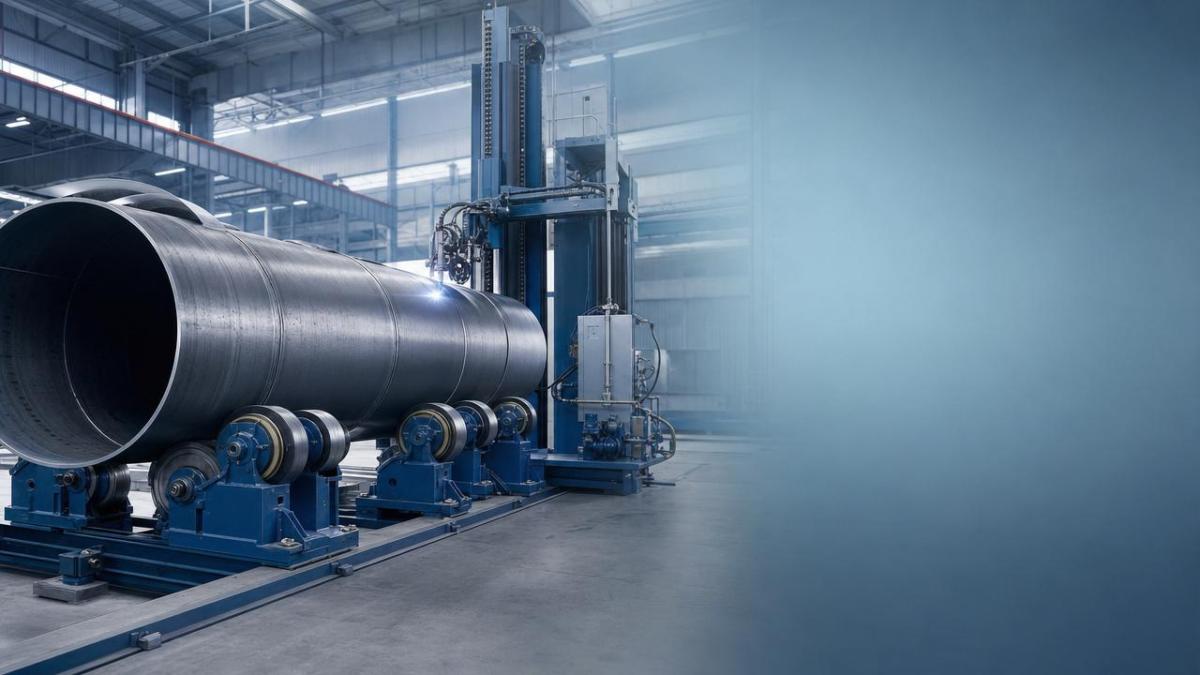
In metal fabrication, delays often come from handling, repositioning, and uneven support during welding. A Self-adjusting welding rotator addresses these bottlenecks without adding complex manual setup steps.
Unlike fixed-frame systems, it automatically aligns to different vessel or pipe diameters. That means fewer stops between jobs, steadier rotation, and more predictable arc performance.
This matters in shops processing carbon steel and stainless steel parts, especially where mixed batches and changing dimensions make manual adjustment slow and inconsistent.
Checklist: how to evaluate the impact on shop flow
Use this checklist to judge whether a Self-adjusting welding rotator will improve production rhythm, weld quality, and workstation efficiency.
- Measure setup reduction by comparing changeover time before and after automatic diameter adaptation across common pipe, tank, or shell sizes.
- Check rotation stability under real loads, because vibration or slipping can weaken bead consistency and force unnecessary operator intervention.
- Verify diameter range coverage so one unit can handle more jobs instead of creating a second bottleneck at another station.
- Review speed control precision, since smooth variable adjustment supports better heat input management and more uniform seam formation.
- Inspect integration with welding manipulators, tractors, or seam tracking devices to avoid isolated equipment that slows coordinated work.
- Confirm operator visibility and safety access, especially when long workpieces require monitoring from multiple angles during continuous welding.
- Calculate labor savings from reduced repositioning, less manual centering, and fewer pauses caused by inconsistent workpiece support.
Application notes for different production situations
Mixed-size pipe and vessel jobs
A Self-adjusting welding rotator is especially useful where diameters change often. Automatic centering helps keep flow moving without repeated roller repositioning or fixture swapping.
This reduces waiting time between tacking, root pass welding, and final seam completion. It also supports more consistent downstream inspection results.
Batch production of longitudinal seam pipe
For batch processing, the rotator becomes more valuable when paired with dedicated seam welding equipment. One practical example is the 12 meter Pipe inside and outside seam welding machine.
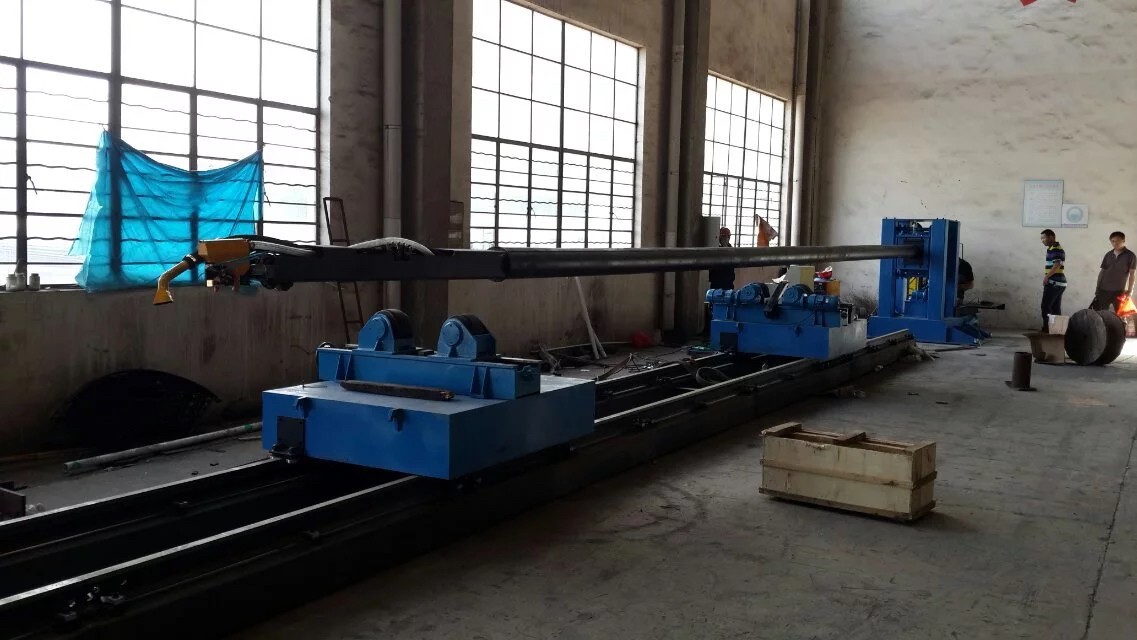
Designed for manufacturing small diameter pipe in batch, it handles carbon steel and stainless steel, with pipe length up to 12 meters, diameter from 400-1500mm, thickness from 6-20mm, and welding speed of 0.4-1.2m/min.
Its automatic inside longitudinal seam welding, outside seam welding, VFD adjusting, and video monitoring support a stable process. When combined with a Self-adjusting welding rotator, overall handling becomes smoother and less dependent on manual correction.
Commonly missed points and risk reminders
Ignore floor condition at your own risk. Uneven installation surfaces can reduce tracking accuracy and cancel out the benefits of automatic adjustment.
Overlook actual load distribution and the rotator may perform poorly even within rated capacity. Long or thin-wall workpieces need balanced support, not just enough tonnage.
Assume all speed control is equal and weld appearance may suffer. Fine adjustment matters when switching between SAW and MIG welding processes.
Skip operator training and cycle time gains may disappear. Even an advanced Self-adjusting welding rotator works best when controls and sequencing are standardized.
Practical execution advice
- Map current delays at fit-up, rotation, welding, and unloading before selecting equipment.
- Match the Self-adjusting welding rotator to your real diameter mix, not only peak-size jobs.
- Test with typical materials and seam types to confirm speed stability and weld repeatability.
- Standardize operating parameters and inspection points after installation.
Wuxi Armada International Trade Co., Ltd supplies fabrication equipment built around practical production needs, with ISO9001-based quality control and EU CE-oriented standards across a broad machinery portfolio.
If reducing idle handling time is a current target, start by reviewing diameter variation, weld process requirements, and workstation sequencing. A properly matched Self-adjusting welding rotator can turn those findings into faster, steadier shop flow.
