




High Precision Non-Standard Edge Milling Machine: Where Accuracy Pays Off
— —
High Precision Non-Standard Edge Milling Machine: Where Accuracy Pays Off
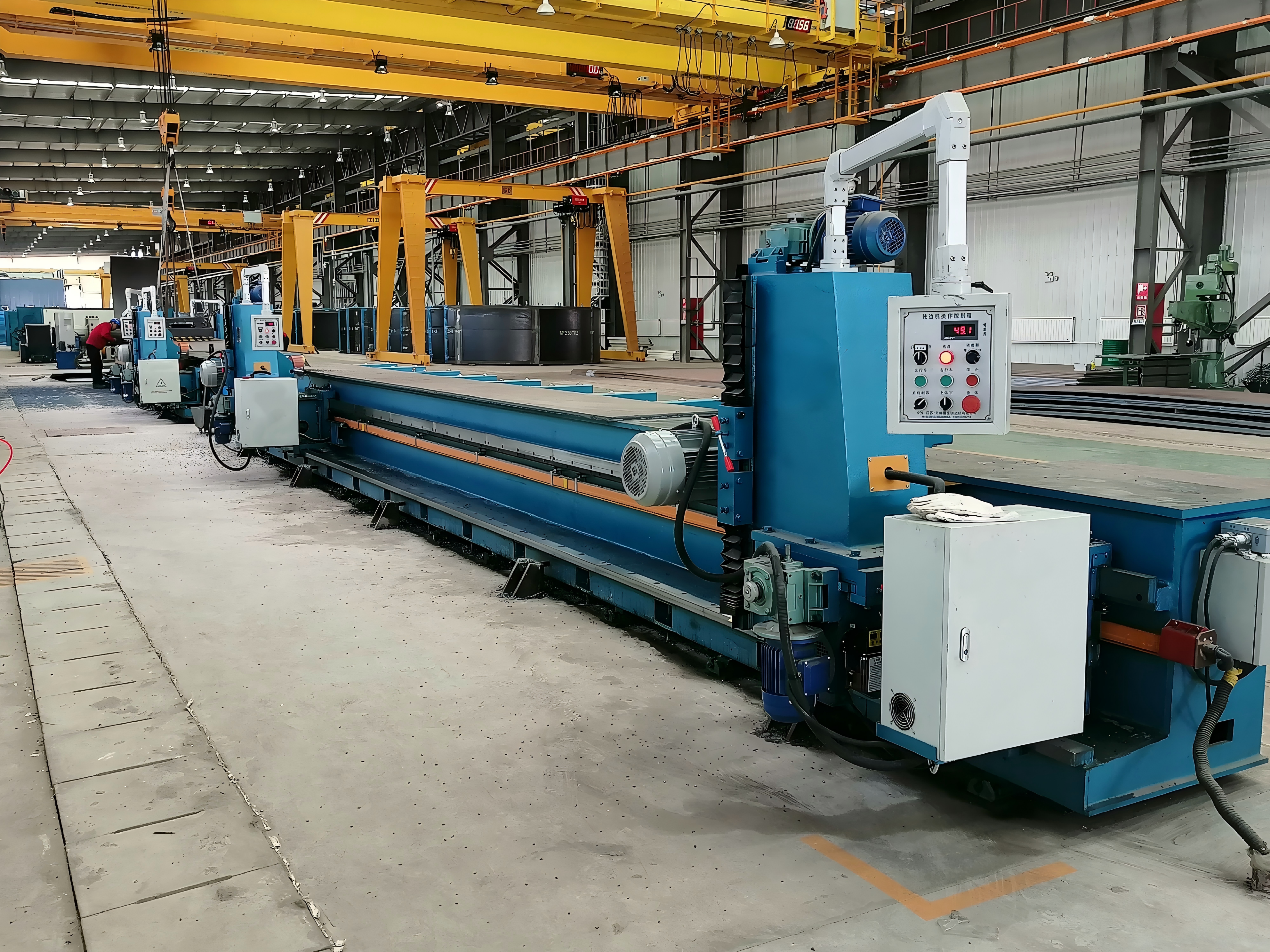
When tight tolerances, custom workpiece geometry, and long-term production reliability directly affect ROI, a high precision non-standard edge milling machine becomes a strategic investment rather than just another piece of equipment. For business evaluators in the manufacturing and processing machinery sector, understanding how precision, customization, and compliance translate into lower rework, higher efficiency, and stronger global competitiveness is essential.
For most evaluators, the core question is not whether precision matters. It is whether a specialized machine can produce measurable financial returns in real production conditions.
The short answer is yes, but only when the equipment matches the workpiece profile, throughput targets, material range, and quality requirements of the buyer’s operation.
That is why the value of a high precision non-standard edge milling machine should be judged through output consistency, labor reduction, scrap control, setup flexibility, and lifecycle reliability.
What Business Evaluators Are Really Looking For in a High Precision Non-Standard Edge Milling Machine
Search intent around this topic is highly commercial and evaluative. Readers typically want to compare equipment value, identify suitable applications, and understand what justifies the premium of a customized precision solution.
Business assessment teams are usually less interested in generic machine definitions. They want evidence that precision and customization improve margins, reduce production risk, and support future customer requirements.
In practical terms, they are asking several direct questions. Will the machine lower rework rates? Can it handle difficult bevel profiles? Is it flexible across materials and thicknesses?
They also want to know whether the supplier can support international quality expectations, stable manufacturing, and long-term service needs, especially for export-oriented or compliance-sensitive operations.
For this audience, useful content must focus on decision criteria. Technical features matter, but only when connected to cost control, productivity, contract quality, and downstream process stability.
Why Accuracy Pays Off Beyond the Machining Stage
Precision in edge milling is not only a machining issue. It directly affects welding quality, assembly fit-up, coating consistency, and the overall reliability of subsequent fabrication steps.
When edge preparation is inconsistent, businesses often absorb hidden losses through additional grinding, manual correction, slower fit-up, rejected welds, and avoidable inspection failures.
A high precision non-standard edge milling machine reduces those hidden costs by creating repeatable bevel geometry and cleaner prepared edges, especially on demanding materials and custom plate configurations.
For evaluators, the financial impact becomes clearer when precision is connected to fewer bottlenecks. Better first-pass quality often shortens production cycles and improves planning confidence across departments.
This matters even more in contract manufacturing or heavy fabrication, where one poor edge preparation step can interrupt expensive downstream resources such as robotic welding cells or multi-station assemblies.
Where Non-Standard Design Creates Real Commercial Value
The phrase “non-standard” can sound risky to buyers who associate customized machinery with longer lead times or complex maintenance. In reality, non-standard design often solves the exact issues standard machines cannot.
Many operations process workpieces that vary in thickness, bevel angle, edge shape, or material grade. Standardized configurations may force compromises that reduce quality or create inefficient manual workarounds.
A non-standard machine is valuable when it is engineered around actual production demands rather than catalog assumptions. That includes clamping methods, cutter head options, travel structure, automation level, and control logic.
For example, a steel fabrication plant handling different weld-preparation profiles may need one platform capable of inclined edges, straight edges, U-shaped, V-shaped, and K-shaped bevel processing.
Instead of buying multiple partial solutions, a tailored system can consolidate processes, reduce floor space pressure, and simplify operator workflows, producing stronger long-term equipment economics.
How to Evaluate ROI Without Getting Lost in Specifications
Business evaluators should translate machine capabilities into a structured return model. The most useful framework compares capital cost against labor savings, scrap reduction, throughput gains, and quality-related risk reduction.
Start with labor. If a machine automates clamping, edge detection, feeding, and return movement, it reduces operator intervention and improves repeatability across shifts.
Next, calculate the cost of poor quality. If the current process causes bevel inconsistency, additional grinding, or weld preparation delays, those recurring losses should be included in the investment baseline.
Then assess throughput. High-speed milling and faster setup changes can improve machine utilization, especially in mixed-order environments where batch sizes vary and delivery windows are tight.
Finally, include strategic value. Precision equipment can help a supplier qualify for higher-spec projects, attract export customers, or support compliance-driven contracts that demand better process control.
In many cases, the strongest ROI does not come from speed alone. It comes from reducing process uncertainty and creating stable output quality that downstream teams can trust.
What Features Actually Matter in Daily Production
Not every specification has equal commercial importance. Evaluators should focus on the features that influence edge quality, machine adaptability, and production continuity under real plant conditions.
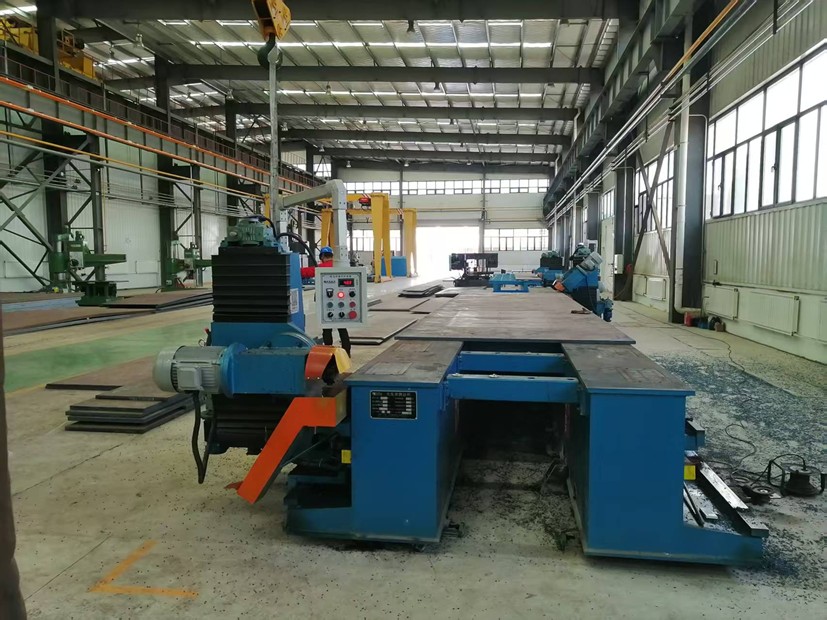
One practical example is the Heavy Edge Milling Machine, designed for steel plate milling across carbon steel, stainless steel, and aluminum plates.
Its value lies not in a single headline feature, but in a combination of useful production capabilities. These include micron level processing precision, automatic clamping, edge detection, and high-speed milling performance.
For manufacturers processing a broad thickness range, the ability to work from 6–80mm supports versatility across standard fabrication demands. A broader 6–400mm specification option may also fit special requirements.
Adjustable bevel processing is another important point. A cutter head angle adjustable from 0° to 90° allows one machine to support varied joint designs without excessive manual adaptation.
Feed speed also affects output planning. A range of 0.13 to 1.0m/min provides a practical balance between quality control and production efficiency for different materials and edge conditions.
Interchangeable standard and customized cutter heads further improve adaptability. For evaluators, this means the machine can remain useful even as customer requirements evolve.
How Precision and Automation Reduce Operating Risk
Business decisions around machinery should always consider risk, not just performance. High precision systems lower operational risk when they reduce dependence on operator judgment for critical quality outcomes.
Automation features such as clamping, edge detection, and controlled feed movement help stabilize the process. That is especially valuable where labor skill levels vary or production runs continue across multiple shifts.
Consistency also matters for documentation and traceability. When output quality is repeatable, manufacturers can build stronger inspection records and reduce disputes tied to dimensional or bevel deviations.
Another risk factor is energy and maintenance cost. Machines designed for low energy consumption and efficient structural layout can improve total cost of ownership over a long service period.
Advanced structure is not just a marketing phrase when it improves rigidity, vibration control, and long-term accuracy retention. Those traits protect both output quality and maintenance budgets.
Questions to Ask Before Approving a Purchase
Before selecting any high precision non-standard edge milling machine, evaluators should ask questions that connect engineering capability with business execution.
First, what exact workpieces will be processed most often? Material type, thickness range, bevel geometry, and batch frequency should shape the machine configuration from the beginning.
Second, what downstream processes depend on edge quality? If the answer includes robotic welding, pressure vessel work, or export-grade fabrication, tolerance stability becomes more valuable.
Third, how much setup flexibility is needed? A machine that performs well on one profile but slows changeovers may not deliver the expected return in mixed production environments.
Fourth, what standards and market expectations must be met? Suppliers that organize production according to ISO9001 quality systems and EU CE expectations provide added confidence for internationally minded buyers.
Fifth, what supplier support is available after delivery? Installation guidance, technical response capability, parts availability, and customization experience all affect long-term success.
Why Supplier Capability Matters as Much as Machine Capability
Even a strong machine specification can underperform if the supplier lacks process understanding or disciplined production control. That is why evaluators should review both equipment and supplier credibility.
Wuxi Armada International Trade Co., Ltd operates in the manufacturing and processing machinery field with experience in mechanical equipment sales and related industrial solutions.
Its product coverage includes automatic welding equipment, CNC cutting machines, milling machines, CNC machine tools, lathes, welding robots, laser cutting machines, and H-beam production line equipment.
The company also supplies bending machines, shearing machines, plate rolling machines, leveling machines, deburring machines, pipe benders, thread rolling machines, and end face milling solutions.
For buyers, this breadth matters because it suggests familiarity with integrated fabrication workflows rather than isolated machine transactions. That can support more practical recommendation and configuration decisions.
The company states that production and design are organized in line with ISO9001 quality system certification and EU CE standards, which is relevant for buyers evaluating reliability and export compatibility.
Its international export experience across Southeast Asia, Europe, North and South America, and Oceania also indicates exposure to varied market requirements and purchasing expectations.
When This Type of Investment Makes the Most Sense
A high precision non-standard edge milling machine is most compelling when edge quality directly affects downstream cost, delivery reliability, or customer acceptance.
It is especially suitable for heavy fabrication, steel structure processing, pressure-related components, equipment manufacturing, and projects with repeatable yet non-standard bevel preparation needs.
It also makes sense when a business wants to replace manual or semi-manual edge preparation methods that create inconsistent quality, labor inefficiency, or production planning uncertainty.
For export-focused manufacturers, precision and compliance can become sales assets. Better edge preparation capability may help secure projects where documentation, repeatability, and appearance all matter.
The second strong case is operational scaling. As order volume grows, manual correction becomes more expensive. Investing earlier in controlled precision can prevent quality issues from growing with throughput.
Final Assessment: Accuracy Pays Off When It Is Matched to the Right Production Need
For business evaluators, the best way to assess a high precision non-standard edge milling machine is to move beyond feature lists and ask what problems it solves repeatedly and profitably.
If it reduces rework, supports multiple bevel geometries, improves downstream welding quality, and fits the actual production mix, accuracy clearly pays off.
If it also brings automation, adaptability, lower energy use, and supplier-side quality discipline, the investment becomes easier to justify from both operational and strategic perspectives.
In short, the right machine is not simply the most advanced one. It is the one that converts precision into predictable output, lower risk, and stronger long-term business performance.
