




Automatic Vessel Welding Manipulator or Manual Setup?
— —
Automatic Vessel Welding Manipulator or Manual Setup?
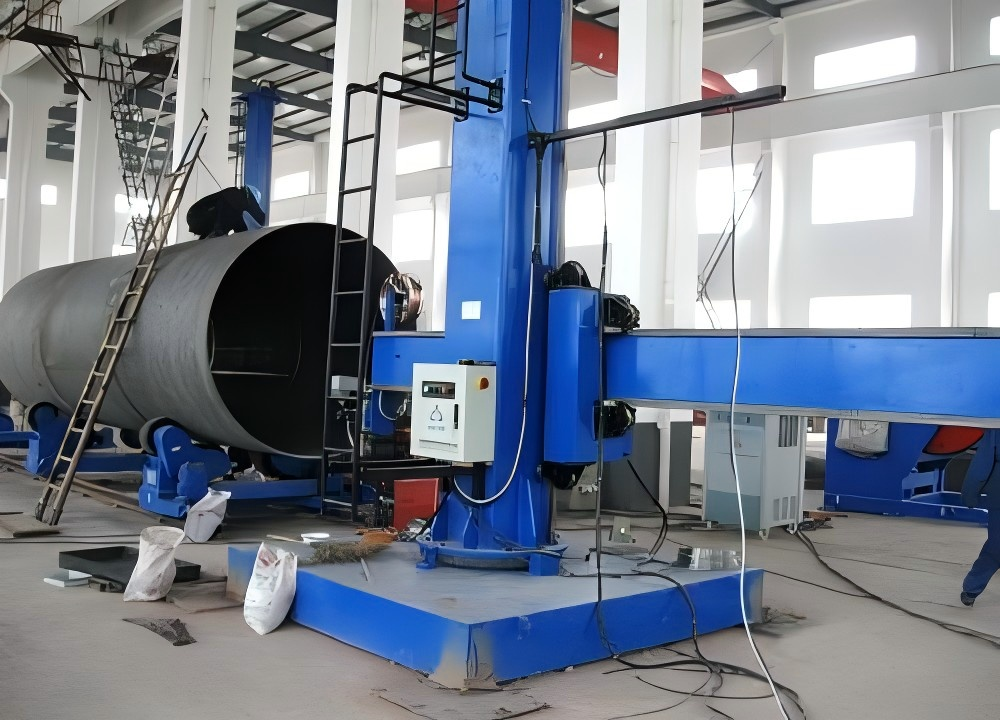
When fabricating pressure vessels, tanks, or cylindrical sections, the choice between an Automatic Vessel welding manipulator and a manual setup shapes quality, speed, safety, and cost control.
This decision also affects consistency, rework rates, and future production capacity. A clear comparison helps build a welding process that supports stable output and industrial compliance.
What is an Automatic Vessel welding manipulator?
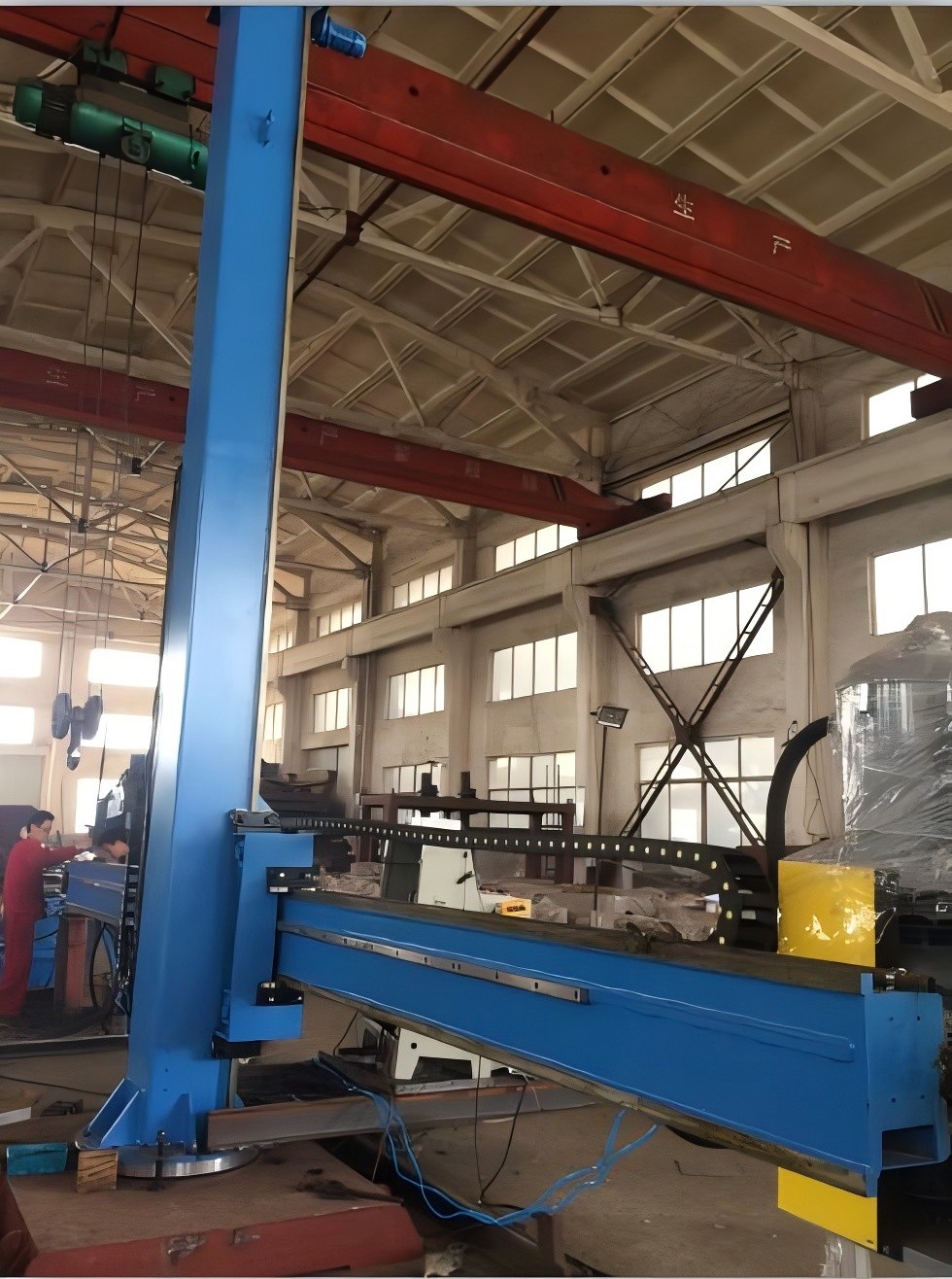
For repeatable vessel production, automation usually delivers better consistency than manual setup.
Stable lifting, telescopic movement, and controlled travel reduce fluctuations during the weld pass.
Many systems include seam tracking and monitoring. These features help maintain alignment and improve final weld results.
Typical models such as LHQ1010 through LHQ7070 offer lifting stroke and telescopic stroke from 1000mm to 7000mm.
Boom loading around 80kg to 120kg supports welding heads and related accessories without unstable motion.
Annealed structures, anti-fall protection, and VFD-controlled boom retraction also strengthen reliability.
When is automation the better investment than manual setup?
Automation becomes more valuable when production volume rises or weld quality requirements become stricter.
It is especially useful when the same tank, pipe, or vessel dimensions repeat across batches.
It also fits workshops that need to reduce dependence on highly variable manual skills.
- Frequent straight seam or circular seam welding
- Pressure vessel projects with demanding inspection requirements
- Long weld lengths that increase fatigue in manual operation
- Growth plans requiring scalable output
Fixed, fixed with rotation, and movable with rotation configurations allow matching layout and workflow needs.
What cost and implementation factors should be checked first?
The first cost is higher than manual fixtures, but total operating cost may drop over time.
Lower rework, faster welding cycles, and more predictable quality often justify the investment.
Implementation should consider power supply, welding source compatibility, and movement requirements.
Many systems support 220V, 380V, 480V, or 600V at 50/60Hz, making integration easier across regions.
Column rotation may be stationary, manual, or motorized. Trolley movement may also be manual or motorized.
Optional flux recovery can further improve submerged arc welding efficiency in heavy fabrication.
What mistakes should be avoided when choosing Automatic Vessel welding manipulator equipment?
A common mistake is choosing only by price without checking stroke, load, or seam type.
Another mistake is ignoring how the manipulator will work with rotators, positioners, and the existing welding source.
It is also risky to underestimate safety and structural quality in long-term heavy-duty use.
Wuxi Armada International Trade Co., Ltd supplies metalworking and welding equipment built around ISO9001 practices and EU CE-oriented standards.
For vessel fabrication, the right solution is the one that matches seam type, workload, safety expectations, and future capacity plans.
If projects involve repeated tank, pipe, or vessel welding, an Automatic Vessel welding manipulator often creates a stronger long-term advantage than manual setup.
Review weld length, part size, duty cycle, and automation compatibility first. That step leads to a more accurate equipment decision and a more stable production line.
