




600kg Welding Positioner for Small Parts: What Improves Weld Consistency
— —
600kg Welding Positioner for Small Parts: What Improves Weld Consistency
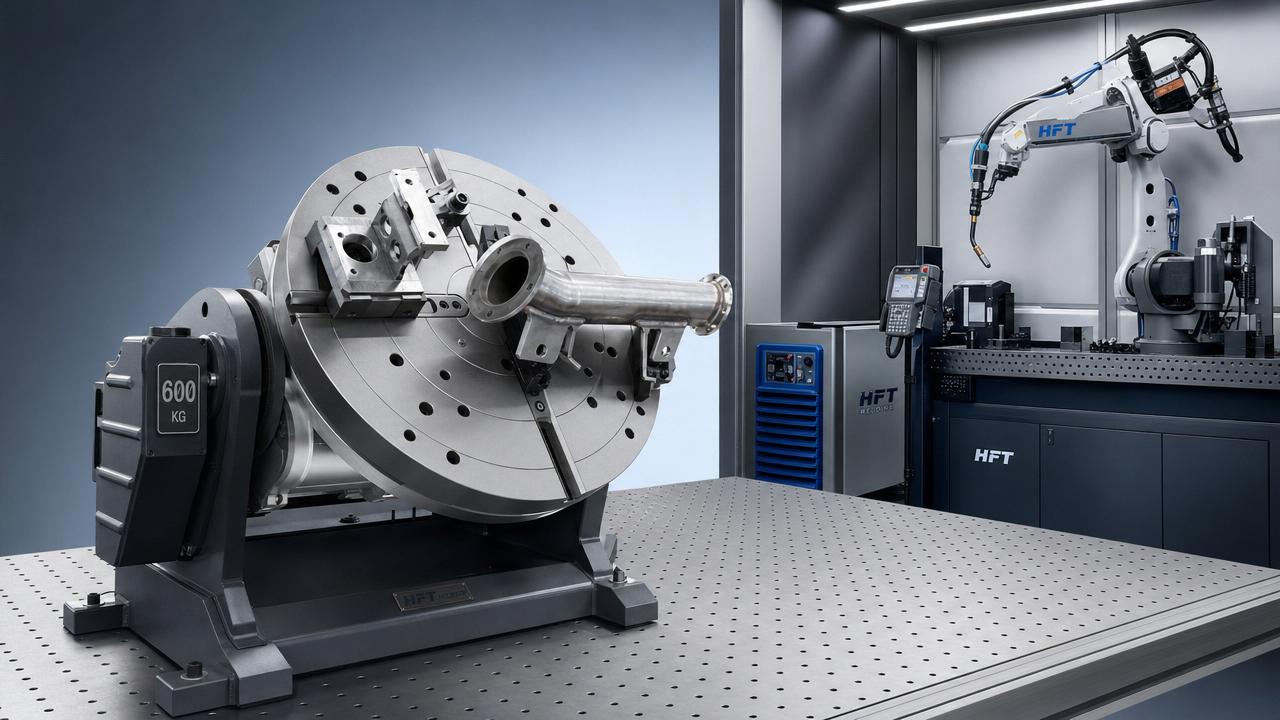
For operators handling small parts, a 600kg welding positioner often changes daily welding results more than expected.
Better rotation, stable holding, and easier torch access help improve weld consistency, reduce fatigue, and limit avoidable rework.
As fabrication moves toward tighter tolerances and repeatable output, the 600kg welding positioner becomes more important in small-part production cells.
Why weld consistency now depends more on positioning control
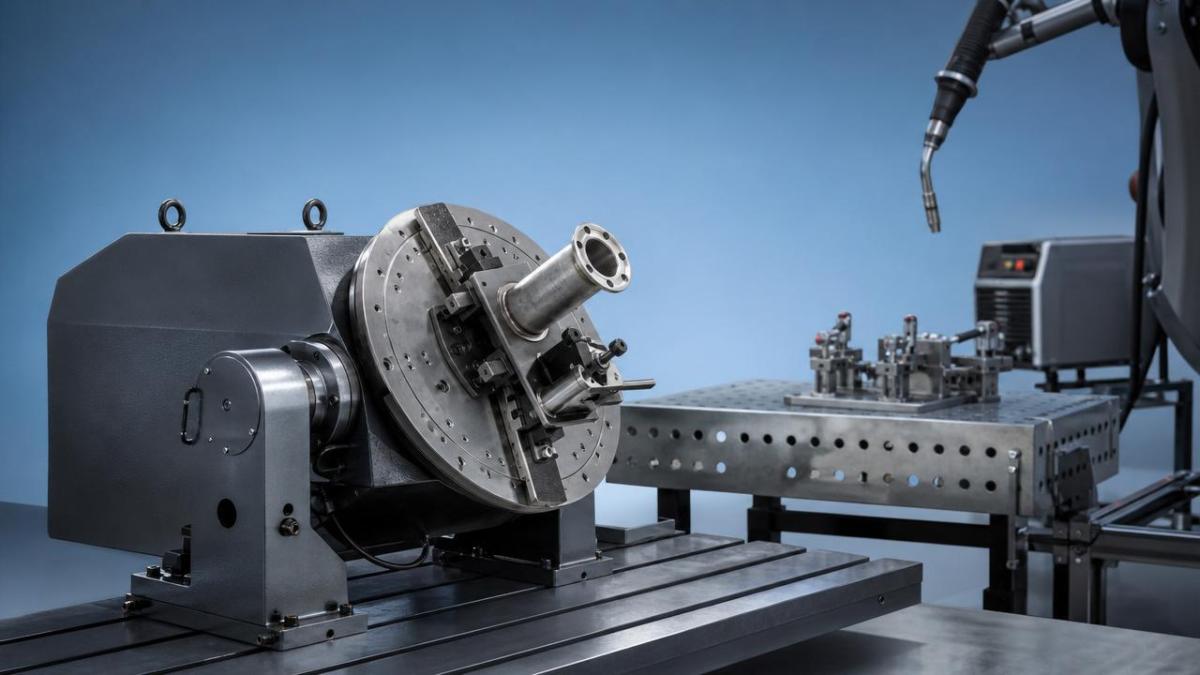
Small parts may look simple, but they often create unstable weld angles, uneven heat input, and inconsistent operator posture.
That is why demand for the 600kg welding positioner is rising in compact welding applications.
The shift is practical, not theoretical.
Shops need repeatable weld quality with less dependence on manual repositioning.
When a part stays in the correct angle, arc travel becomes more stable and bead appearance improves.
A 600kg welding positioner also supports safer handling when fixtures, chucks, and offset loads increase total working weight.
Several signals show how small-part welding requirements are changing
Fabrication lines increasingly value controlled rotation and repeatable angles over simple manual turning.
This trend appears in stainless work, carbon steel assemblies, pipe fittings, brackets, and precision subcomponents.
- More mixed-material jobs require stable speed and predictable heat distribution.
- Shorter delivery cycles reduce tolerance for rework and post-weld correction.
- Labor efficiency matters more when skilled welding time is limited.
- Compact workcells need equipment that improves access without adding complexity.
What actually improves consistency with a 600kg welding positioner
Not every positioner delivers the same result.
Several features directly affect weld repeatability in real production.
Stable rotation speed
Consistent rotational speed helps maintain uniform bead shape and reduces sudden motion during critical weld passes.
Accurate tilt and angle holding
A fixed working angle supports better puddle control, especially on circular seams and irregular small assemblies.
Reliable clamping and load balance
Even a 600kg welding positioner performs poorly if the workpiece is off-center or weakly fixtured.
Balanced loading reduces vibration and protects gearbox life.
Foot control or coordinated operation
Hands-free adjustment allows smoother arc management and fewer interruptions during part rotation.
The main drivers behind this equipment upgrade are easy to identify
The impact reaches quality, throughput, and upstream preparation
Improved positioning affects more than the welding station itself.
It changes fixture planning, tack-weld strategy, and even edge preparation quality before the arc starts.
For example, better bevel accuracy supports more predictable fit-up and smoother rotation during welding.
In plate preparation, equipment such as Turn Type Plate Edge Milling Machine can help create cleaner bevel forms.
Its high-precision milling approach supports V, U, and K bevel processing with strong automation and low energy consumption.
That upstream accuracy often complements a 600kg welding positioner in repeatable fabrication workflows.
The most important points to watch before selecting a model
- Check real working load, including fixture weight and offset center of gravity.
- Confirm rotation smoothness at low speed for precise weld starts and stops.
- Review table size and mounting options for actual small-part fixtures.
- Match tilt range to the joint types used most often.
- Consider future automation links with welding robots or coordinated controls.
- Evaluate maintenance access, grounding reliability, and safety interlocks.
A practical response is to standardize usage, not only the machine
Even a good 600kg welding positioner needs consistent operating rules.
Set standard fixture points, preferred welding angles, and approved rotation speeds for common parts.
Record results by weld type and adjust procedures based on bead uniformity and rework frequency.
In current fabrication conditions, weld consistency is increasingly a positioning issue as much as a welding skill issue.
A well-matched 600kg welding positioner improves control, safety, and repeatability for small parts.
The best next step is to compare actual part geometry, fixture design, and target weld quality before final equipment selection.
