




10 Tons Welding Positioner: Key Load and Stability Checks in 2026
— —
10 Tons Welding Positioner: Key Load and Stability Checks in 2026
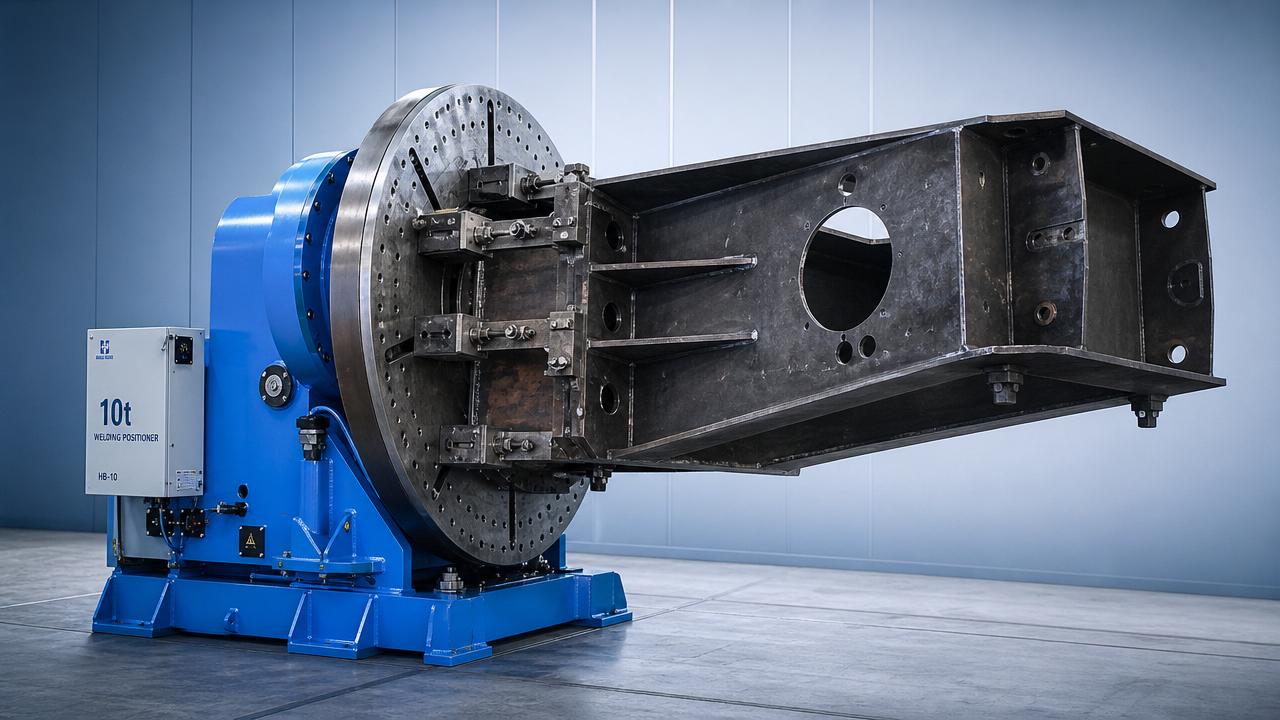
For technical evaluators assessing a 10 tons welding positioner in 2026, load capacity and stability directly affect welding quality, operator safety, and long-term maintenance cost. This guide focuses on the checks that matter most, including structural strength, center-of-gravity control, rotation behavior, and compliance verification, so equipment selection can be based on measurable performance rather than catalog claims.
Why a checklist matters for a 10 tons welding positioner
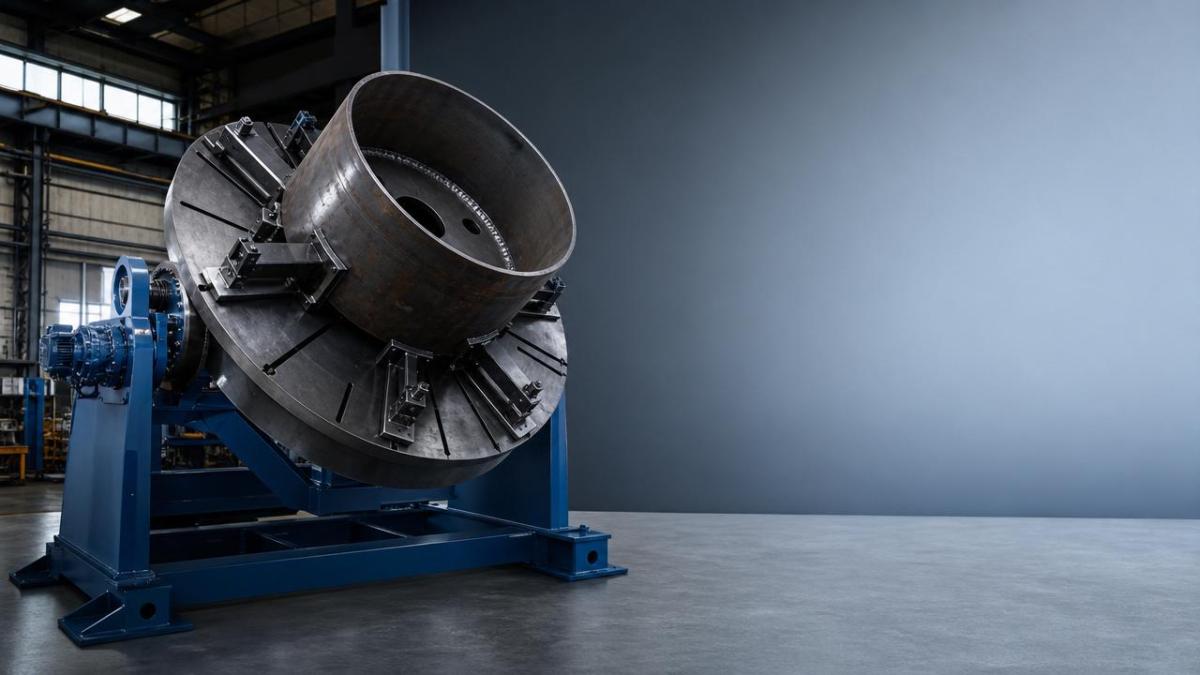
A 10 tons welding positioner often handles large fabrications, eccentric loads, and repeated rotation cycles. Small specification gaps can create vibration, tilt risk, poor weld accessibility, or premature bearing wear.
A checklist approach reduces selection errors. It helps compare nominal load, real usable load, offset tolerance, drive torque, braking performance, and base stability under actual workshop conditions.
Core load and stability checks in 2026
- Confirm rated load at the stated load center, not only maximum table load. A 10-ton rating without center-distance data gives an incomplete picture of usable capacity.
- Measure allowable eccentricity in both axial and radial directions. Offset workpieces increase overturning moment and can reduce safe operating capacity far below the nominal 10 tons.
- Check table diameter, faceplate thickness, and fixture interface strength. Large weldments may fit the load limit but still overload the mounting surface or clamping points.
- Review rotation torque and tilting torque separately. Heavy assemblies with uneven geometry need enough starting torque to avoid stalling during low-speed positioning.
- Inspect bearing type, gearbox design, and backlash values. Low backlash improves torch tracking accuracy and prevents shock loads during start-stop rotation.
- Verify base frame rigidity and anchor requirements. A stable foundation is essential when a 10 tons welding positioner operates with raised centers of gravity.
- Test braking and locking performance under full simulated load. Static holding ability is critical during tack welding, fit-up adjustment, and out-of-position work.
- Check rotation speed range and low-speed smoothness. Stable slow rotation supports better bead consistency, especially in circumferential and multi-pass welding tasks.
- Confirm electrical and control safety features, including emergency stop, overload protection, interlocks, and pendant response during tilt and rotation changes.
- Review compliance records for ISO9001 processes and applicable CE requirements. Documentation quality often reflects the reliability of the complete positioner build.
Application notes for different fabrication scenarios
Heavy cylindrical parts
For pipes, shells, and pressure-vessel sections, focus on rotational smoothness and chucking balance. Cylindrical parts may seem easy to support, but ovality and seam offset can shift the center of gravity.
In these cases, a 10 tons welding positioner should provide stable low-speed turning, consistent braking, and enough fixture adaptability for repeatable seam access.
Irregular welded structures
Frames, brackets, and fabricated assemblies create the highest stability risk because weight distribution changes after tack welding or subassembly installation. Evaluate radial offset limits carefully.
Fixture planning also matters. In broader fabrication lines, related forming equipment such as Torsion bar synchronize CNC press brake can support upstream part accuracy, reducing imbalance caused by dimensional variation before welding.
Automated welding cells
When integrating robots or manipulators, verify communication interfaces, repeat positioning accuracy, and acceleration control. Sudden motion changes can affect both weld path quality and mechanical stability.
A welding positioner in an automated cell should be assessed as part of the whole system, including torch reach, cable routing, guarding layout, and synchronized motion logic.
Commonly overlooked risks
Ignoring dynamic loads. Catalog ratings may reflect static conditions. Real welding cycles include starts, stops, tilt transitions, and fixture changes that increase stress.
Underestimating fixture weight. Chucks, faceplates, support arms, and custom jigs consume part of the rated load, reducing net payload for the actual workpiece.
Overlooking floor conditions. Uneven foundations or weak anchor zones can compromise the stability of a 10-ton unit even when the machine itself is properly designed.
Skipping service access review. Bearing lubrication points, gearbox inspection, and electrical cabinet access affect uptime and should be checked before installation.
Practical execution steps
- List the heaviest workpieces, including fixtures, clamps, and expected weld buildup.
- Mark the estimated center of gravity and calculate eccentric loading in both directions.
- Request torque curves, load-center limits, and braking data from the supplier.
- Compare foundation, power, and control requirements with the planned installation site.
- Ask for witness testing or video proof under representative load conditions.
Conclusion and next action
The right 10 tons welding positioner is defined by safe usable load, stable motion, and verified structural margins, not by nameplate capacity alone. In 2026, the strongest evaluations will combine load-center analysis, torque verification, braking checks, and compliance review.
Before making a final decision, prepare a real workpiece matrix, confirm eccentric load limits, and request test evidence for the exact operating range you expect on the shop floor.
