— —
Vertical H Beam Assembly Machine Explained: Key Functions, Workflow, and Buying Essentials
What Is A Vertical H Beam Assembly Machine
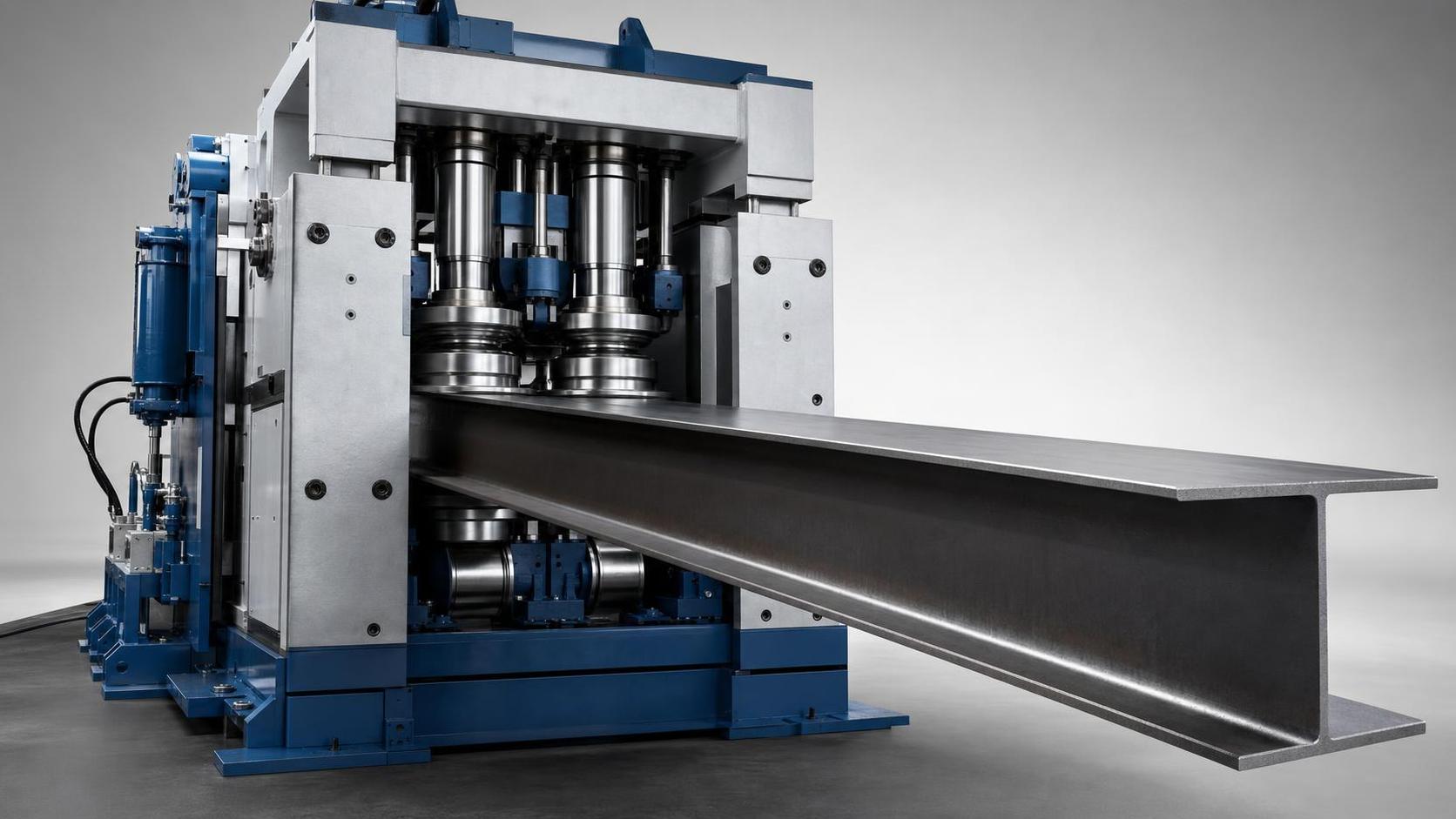
A Vertical H beam assembly machine is a steel fabrication system used to position, align, and tack the web and flange plates of an H beam before submerged arc welding or other joining operations. Its core purpose is to create a stable, repeatable fit-up condition so the beam enters the next process with controlled geometry, reduced distortion risk, and consistent dimensional accuracy.
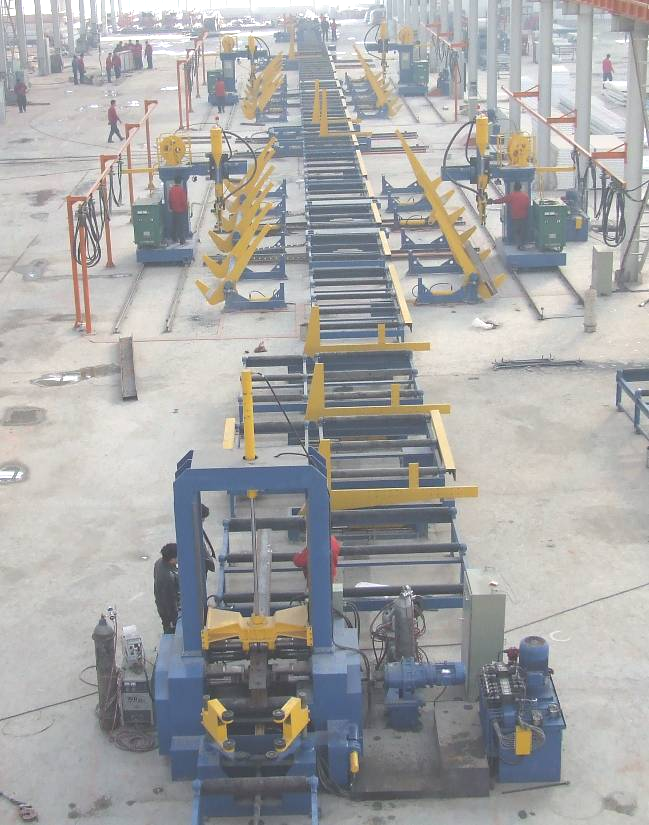
In practical production lines, this machine sits after plate cutting and edge preparation and before final beam welding. By holding the components vertically, it uses guiding rollers, centering devices, clamping units, and tack welding support to assemble the section efficiently. This vertical layout is especially useful for medium and heavy structural members where manual fitting becomes slow, labor intensive, and harder to standardize.
For buyers in structural steel, bridge fabrication, plant construction, ship-related steelwork, and heavy equipment manufacturing, the Vertical H beam assembly machine is not simply a single machine. It is a process-control point that directly affects welding quality, straightness, productivity, and rework rates across the whole H beam line.
How The Technology Works
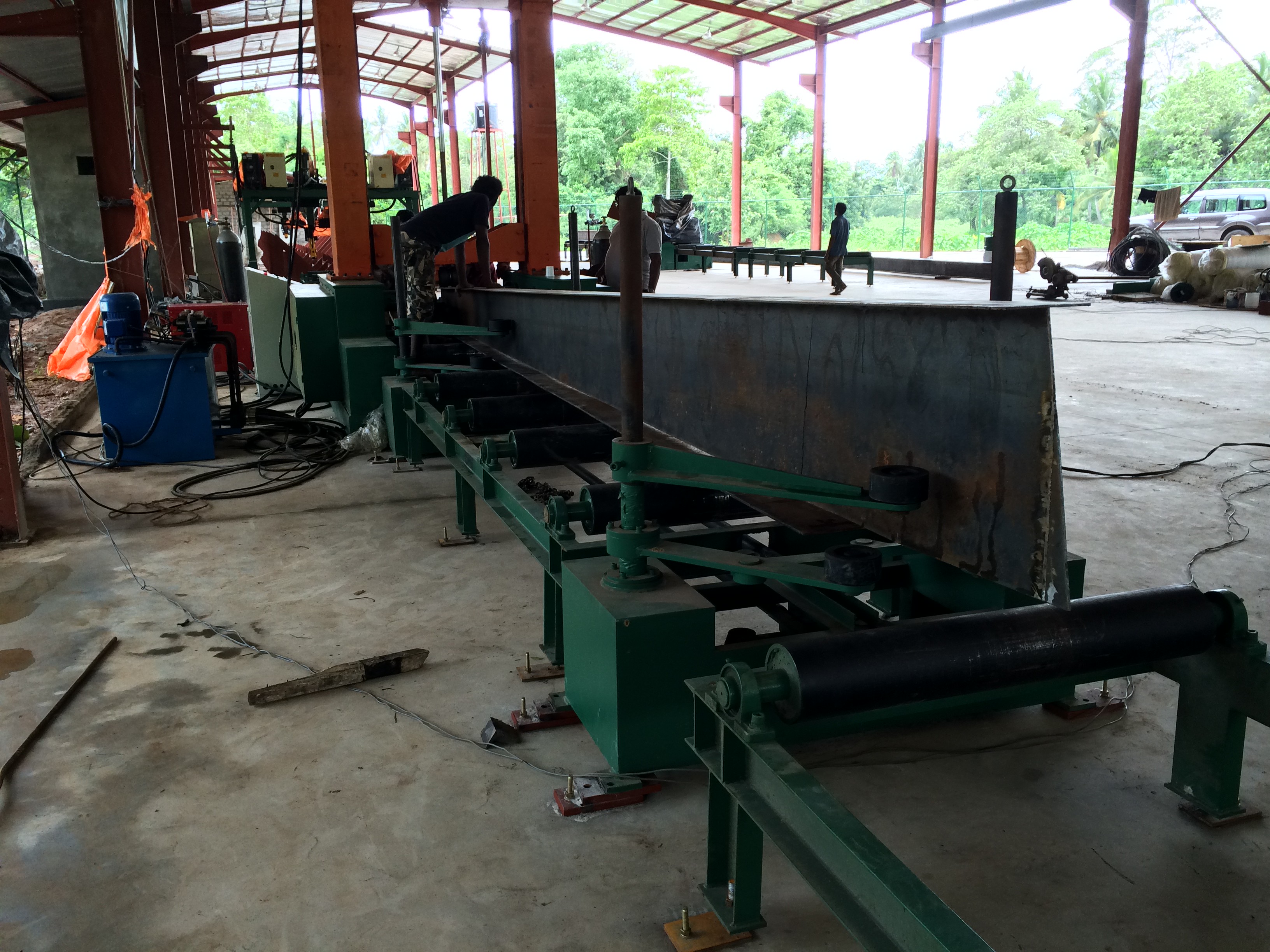
The operating principle is straightforward but highly process sensitive. The web plate is fed into the machine first, then the flange plates are introduced from both sides. Positioning mechanisms guide the parts into a vertical H profile, while synchronized clamping units push the flanges toward the web and maintain the target gap, symmetry, and perpendicularity before tack welding is performed.
Most systems use mechanical guides combined with hydraulic or pneumatic clamping to maintain pressure during assembly. Depending on the machine design, tack welding may be manual, semi-automatic, or integrated. Accurate centering is critical because even small deviations at this stage can multiply during final welding, leading to excessive heat correction, straightening work, or rejection of the finished beam.
A well-configured line also considers material thickness range, flange width variation, and web height changeover efficiency. Stable conveying speed, rigid frame design, and reliable alignment sensors or reference structures help ensure that the Vertical H beam assembly machine delivers repeatable results under continuous production rather than only under ideal shop-floor conditions.
Main Types And Production Configurations
Vertical H beam assembly machines are commonly categorized by automation level, beam size range, and whether they operate as a standalone station or as part of a complete line. Entry-level versions may focus on fit-up and manual tack welding, while more advanced systems integrate automatic positioning support and are designed to connect smoothly with H beam welding machines, straightening machines, and transfer equipment.
Another useful distinction is between general-purpose assembly equipment and line-matched solutions for higher-volume factories. A standalone machine can suit custom fabrication shops with varied beam specifications and flexible scheduling. A line-based configuration is better for producers seeking balanced throughput from cutting to assembly, welding, straightening, and surface treatment, often including shot blasting machine integration downstream.
Wuxi Armada operates across a broad metal fabrication equipment portfolio, including H beam assembly machine, H beam welding machine, H beam straightening machine, shot blasting machine, H beam tilting machine, and 3 in 1 H beam welding machine solutions. For buyers building or upgrading a beam workshop, this wider product coverage is useful because equipment matching, material flow logic, and after-sales coordination matter as much as the performance of any single unit.
Who Uses It And Where It Fits
The primary users are structural steel fabricators producing H beams for buildings, industrial workshops, logistics facilities, energy projects, and infrastructure packages. It is also relevant to manufacturers of heavy frames, modular steel units, and engineered welded sections where beam consistency affects assembly efficiency in later stages. In these environments, manual fit-up often becomes a bottleneck once order volume or beam size increases.
A Vertical H beam assembly machine is especially valuable where repeat orders, export projects, or documented quality requirements demand stable dimensional control. It supports more consistent root alignment before welding, which helps when downstream inspection, painting, blasting, and installation tolerances are tightly managed. The machine also improves labor deployment by shifting skilled workers from repetitive alignment tasks to quality supervision and welding optimization.
The international customer list associated with Wuxi Armada, including companies such as URALSTANKOIMPORT, MD Calbah Industries Pty Ltd, Ersay International Transport, Zein Steel Industries Co.LLC, PT.Cahaya mas Cemerlang, Estructuras Metalicas Girders Chile Limitada, and Lincoln Electric-MENA, suggests experience serving varied regional requirements. For overseas buyers, this matters because machine specification, electrical standards, documentation clarity, and logistics coordination often influence project success as much as the machine itself.
Typical Workflow And Quality Control Points
A typical workflow starts with plate cutting, identification, and dimensional verification. The web and flange plates should be checked for flatness, edge quality, and material conformity before loading. Poor upstream preparation can reduce the effectiveness of even a well-built Vertical H beam assembly machine because clamps and guides cannot fully compensate for severe plate deformation or incorrect edge geometry.
Once loaded, the web is centered and the flanges are positioned from both sides. The machine applies controlled clamping force, operators verify alignment references, and tack welds are placed to hold the section. At this stage, the main quality points are web-to-flange squareness, flange symmetry, root gap consistency, tack spacing, and handling stability during transfer to the welding station.
After assembly, the beam moves to final welding, then usually to straightening and optional surface treatment such as blasting. Effective quality control therefore spans the whole line: incoming plate inspection, assembly tolerance checks, welding parameter consistency, distortion correction records, and final dimensional verification. Buyers should assess not only machine specifications but also whether the supplier can support this process logic with practical recommendations and line integration advice.
How To Choose The Right Machine
Selection should begin with beam range and production objectives rather than headline price. Key inputs include web height, flange width, plate thickness, beam length, daily output targets, welding method, and the amount of specification changeover expected. A machine optimized for narrow product variation may offer stronger efficiency, but a more flexible configuration may be better for contract fabricators handling diverse project work.
Buyers should also review frame rigidity, clamping stability, drive system reliability, alignment accuracy, accessibility for maintenance, and compatibility with upstream and downstream equipment. If the machine will work in a full beam line, conveying interfaces and control coordination become critical. Wuxi Armada’s broader range in welding manipulators, rotators, positioners, cutting systems, and beam-line equipment can be an advantage for purchasers seeking a more unified sourcing path.
Commercial due diligence is equally important. Ask for realistic scope definitions, spare parts lists, installation support terms, consumable assumptions, and training details. Certifications such as ISO9001, CE, and SGS, when applicable to the transaction context, can support buyer confidence, but the practical test is whether the supplier can translate specifications into a machine that fits the intended process, operator skill level, and factory layout.
Cost Structure, TCO, And ROI Thinking
The purchase price of a Vertical H beam assembly machine is only one part of total ownership cost. Buyers should account for transport, installation, commissioning, utilities, tooling, spare parts, operator training, and production downtime risk. If the machine is part of a new line, foundation work, material handling devices, electrical adaptation, and layout changes may represent a meaningful share of the real project cost.
Operating economics depend heavily on labor saving, fit-up accuracy, and rework reduction. A machine that shortens assembly time but creates unstable alignment may raise overall cost by increasing welding correction and straightening work. Conversely, a more stable machine can improve throughput across multiple linked stations, which often provides the strongest return in beam manufacturing environments with recurring orders and measurable bottlenecks.
ROI analysis should therefore compare manual assembly, semi-automatic assembly, and line-integrated assembly under real production assumptions. Useful buyer metrics include assembled beams per shift, tack welding cycle time, downstream welding continuity, reject or repair rate, and maintenance hours per month. The best investment decision usually comes from matching capacity and accuracy to demand, not from choosing the highest automation level by default.
Maintenance, Upgrades, And Future Trends
Routine maintenance typically focuses on rollers, clamping mechanisms, drive components, hydraulic or pneumatic systems, electrical connections, and alignment calibration. Inspection intervals should be linked to production intensity, beam weight range, and operating conditions. Preventive maintenance is important because wear in guiding or clamping elements can gradually reduce assembly precision before failure becomes obvious to operators.
When planning upgrades, many fabricators look for improved automation of positioning, better handling compatibility, and clearer process data. Future-oriented systems are moving toward more stable line integration, simplified adjustment for multiple beam sizes, and stronger coordination with welding, straightening, and blasting stages. The goal is not automation for its own sake, but more predictable output and lower dependence on manual correction.
The broader market trend in steel fabrication points toward flexible production cells, energy-conscious operation, and integrated procurement from suppliers able to support complete workflow design. For buyers evaluating a Vertical H beam assembly machine today, the most practical approach is to focus on process fit, service responsiveness, and expansion compatibility. That is where a supplier with a broad fabrication equipment range, such as Wuxi Armada, can bring added value beyond the base machine alone.
 Maintenance Priorities for High Precision Non-Standard Edge Milling MachinesHigh precision non-standard edge milling machine maintenance priorities by scenario: reduce downtime, protect accuracy, extend machine life, and improve stable production performance.
 Heavy Duty H-Beam Line Market Shift: Rising Demand from Prefab Concrete Plants and Wind Tower Fabricators in Southeast AsiaHeavy duty h beam line demand surges in Southeast Asia—prefab concrete plants & wind tower fabricators choose precision, reliability, and ISO/CE-certified systems.
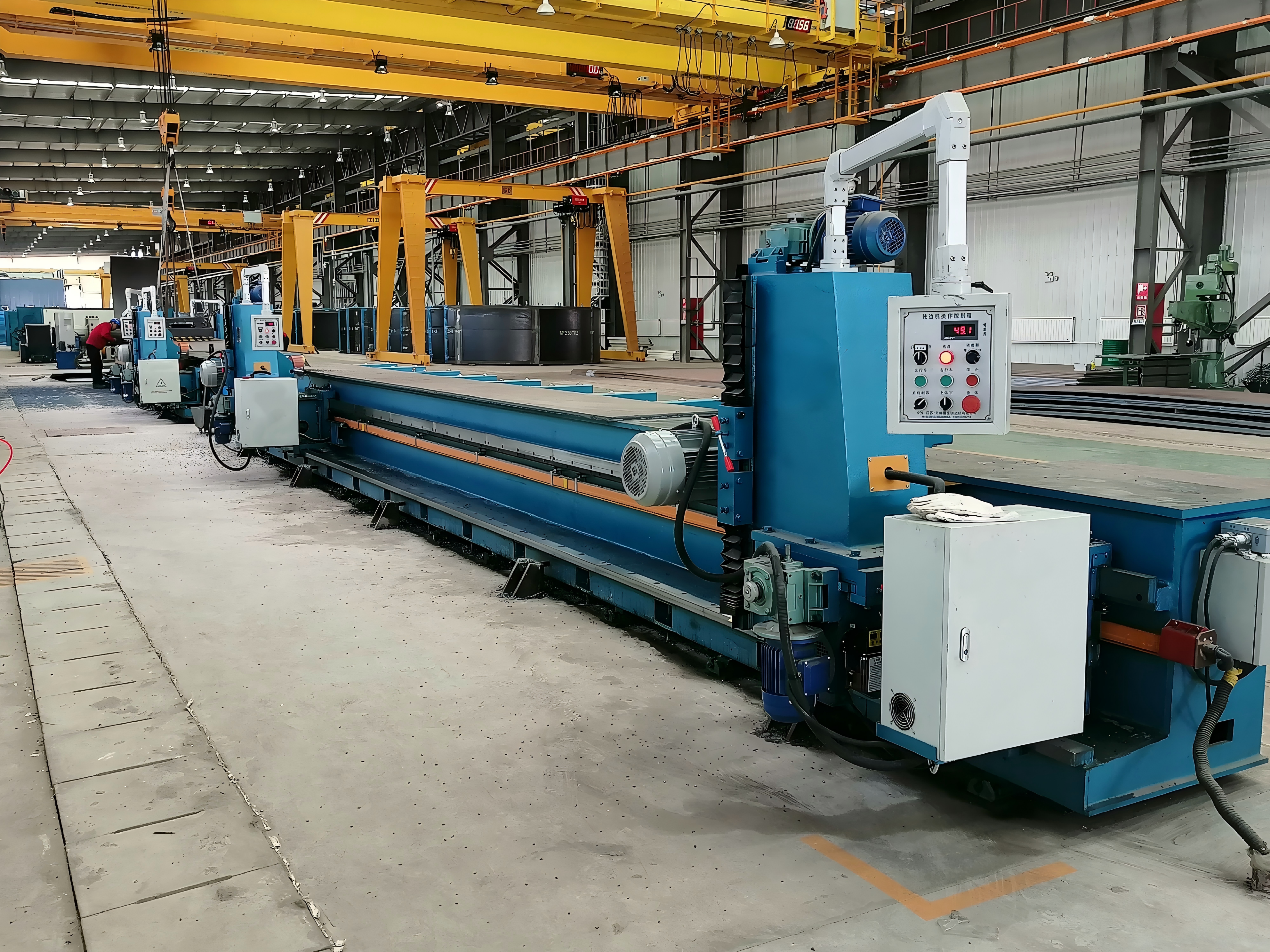
 Carbon Steel Edge Milling in 2026: What Fabricators Are ChangingCarbon steel edge milling is reshaping fabrication in 2026. See how fabricators improve weld quality, automation, cost control, and machine selection for better output.
 Heavy automatic h beam line1.Introduction for Heavy automatic h beam line:
As a highly automatic H-beam production line, Heavy-duty steel production line sees reducing the use frequency of overhead crane as its subject. Through using automatic machines as roller conveyor, turning machine and conveying machine to conveying, turning and moving H beam during welding process, which greatly improved user’s production efficiency.
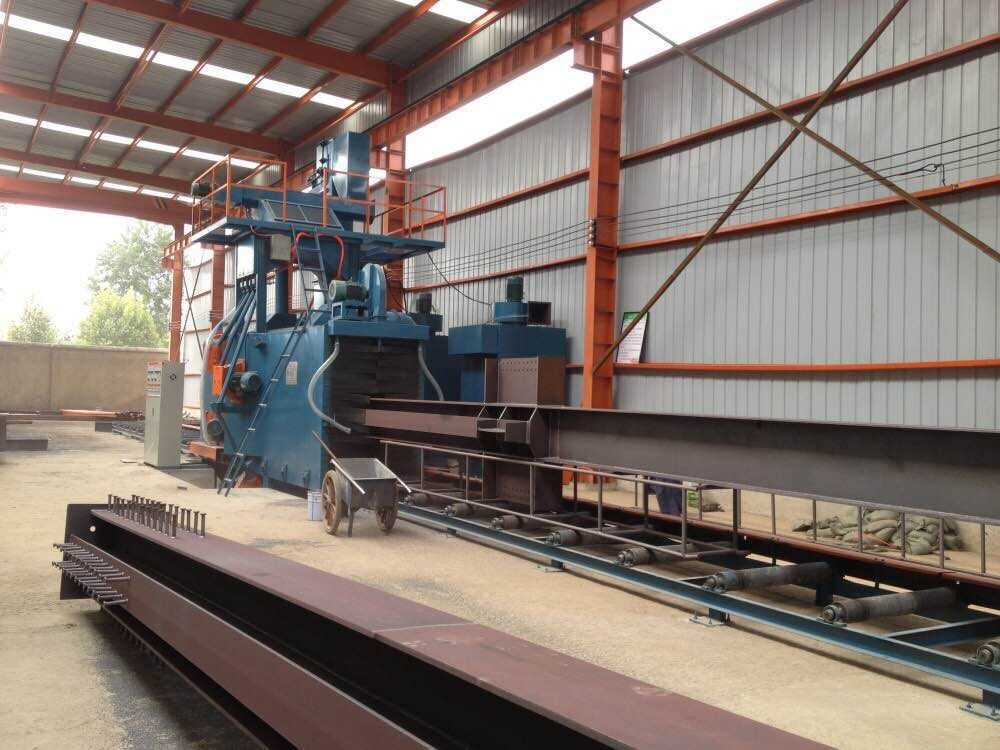
The General production process of heavy-duty steel production line as following: Shot blasting machineH beam Shot blasting machine is primarily for shot-blasting of steel structural parts, aluminum profiles,steel sheets and steel billets to remove the rusty spot, rusty layer and scale cinder on steel to obtain a uniform, smooth and glossy metal surface allowing improved coating quality and higher anti-corrosion performance. Shot blasting machine To ensure the high shot-blasting performance and extend the service of rollers, a high-chromium grinding-resistant sheath is installed on the room rollers to extend its service life by scores of times,Automatic H beam Shot blasting machine.
 H beam assembly machine1.Introduction for H beam assembly machine:
1.1.The automatic centering of flange and web adopts hydraulic motor and gear, with high centering precision and good reactivity. All of the operation are centralized on the electric control button panel, with easy and convenient operation and precise positioning.H beam assembly machine
1.2.The main transmission part adopts cycloid pinwheel and Taiwan TAIAN brand inverter, the assembly speed can be adjusted between 0.5—6 M/min.H beam making machine