




Shearing machine Explained: Essential Knowledge for Sheet Metal Cutting and Fabrication
— —
What A Shearing Machine Is And Why It Matters
A Shearing machine is an industrial cutting machine used to separate sheet metal or plate through the controlled action of an upper blade and a lower blade. Unlike sawing, grinding, or thermal cutting, shearing removes material by applying high mechanical force along a straight cutting line. The result is a clean blank, strip, or plate section that can move directly into bending, rolling, welding, drilling, milling, or assembly operations.
In sheet metal fabrication, the Shearing machine often sits near the beginning of the production flow. It converts large stock sheets into workable sizes and helps control downstream accuracy. If the first cut is inconsistent, every later process, including press brake bending, plate rolling, H beam fabrication, edge milling, or robotic welding, may require correction. For this reason, shearing is not only a cutting step but also a dimensional control process.
Common buyers include steel structure fabricators, metal furniture plants, enclosure manufacturers, ship repair workshops, machinery builders, trailer manufacturers, HVAC duct producers, and general metal service centers. A suitable Shearing machine can improve throughput, reduce dependency on manual cutting, lower rework, and create a more stable workflow for both batch production and custom fabrication.
How The Shearing Process Works
The working principle of a Shearing machine is based on plastic deformation and fracture. The sheet is held firmly by hold-down cylinders or mechanical clamps, while the upper blade moves down against the fixed lower blade. As the blades penetrate the material, the metal first deforms, then cracks from both sides, and finally separates. The quality of the cut depends on blade clearance, rake angle, blade sharpness, material strength, and clamping stability.
Blade clearance is one of the most important parameters. Too little clearance increases cutting force, blade wear, and the risk of edge dragging. Too much clearance can cause burrs, twisting, and poor straightness. Operators usually adjust clearance according to material thickness and type, such as mild steel, stainless steel, aluminum, galvanized sheet, or wear-resistant plate. Correct clearance protects the machine and creates a more predictable cut surface.
Backgauge positioning also affects productivity and repeatability. A manual backgauge may be sufficient for small workshops and simple cutting tasks, while motorized or CNC-controlled backgauges are preferred for frequent size changes and higher batch accuracy. Modern systems may include digital readouts, programmable stroke control, safety guards, hydraulic overload protection, and optional front support arms to reduce handling error.
Main Types Of Shearing Machines
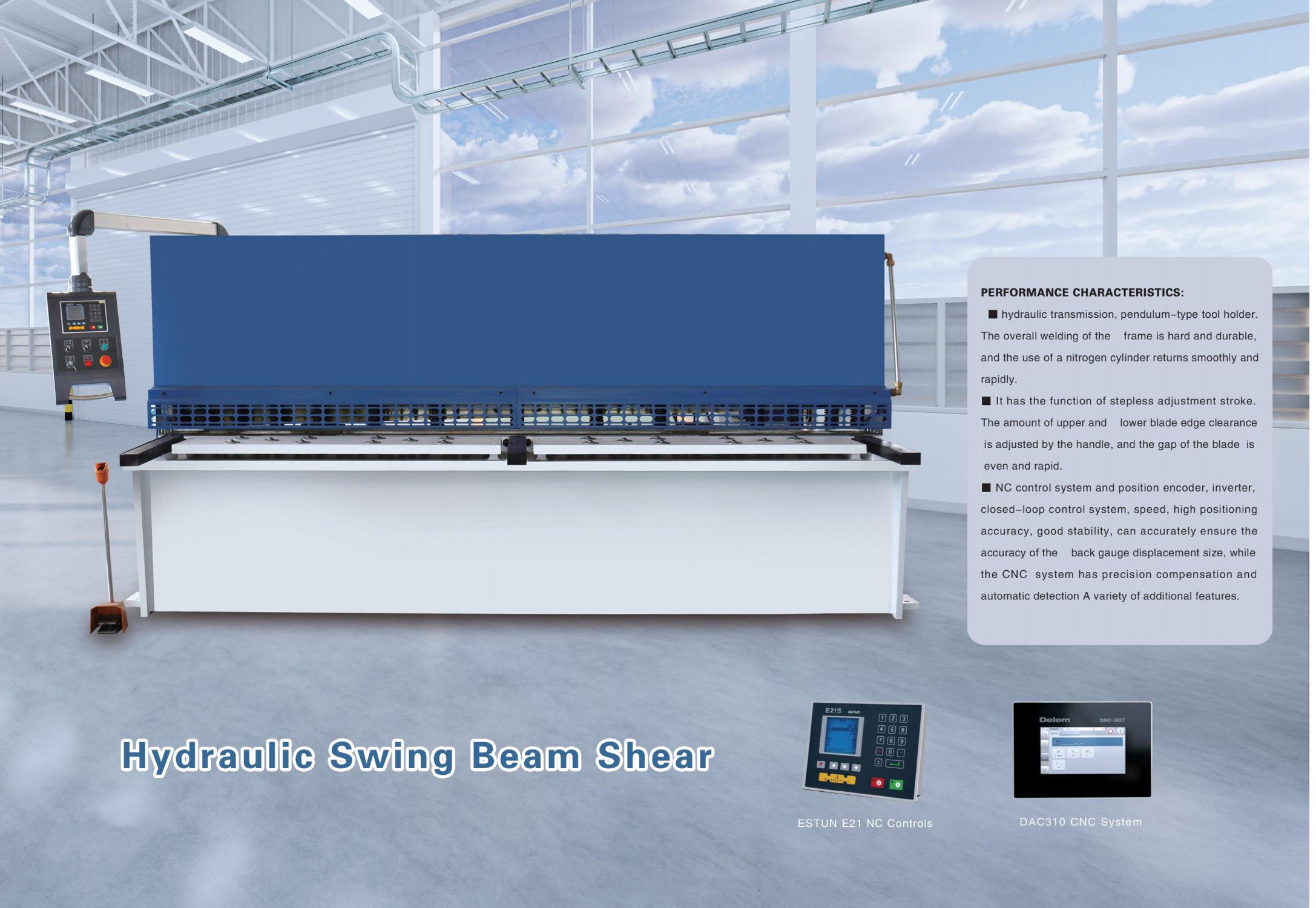
The two mainstream industrial categories are the Hydraulic Swing Beam Shear and the Hydraulic guillotine shear. A swing beam design moves the upper blade in an arc. It is widely used for general sheet cutting because it offers a practical balance of cost, maintenance convenience, and cutting performance. For many small and medium fabrication plants, it is a reliable choice for daily carbon steel and light stainless steel processing.
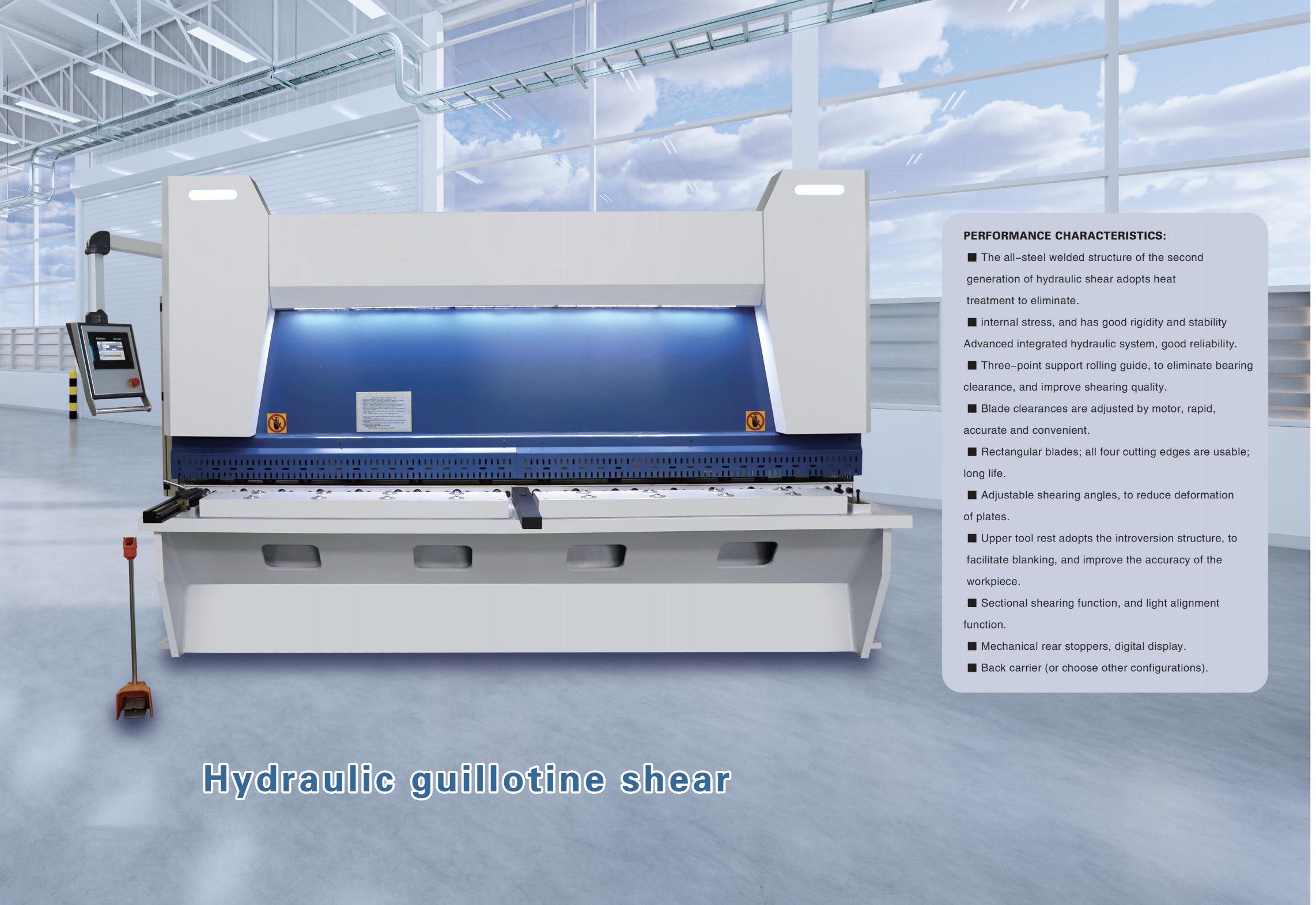
A Hydraulic guillotine shear moves the upper blade more vertically, often with adjustable rake angle and blade gap. This structure is commonly selected for heavier duty work, thicker plates, or applications requiring better control over cut quality and distortion. It may require a higher initial investment, but it can provide stronger adaptability when the factory processes a wider material range or larger plate sizes.
Mechanical shears, pneumatic shears, and small foot-operated shears still exist in specific environments, especially for thin sheet or maintenance work. However, hydraulic Shearing machine solutions dominate many industrial applications because they offer smoother force delivery, overload protection, easier adjustment, and better integration with production lines. The right type should be selected according to material thickness, production volume, accuracy requirements, floor space, and operator skill level.
Selection Criteria For B2B Buyers
When evaluating a Shearing machine, buyers should begin with cutting capacity. This includes maximum thickness, maximum cutting length, tensile strength of the intended material, and the expected duty cycle. A machine rated for a certain thickness in mild steel may not perform the same way on stainless steel or high-strength plate. Clear communication about material grades and daily workload helps prevent under-sizing and premature wear.
Accuracy-related factors include blade quality, frame rigidity, backgauge precision, hydraulic stability, and the ability to maintain consistent clearance. For workshops that feed cut blanks into press brakes, plate rolling machines, welding fixtures, or CNC drilling lines, repeatable dimensions are often more valuable than maximum speed alone. A well-chosen machine reduces secondary trimming and helps operators maintain stable production rhythm.
Safety and serviceability should not be treated as optional. Practical features include front finger guards, rear light curtains where applicable, emergency stop functions, electrical cabinet protection, clear lubrication points, accessible hydraulic components, and understandable control interfaces. Buyers should also review documentation, spare parts availability, training support, and compliance documents. Wuxi Armada supports international buyers with machines backed by ISO9001, CE, and SGS certificate references where applicable to the supplied equipment and project scope.
Applications And Global Project Context
A Shearing machine is used wherever straight sheet or plate cutting is required before forming or joining. In steel fabrication, it prepares gusset plates, stiffeners, connection plates, cabinet panels, duct sections, brackets, covers, and machine guards. In heavier fabrication, sheared plates can be sent to edge milling, drilling, welding positioners, welding rotators, shot blasting machines, or H beam production lines depending on the final structure.
Wuxi Armada serves buyers in manufacturing and processing machinery with a broad portfolio that includes shearing machines, press brakes, plate rolling machines, CNC flame cutting machines, CNC plasma cutting machines, CNC fiber laser cutting machines, welding manipulators, welding rotators, welding positioners, H beam assembly and welding equipment, band saws, radial drilling machines, deburring machines, and pipe bending equipment. This range is useful for customers who want compatible upstream and downstream processes from one machinery partner.
International project references such as URALSTANKOIMPORT, MD Calbah Industries Pty Ltd, Ersay International Transport, Contevix comercio e servicos ltda, Zein Steel Industries Co.LLC, BatysMunaiGazZhabdyktary LLP, Rienzie Group, Regional engineering works, PT.Cahaya mas Cemerlang, Estructuras Metalicas Girders Chile Limitada, and Lincoln Electric-MENA show the type of global industrial customers that require practical metal fabrication solutions. For export projects, buyers should confirm voltage, language interface, guarding expectations, documentation, installation conditions, and local import requirements before shipment.
Installation, Operation, And Quality Control
Proper installation begins with a stable foundation, level machine placement, correct electrical connection, hydraulic oil verification, and a full inspection of the blade area and guards. A Shearing machine should be positioned with enough front and rear space for sheet loading, unloading, and safe operator movement. If the plant processes long or heavy sheets, front support arms, rear conveyors, lifting devices, or roller tables may improve safety and reduce handling damage.
Daily operation should include checking blade condition, hold-down pressure, oil level, backgauge movement, emergency stop response, and abnormal noise. Operators must match blade clearance to material thickness and avoid cutting material beyond the rated capacity. Good practice also includes test cutting before batch work, measuring the first parts, recording parameters for repeat orders, and keeping the cutting table free of scale, scrap, and foreign objects.
Quality control focuses on dimensional tolerance, edge burr, twist, squareness, and surface scratches. If burr height increases, the cause may be worn blades, incorrect clearance, unsuitable rake angle, or unstable clamping. Periodic blade turning, sharpening, hydraulic maintenance, fastener inspection, and backgauge calibration help keep output consistent. For factories combining shearing with press brake bending, plate leveling, welding, and milling, this preventive discipline reduces cumulative error across the entire fabrication route.
Total Cost Of Ownership And ROI
The purchase price of a Shearing machine is only one part of total ownership cost. Buyers should also evaluate tooling life, hydraulic system reliability, electrical component availability, energy consumption, installation labor, operator training, spare blades, oil replacement, maintenance downtime, and scrap rate. A lower-priced machine may become expensive if it produces inconsistent blanks, requires frequent adjustment, or lacks timely parts support.
Return on investment usually comes from faster cutting, fewer outsourced blanks, reduced rework, improved material utilization, and better scheduling control. For plants already using press brakes, plate rolling machines, welding lines, or CNC cutting machines, adding or upgrading a Shearing machine can remove a bottleneck at the material preparation stage. The ROI calculation should compare current labor time, subcontracting cost, waste, delivery delays, and expected annual cutting volume.
A practical procurement approach is to define three scenarios: current workload, expected growth, and occasional peak demand. The selected machine should comfortably handle normal production while retaining some reserve capacity. Wuxi Armada can be considered by buyers who need not only a shearing solution but also related fabrication equipment, allowing discussions about process matching, layout planning, and future expansion rather than purchasing isolated machines without production context.
Future Trends In Sheet Metal Shearing
The Shearing machine market is moving toward easier operation, better repeatability, improved safety, and stronger integration with digital fabrication workflows. CNC backgauges, touch-screen controls, recipe storage, automatic blade gap adjustment, and production data recording are becoming more common. These functions help reduce reliance on operator memory and support mixed-batch manufacturing, where different sheet sizes and materials are processed in the same shift.
Another trend is process combination. Many factories now compare shearing with laser cutting, plasma cutting, and flame cutting. Thermal cutting is flexible for complex contours, while shearing remains highly efficient for straight cuts and rectangular blanks. The best plants often use both: a Shearing machine for fast straight preparation and CNC cutting systems for shaped parts. This balanced approach improves capacity without using an expensive process for every simple cut.
Sustainability and lifecycle value are also influencing purchasing decisions. Buyers increasingly look for machines with durable frames, maintainable hydraulic systems, efficient motors, replaceable wear parts, and clear service documentation. As global fabricators face shorter delivery cycles and more varied orders, the most valuable Shearing machine will be the one that combines stable mechanical performance, safe operation, predictable service, and compatibility with the wider fabrication line.
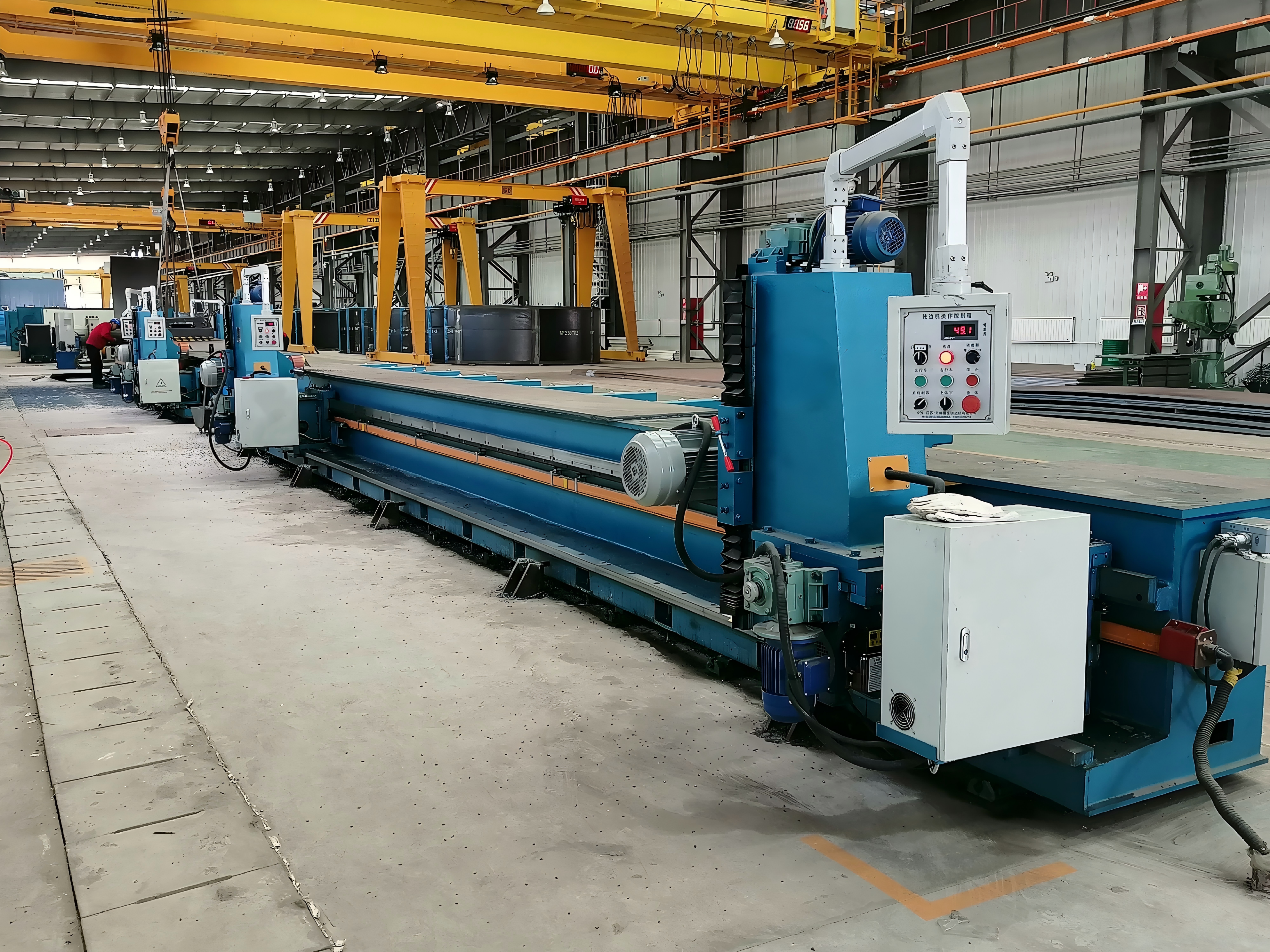
 High Precision Non-Standard Edge Milling Machine: Where Accuracy Pays OffHigh precision non-standard edge milling machine solutions boost ROI with tighter tolerances, lower rework, flexible bevel processing, and reliable output for demanding fabrication projects.
 Carbon Steel Edge Milling in 2026: What Fabricators Are ChangingCarbon steel edge milling is reshaping fabrication in 2026. See how fabricators improve weld quality, automation, cost control, and machine selection for better output.
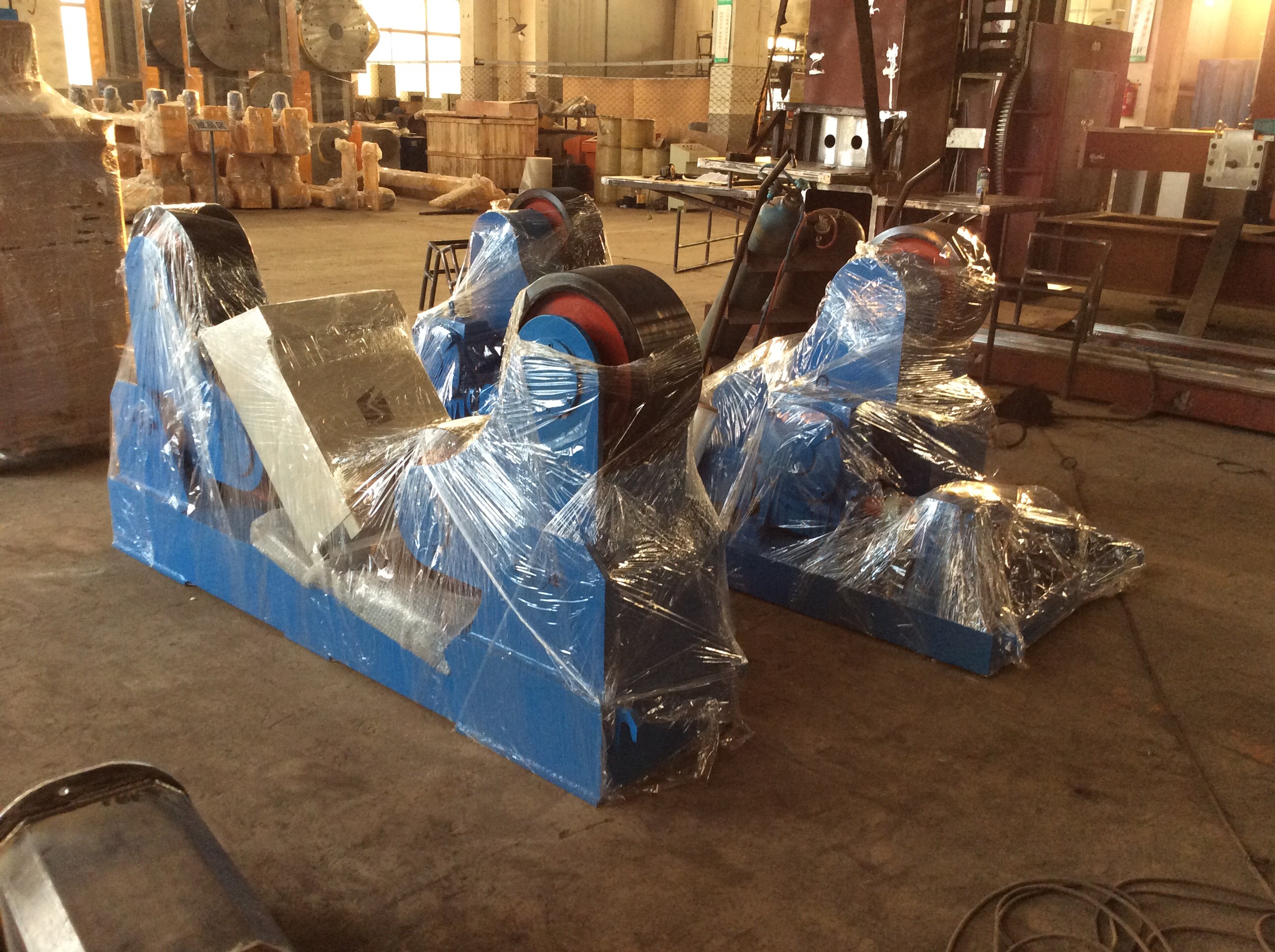
 What defines a reliable welding rotator manufacturer todayWelding rotator manufacturer selection starts with engineering, quality, compliance, and service. Learn how to identify a reliable supplier and reduce procurement risk.
 Hydraulic Swing Beam Shear1.Introduction for Hydraulic Swing Beam Shear:
A shearing machine is a machine that uses one blade to perform reciprocating linear motion to shear the sheet metal. It relies on the moving upper blade and the fixed lower blade, with a reasonable blade gap, to apply shear force to various thicknesses of metal sheets, causing the sheets to break and separate according to the required dimensions. Shearing machines belong to a type of forging machinery and are mainly used in the metal processing industry. The products are widely applicable to industries such as aviation, light industry, metallurgy, chemical industry, construction, shipbuilding, automobiles, power, electrical appliances, and decoration, providing the necessary specialized machinery and complete equipment. Hydraulic guillotine shear1.Introduction for Hydraulic guillotine shear:
A shearing machine is a machine that uses one blade to perform reciprocating linear motion to shear the sheet metal. It relies on the moving upper blade and the fixed lower blade, with a reasonable blade gap, to apply shear force to various thicknesses of metal sheets, causing the sheets to break and separate according to the required dimensions. Shearing machines belong to a type of forging machinery and are mainly used in the metal processing industry. The products are widely applicable to industries such as aviation, light industry, metallurgy, chemical industry, construction, shipbuilding, automobiles, power, electrical appliances, and decoration, providing the necessary specialized machinery and complete equipment.
